


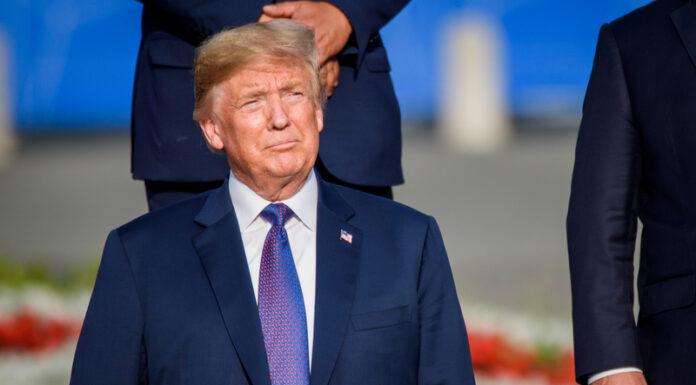
President Donald Trump inserted himself into Honduras’ presidential election on Monday, Dec. 1, issuing a stark warning to the Central American nation about the ongoing vote count. Without offering evidence, Trump accused Honduras of attempting to alter the results of the Nov. 30 election and threatened severe consequences if officials interfered with the tally.
“Looks like Honduras is trying to change the results of their Presidential Election,” Trump wrote on Truth Social. “If they do, there will be hell to pay!”
The president’s remarks came hours after Ana Paola Hall, president of the National Electoral Council, announced that the preliminary rapid reporting system had reached its conclusion with 57 percent of votes tallied. The count revealed an extremely close race between two conservative candidates: Nasry Asfura of the National Party and Salvador Nasralla of the Liberal Party. Asfura held a narrow lead of only a few hundred votes when the counting process halted at midnight on Nov. 30.
Trump demanded that election officials complete the vote count, emphasizing what he described as the importance of democratic processes. In his statement, Trump stressed that hundreds of thousands of Hondurans must have their votes counted and insisted that democracy must prevail. The president’s intervention adds significant pressure to an already tense post-election environment in the Central American nation.
The race for Honduras’ presidency carries substantial implications for the country’s future relationship with Washington. Rixi Moncada, the democratic socialist LIBRE party candidate, trailed the two leading contenders by roughly 20 percentage points. Both Asfura and Nasralla have pointed to the close tally as evidence that they are ahead, though neither has declared victory.
Earlier in the week, on Friday, Nov. 28, Trump endorsed Asfura, calling him the only Honduran candidate his administration would work with. The president praised Asfura’s commitment to fighting what he termed “narco-communists” alongside the United States. This endorsement represents a direct American intervention in another nation’s electoral process, a move that has drawn attention from foreign policy observers.
Officials indicated the count would continue, but did not specify when updated totals would be released. Parts of the National Electoral Council’s online system appeared to have been taken down, adding to confusion about the election’s status. The electoral body’s decision to halt the preliminary reporting system has sparked questions about transparency and procedural integrity.
Trump’s involvement in Honduras extends beyond his election day statements. He announced plans to pardon former Honduran President Juan Orlando Hernandez, who is currently serving a 45-year sentence in the United States. This announcement loomed large over the race, underscoring how American political decisions can significantly impact the country’s domestic affairs.
The election took place Sunday, Nov. 30, with voters turning out to select their next leader. Trump claimed on his platform that Hondurans voted in overwhelming numbers. The president’s characterization of the vote count stoppage as abrupt has added fuel to speculation about the electoral process, though election officials have not provided detailed explanations for the pause.
The outcome will determine whether Honduras shifts away from the ruling LIBRE party, which currently governs the nation. Such a transition would mark a significant political change for the country and potentially reshape its diplomatic and economic ties with its northern neighbor. Trump’s public statements about working exclusively with Asfura suggest that the United States’ bilateral relationship with Honduras could depend heavily on who ultimately wins the presidency.
Presidential elections in Latin American countries often attract international attention, but direct threats from a sitting U.S. president regarding another nation’s vote count represent an unusual level of interference. Trump’s warning that there will be “hell to pay” if results are altered signals his administration’s willingness to take an aggressive stance on electoral outcomes in the region.
The National Party and Liberal Party represent conservative political forces in Honduras, while the LIBRE party represents a democratic socialist alternative. With Moncada trailing significantly, the race appears to be between the two right-wing candidates, making Trump’s endorsement of Asfura a potential deciding factor in a contest separated by such a slim margin.
As Honduras awaits the completion of its vote count, the nation faces not only the resolution of a close electoral contest but also the implications of American pressure on its democratic processes. The president’s statements have injected new urgency into an already hostile post-election environment, with the final outcome carrying consequences that extend far beyond Honduras’ borders.