


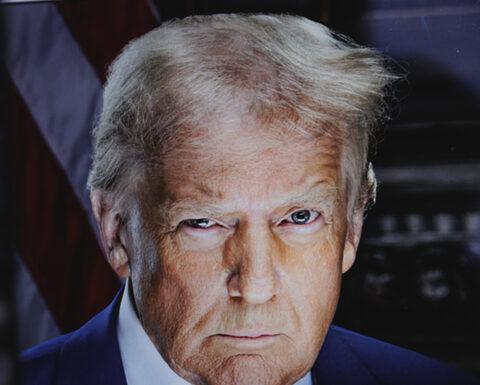
President Donald Trump spent the early hours of Christmas Eve launching inflammatory threats against television networks and late-night hosts, saying popular comedian Stephen Colbert should be “put to sleep, NOW.”
Trump, 79 years old, posted a series of threats on Truth Social Wednesday morning, questioning whether broadcast licenses for major networks should be terminated over coverage he deems unfavorable. The president prematurely wished his 11 million followers a “MERRY CHRISTMAS!!!” 24 hours early, despite the disturbing nature of his earlier messages.
The president’s social media outburst targeted CBS and other networks, with particularly venomous attacks directed at Colbert, 61 years old, whose late-night program airs on the network. Trump called for CBS to terminate the show before the host’s contract ends in May.
“CBS should, ‘put him to sleep,’ NOW, it is the humanitarian thing to do!” Trump wrote in his post about Colbert.
The president’s Christmas Eve morning posts came just hours after he appeared on the Kennedy Center Honors on Tuesday night. Trump claimed that 97 percent of networks are against him and threatened to terminate their broadcast licenses over what he characterized as negative coverage.
Trump’s threats gained new weight after FCC chief Brendan Carr took action in September to take Jimmy Kimmel off the air for a week. While the FCC cannot directly cancel broadcasting licenses for major networks like ABC, CBS, and NBC, it can exert control over their local affiliate stations, demonstrating the administration’s willingness to use regulatory power against media critics.
The timing of Trump’s threats coincided with reports that headlines suggested Colbert may run for president in 2028, which may have further inflamed the president’s reaction. The comedian has been one of Trump’s most consistent critics in late-night television.
CBS has recently shown signs of accommodating the Trump administration’s demands. On Sunday, the network pulled a 60 Minutes story about El Salvador megaprison deportations just hours before it was scheduled to air. The segment focused on the Trump administration deporting Venezuelan migrants to the notorious facility.
Bari Weiss reportedly ordered the 60 Minutes segment pulled. Sharyn Alfonsi, the reporter who worked on the spiked story, expressed concerns in a leaked memo about the chilling effect such decisions create.
“If the standard for airing a story becomes ‘the government must agree to be interviewed,’ then the government effectively gains control over the 60 Minutes broadcast,” Alfonsi said.
The incident involving the 60 Minutes deportation story marks a significant shift for a program long considered an investigative powerhouse. Critics argue that spiking stories under government pressure transforms journalism into state propaganda.
Trump’s Christmas Eve social media activity extended beyond attacking individual hosts. The president questioned which network has “the worst Late Night host” among CBS, ABC, and NBC, claiming they share three characteristics: high salaries, no talent, and low ratings. He suggested their broadcast licenses should be revoked for being “almost 100% Negative” toward him and the Republican Party.
The president’s threats represent an escalation of his ongoing war with media organizations he views as hostile. Throughout the year, Trump has repeatedly raised the possibility of stripping television networks of their broadcast licenses over coverage he considers unfair, a threat that press freedom advocates warn could have severe consequences for independent journalism.
Legal experts note that while the president cannot directly cancel network licenses, his hand-picked FCC leadership has already demonstrated a willingness to use regulatory authority to pressure media outlets. The September action against Jimmy Kimmel’s show, though it resulted in only a brief suspension, established a precedent that has sent ripples of concern through the broadcasting industry.
Trump’s fixation on late-night comedy hosts has been a constant throughout his political career, with Colbert, Kimmel, and others regularly featuring the president in their monologues. The comedians have made Trump’s legal troubles, policy decisions, and personal behavior regular fodder for their programs, drawing millions of viewers each night.
The president’s Christmas Eve outburst also follows a pattern of using holiday periods for controversial statements and actions. Rather than focusing on traditional seasonal messages of unity and goodwill, Trump chose December 24, 2025 to issue what critics characterize as authoritarian threats against the press.
Press freedom organizations have expressed alarm at the combination of presidential threats and regulatory action against media outlets. They warn that the willingness of government agencies to act on Trump’s grievances against specific journalists and programs creates a dangerous precedent that could fundamentally alter the relationship between government and the press in America.
The president’s ability to influence broadcast licensing decisions through his appointed FCC leadership raises questions about the independence of regulatory agencies meant to operate free from political interference. Critics argue this represents a fundamental threat to press freedom and the First Amendment.
As Trump prepares to turn 80 next year, his combative relationship with media organizations shows no signs of abating. His Christmas Eve threats suggest he remains focused on punishing perceived enemies in the press, even during what traditionally serves as a time for reflection and reconciliation.
The incident involving CBS’s decision to spike the 60 Minutes deportation story, combined with Trump’s explicit threats to revoke broadcast licenses, has created what media analysts describe as a dangerous climate of self-censorship. News organizations now face the reality that challenging the administration could result in regulatory retaliation, fundamentally altering the calculus of investigative journalism in America.