


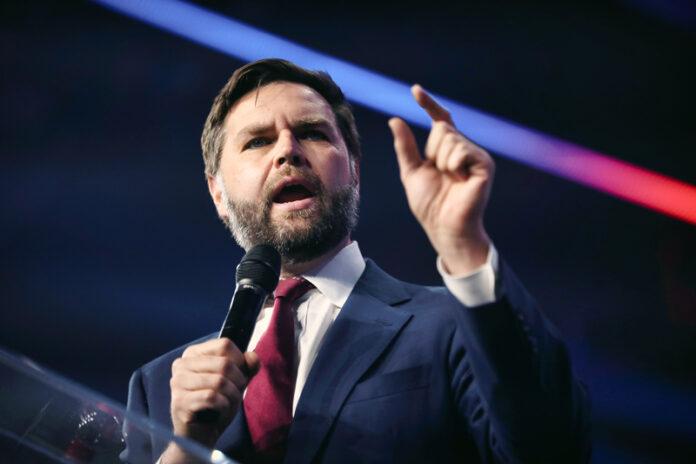
Grace Chong, the Chief Financial Officer and Chief Operating Officer of Steve Bannon’s media company, has publicly criticized Vice President JD Vance on social media, intensifying tensions within conservative political circles.
Chong shared posts on X criticizing the vice president, continuing a contentious relationship between the two figures. Last year, Vance called Chong a “mouth breathing imbecile” after she criticized him for missing a Senate vote.
The recent dispute centers on fraud cases in Minnesota involving billions in federal funds that were stolen. Many defendants in these cases are Somali Americans, turning the prosecutions into a political flashpoint. President Donald Trump called Minnesota a hub of fraudulent money laundering.
On Saturday, Vance stated that Minnesota is a microcosm of immigration fraud in the system. In response, Chong called the statement “word salad.”
Vance praised YouTuber Nick Shirley’s journalism covering the fraud cases. Bannon responded via the Gettr platform, calling for DOJ and FBI Joint Task Force deployment. Chong shared a screenshot of Bannon’s response and posted her own commentary with a photo of Vance captioned: “We are going to do nothing.”
The public feuding reflects broader divisions within Republican ranks as high-profile figures clash over policy and political strategy.
Meanwhile, Vance has been working behind the scenes to maintain relationships within the administration and conservative movement. The vice president has acted as mediator between Trump and Elon Musk during recent tensions between the two.
Vance’s diplomatic efforts come as he positions himself for potential future political ambitions. The vice president is considering a presidential run in 2028, when Trump’s second term would end. Musk’s financial and political support could prove crucial for any campaign Vance might launch.
The Minnesota fraud cases continue to generate political controversy as prosecutors pursue charges related to stolen federal funds. The cases involve state-run programs where billions were allegedly diverted through fraudulent schemes.
Chong and Bannon have pressed for federal law enforcement action beyond the ongoing prosecutions, criticizing what they view as insufficient government response. Their public criticism of Vance reflects frustration with the administration’s handling of the situation.
The dispute highlights competing approaches within conservative circles regarding immigration policy, law enforcement priorities, and government accountability. These tensions have played out increasingly on social media platforms where political figures engage directly with supporters and critics.
Vance’s office has not publicly responded to the recent criticism from Chong and Bannon.
The fractures within the Republican coalition demonstrate the challenges of maintaining unity across diverse factions with varying priorities and strategies. Personal conflicts and policy disagreements have increasingly spilled into public view as prominent figures compete for influence and positioning.
As Trump’s second term progresses, questions about succession and the future direction of the conservative movement have begun shaping political calculations and relationships. Vance’s role as vice president places him at the center of these dynamics as he balances current responsibilities with potential future ambitions.