


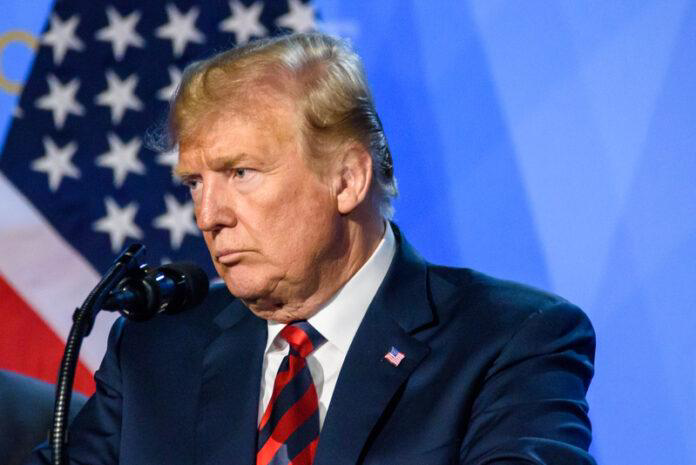
Donald Trump snapped at a reporter during a joint appearance with Ukrainian President Volodymyr Zelensky at Mar-a-Lago on Sunday, calling a question about security guarantees “dumb” as the two leaders met for high-stakes peace negotiations.
The 79-year-old president reacted sharply when asked whether he was prepared to sign a security agreement with Ukraine. “Well, it depends what the security agreement says. What a dumb question,” Trump said, standing beside Zelensky at his Palm Beach, Florida, resort on Sunday afternoon. Trump said nobody knows what the security agreement will say.
Trump continued by insisting there would be a strong agreement with significant European involvement. Trump said European nations very much involved in the peace process, highlighting the multilateral nature of the negotiations. He stressed that European leaders were supportive of the effort and eager to see a resolution to the conflict that has devastated Ukraine and destabilized the region.
The meeting came shortly after Trump spoke with Russian President Vladimir Putin in what he described as a productive conversation. Trump described call with Putin as good and productive and said call with Putin lasted over two hours. The discussion covered extensive ground as both sides work toward a potential settlement to end the war.
Following his meeting with Zelensky, Trump expressed optimism about the negotiations, telling reporters teams getting closer to deal and that they covered 95% of issues during their discussions. Trump said outcome will be clear in few weeks, acknowledging the complexity of the remaining challenges.
Zelensky provided his own assessment of the progress, stating that Zelensky said 20-point peace plan 90% agreed and that Zelensky said security guarantees 100% agreed. The Ukrainian leader emphasized the importance of these guarantees as a cornerstone of any lasting peace settlement.
When pressed on specifics, Trump said territory is thorniest issue in the negotiations. The eastern Donbas region has emerged as a particularly difficult sticking point, with Zelensky said Ukraine has different position on Donbas compared to Russia’s demands.
The diplomatic push came against a backdrop of continued violence. Russia bombed Kyiv one day before meeting, with Russian strikes on Saturday killed at least one person. The timing of the attacks raised questions about Moscow’s commitment to peace, though Trump insisted Putin was serious about reaching an agreement.
In a further complication, Russian Embassy shared AI video of Zelensky, adding to tensions as the peace talks approached a critical juncture.
Trump’s irritation with the press has become a recurring feature of his interactions with journalists, including interactions with reporters Rachel Scott and Yamiche Alcindor. These incidents follow a pattern of confrontational exchanges, particularly with female reporters.
The Sunday meeting included a high-level delegation from the Trump administration. Marco Rubio and Pete Hegseth attended, along with Trump’s son-in-law Jared Kushner and other senior officials. The composition of the U.S. team signaled the administration’s commitment to brokering a deal.
The discussions at Mar-a-Lago represented the latest attempt to forge a path toward ending the war between Russia and Ukraine. The location of the talks at Trump’s private resort underscored the informal yet high-stakes nature of the diplomacy.
Despite the progress claimed by both leaders, significant obstacles remain. The question of territorial control, particularly in the Donetsk region, continues to divide the parties. Russia’s position on these territories and Ukraine’s refusal to cede control of areas it still holds represent fundamental disagreements that must be resolved before any final agreement can be reached.
The 20-point peace plan that Zelensky referenced represents months of behind-the-scenes negotiations between the parties. While details of the plan remain largely undisclosed, the framework appears to address security arrangements, territorial questions, and the mechanisms for implementing any eventual settlement.
Trump’s extended conversation with Putin before meeting Zelensky suggested a coordinated approach to the negotiations. By speaking with both leaders on December 28, 2025, Trump positioned himself as a mediator attempting to bridge the gap between Moscow and Kyiv.
The meetings represented a critical moment in the effort to end the conflict. With both sides claiming significant progress but acknowledging remaining challenges, the coming weeks will determine whether the diplomatic push can succeed where previous efforts have failed.
The presence of European allies in the process adds another dimension to the negotiations. Their involvement in security guarantees and reconstruction efforts will be crucial to any sustainable peace agreement.
As the talks continue, the international community watches closely to see whether Trump’s approach can deliver the breakthrough that has eluded previous attempts at peacemaking. The outcome will have profound implications not just for Ukraine and Russia, but for European security and the broader international order.