


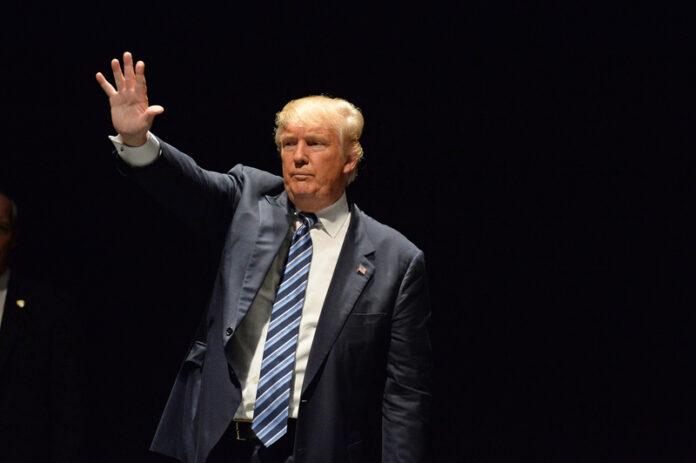
President Donald Trump, 79, struggled visibly as he descended the stairs from Air Force One on Wednesday, January 21, 2026, after arriving in Davos, Switzerland, for the World Economic Forum. The president appeared exhausted following a flight marred by mechanical problems and significant delays that added nearly three hours to his journey.
The president’s trip began with an electrical issue on Air Force One that forced the aircraft to return to Washington, D.C., on Tuesday night. After switching planes, Trump departed again just after midnight, finally touching down at Zurich Airport on Wednesday morning. From there, he traveled by helicopter to Davos for his scheduled address to world leaders.
Video footage captured Trump moving carefully down the aircraft stairs, gripping the handrail as he made his way slowly to the tarmac before he boarded a nearby helicopter for the final leg of his journey.
Further video posted to social media by White House Communications Adviser Margo Martin showed the president walking up a red carpet at the World Economic Forum venue, where he appeared to be breathing heavily and struggling to walk in a straight line. The footage fueled immediate speculation about the president’s physical condition following the grueling overnight journey.
Trump’s appearance at Davos came at the end of an exceptionally demanding stretch of public engagements. On Monday night, he attended the college football championship game, an event that kept him out past 2 a.m. On Tuesday, he conducted a 104-minute White House press briefing before preparing for his international trip.
During his speech at the World Economic Forum, observers noted that the president’s voice sounded hoarse and he appeared to have bags under his eyes. The physical toll of the schedule was evident as Trump addressed the assembled world leaders on topics including trade policy and international relations.
The president’s visible fatigue has drawn attention to concerns about his demanding schedule. According to reports, staff counseled Trump to keep his eyes open during public events, while cabinet members have been urged to shorten their presentations during meetings.
White House Press Secretary Karoline Leavitt, CNN correspondent Kaitlan Collins, and CNN’s Alayna Treene were among those whose names appeared in reports about the challenging circumstances of the trip.
The Switzerland trip also featured a notable geographical confusion during Trump’s speech. The president repeatedly said “Iceland” when he appeared to mean Greenland, making the error three times during his address. This came as Trump continues to threaten to annex Greenland, an autonomous territory of Denmark, a move that has strained relations with European allies and raised questions about NATO cohesion.
Following the challenging international journey, Chief of Staff Susie Wiles announced a significant shift in the president’s travel plans. Trump will reduce his international travel commitments and instead focus on domestic tours ahead of the November midterm elections.
Wiles announced aboard Air Force One that the president will visit a new city every week, outlining the new strategy that will see Trump crisscrossing the country rather than making frequent trips abroad.
The domestic tour schedule will include a trip to Iowa, where Trump plans to deliver a speech focused on economic issues. The shift represents a recalibration of priorities for an administration that had initially planned a more robust international presence during its second term.
The decision to curtail international travel comes as the president faces mounting scrutiny over his physical stamina and mental acuity. Critics have been monitoring his public appearances closely, watching for what they describe as “extra-long blinks” and other signs of fatigue or confusion.
During Tuesday’s lengthy White House briefing, Trump rambled about his baseball career, discussing his time playing at Cunningham Park. He also discussed mental institutions, specifically mentioning Creedmoor Psychiatric Hospital, in a digression that lasted several minutes.
The president’s age makes him the oldest sitting president in American history, surpassing the record previously set by Joe Biden. At 79, Trump faces inevitable questions about his capacity to handle the demanding physical and mental requirements of the presidency, particularly when it involves extensive international travel and time zone changes.
The World Economic Forum gathering in Davos typically serves as a crucial venue for American presidents to engage with global business leaders and foreign government officials. The annual meeting brings together heads of state, corporate executives, and international policymakers to discuss economic trends and global challenges.
The mechanical problems that plagued Air Force One added an unexpected challenge to what was already a demanding trip. The decision to return to Washington and switch planes, while prudent from a safety standpoint, significantly disrupted the president’s rest schedule and added hours of additional travel time.
The new focus on domestic travel reflects both practical considerations about the president’s stamina and political calculations about the upcoming midterm elections. Midterm elections historically pose challenges for the party controlling the White House, and Trump’s team appears to be prioritizing direct engagement with American voters over international diplomacy during this crucial period.
The contrast between Trump’s labored movements in Davos and the energetic image he typically projects on the campaign trail was stark. The visible signs of exhaustion—the slow descent from the aircraft, the heavy breathing, the difficulty maintaining a straight walking path—provided ammunition for critics who have questioned whether the president can sustain the pace required for effective governance.
As the administration pivots toward a more domestically focused travel schedule, the president’s ability to balance the demands of governing with the physical realities of aging remains a central question. The decision announced by Wiles suggests that Trump’s advisers recognize the need to manage his schedule more carefully, even as they frame the shift in terms of electoral strategy rather than physical limitations.