


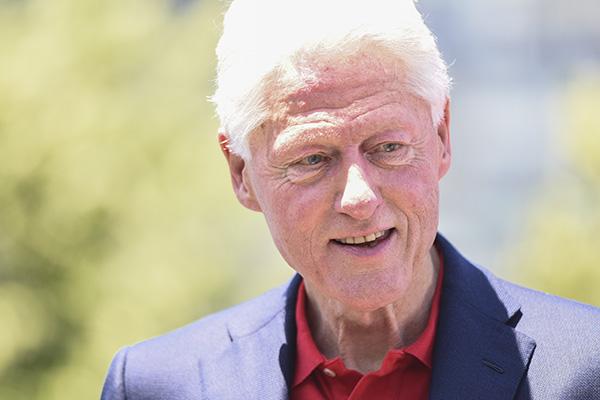
The House Oversight Committee convened Wednesday, January 21, 2026, to mark up contempt resolutions against former President Bill Clinton and former Secretary of State Hillary Clinton for defying subpoenas related to the committee’s investigation into Jeffrey Epstein.
Chairman James Comer is leading the effort to hold the Clintons in contempt of Congress after they failed to appear for depositions despite a bipartisan subpoena issued on January 14, 2026. “The Clintons are not above the law, and the House Oversight Committee will move to hold them in contempt of Congress,” Comer said in a statement.
The contempt resolution is expected to advance out of the committee Wednesday afternoon, setting up a full House floor vote in the coming days. A simple majority is needed to pass the contempt resolution, though it does not require passage in the Senate. Speaker Mike Johnson can afford to lose just two Republican votes before a third GOP defector could upset passage.
If the resolution passes, it would be referred to the U.S. Attorney for the District of Columbia for possible criminal prosecution. Contempt of Congress could result in a fine or incarceration, making this a significant escalation in the clash between House Republicans and the former first couple.
The subpoenas were issued to 10 individuals as part of the committee’s investigation into Epstein and his associate Ghislaine Maxwell. Epstein killed himself in a jail cell in 2019 while awaiting trial on sex trafficking charges. Republicans have pointed to Bill Clinton’s travels on Epstein’s private aircraft in the early 2000s as justification for seeking his testimony.
The Clintons have consistently insisted that the subpoena is without legal merit. Their attorney, David Kendall, has argued that the Clintons have no information relevant to the committee’s investigation and should not be required to appear for in-person testimony.
On January 13, 2026, the Clintons released written declarations to the Oversight Committee. Both Clintons denied any knowledge of Epstein’s crimes in those statements. Bill Clinton denied ever visiting Little St. James Island, Epstein’s private estate in the U.S. Virgin Islands.
In his declaration, Bill Clinton acknowledged traveling on Epstein’s private aircraft between 2002 and 2003 to visit Clinton Foundation projects and attend conferences and meetings. The Justice Department released photographs of the former president with Epstein and Maxwell last month, showing them together during international travels during that period.
Comer rejected an offer from Clinton attorneys for a conversation with only Bill Clinton in New York. The proposal would have included Comer, Ranking Member Robert Garcia, and two staff members from each side.
Angel Ureña, a Clinton spokesperson, pushed back against Comer’s characterization of the negotiations. “We never said no to a transcript,” Ureña said in a statement to ABC News. Ureña added that interviews are on the record and under oath, suggesting the dispute was not about the format of testimony.
Neither Bill Clinton nor Hillary Clinton has been accused of wrongdoing in connection with Epstein’s crimes. No Epstein survivor has made a public allegation against the Clintons regarding inappropriate behavior or wrongdoing related to Epstein’s criminal activities.
The contempt proceedings represent a rare use of congressional power. Contempt of Congress charges have historically been reserved as a last resort when witnesses refuse to cooperate with legislative investigations. Recent precedents include Peter Navarro and Steve Bannon, who were convicted of contempt charges for defying congressional subpoenas.
The financial relationship between Epstein and the Clintons dates back decades. Epstein donated to Bill Clinton’s presidential campaign. He also donated to Hillary Clinton’s Senate campaign when she ran for office in New York.
In their written declarations, both Clintons stated they could not recall specific details about their interactions with Epstein during the time he attended events or may have been photographed at White House functions. Bill Clinton acknowledged that Epstein may have been among the people photographed with him during his time in office but said he did not recall encountering Epstein or any specific interaction with him while serving as president.
The timing of the contempt vote has drawn criticism from Democrats. The Clintons’ legal team has argued that the committee’s focus on their testimony undermines the investigation’s credibility.
In his written declaration, Bill Clinton explained his reasoning for accepting Epstein’s offer of private air travel. After leaving office, Clinton devoted his time to the Clinton Foundation, and Epstein offered a plane large enough to accommodate Clinton, his staff, and his Secret Service detail. Clinton stated he did not recall speaking to Epstein for more than a decade prior to Epstein’s 2019 arrest.
Both Clintons also denied any involvement in criminal investigations or prosecutions of Epstein or Maxwell, either while in office or afterward. Hillary Clinton stated in her declaration that she did not direct, oversee, or participate in the handling of the investigations or prosecutions of either Epstein or Maxwell.
The committee’s investigation into Epstein comes as Congress continues to seek answers about how the financier was able to commit crimes for years despite multiple interactions with law enforcement. The bipartisan nature of the original subpoena vote reflects broad congressional interest in understanding the failures that allowed Epstein’s crimes to continue.
If the contempt resolution advances to the House floor, Democrats will face a difficult political decision about whether to defend the Clintons or support accountability measures. The vote could expose divisions within the Democratic caucus between those loyal to the party’s former leaders and those prioritizing transparency in the Epstein investigation.
The proceedings mark an extraordinary moment in American political history, as Congress moves toward using one of its most powerful enforcement mechanisms against a former president. While former presidents have occasionally appeared before Congress voluntarily, none has ever been successfully compelled to testify through contempt proceedings.