


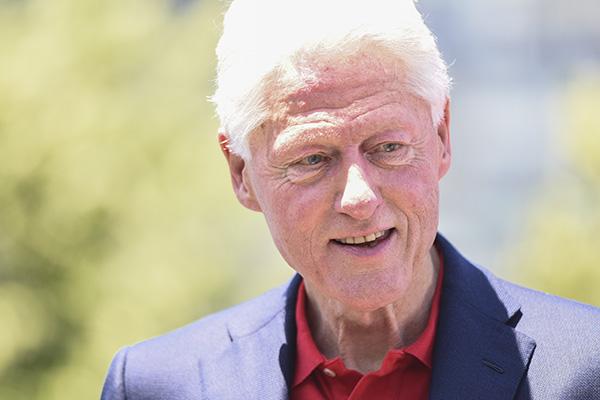
Former President Bill Clinton issued a stark warning about American freedoms in the wake of the fatal shooting of Alex Pretti, a 37-year-old VA nurse who was shot dead by Border Patrol during a protest against ICE in Minneapolis, Minnesota on Saturday.
Clinton posted a statement to X on Sunday evening, addressing what he described as a pivotal moment in American history. “Over the course of a lifetime, we face only a few moments where the decisions we make and the actions we take will shape our history for years to come,” Clinton wrote.
In his statement, Clinton referenced both Pretti’s death and that of Renee Good, calling the actions of federal agents unacceptable. He urged Americans to stand up for democratic principles, writing: “It is up to all of us who believe in the promise of American democracy to stand up, speak out, and show that our nation still belongs to We the People.”
The statement comes as tensions escalate in Minnesota following the shooting during the protest against ICE operations. The Department of Homeland Security confirmed that investigators are reviewing bodycam footage of the incident, and multiple angles of the shooting exist, according to DHS officials.
President Donald Trump and Minnesota Governor Tim Walz spoke Monday morning, with Walz calling Trump to request federal cooperation in investigating the shooting. Trump agreed to share evidence with the state for an independent probe. White House press secretary Karoline Leavitt addressed the situation during a press conference but did not commit to releasing the body camera footage publicly.
The federal law enforcement presence in Minnesota has become a focal point of controversy. U.S. District Judge Kate Menendez is holding a hearing on restraining ICE operations in the state. The dramatic increase in federal agents has raised concerns among state officials and residents alike. Previously, 80 ICE agents operated in Minnesota, but that number has surged to approximately 4,000 federal agents currently deployed in the state.
Border czar Tom Homan’s role in the expanded enforcement operations has drawn scrutiny as the administration pursues aggressive immigration enforcement policies. The deployment of thousands of additional federal agents to Minnesota represents a significant escalation compared to previous ICE operations in the state.
Clinton’s intervention in the controversy occurs against the backdrop of his own political challenges. The House held Clinton and Hillary Clinton in contempt related to Jeffrey Epstein. Despite this, the former president chose to weigh in on the Minnesota situation, framing it as a critical test for American democracy and civil liberties.
Georgia Senator Raphael Warnock also addressed the situation, characterizing the federal actions as troubling for democratic norms. The shooting has prompted responses from political figures across the spectrum as questions mount about the scope and conduct of federal immigration enforcement operations.
The Trump administration has pursued expansive immigration enforcement policies since taking office in early 2025. On January 20, 2025, Trump signed a birthright citizenship order as part of his inaugural day actions. The administration also withdrew from the Paris Climate Treaty and pardoned 1,500 January 6 rioters on February 24, 2025, demonstrating a pattern of sweeping executive actions.
The Federal Communications Commission, under chair Brendan Carr, has launched investigations into NBC, NPR, PBS, and CBS. The FCC is also investigating Comcast over DEI policies, raising concerns among media freedom advocates about the administration’s approach to press oversight and regulation.
Judge Menendez is expected to rule soon on whether to impose restrictions on ICE activities in Minnesota. The hearing on Monday included arguments over the appropriate balance between federal immigration enforcement authority and state concerns about civil liberties and public safety. Minneapolis city attorneys argued that the massive federal presence is creating widespread fear among residents and causing lasting harm to communities.
Federal attorneys defended the deployment of federal agents, claiming Minnesota was not adequately enforcing federal immigration law. When Judge Menendez questioned whether the same enforcement goals could be achieved with fewer agents, they noted that 80 agents had previously operated in the state.
The legal battle over federal authority and state sovereignty in immigration enforcement reflects broader tensions in American federalism. States have historically played significant roles in law enforcement, but immigration has long been considered primarily a federal responsibility. The current dispute tests the boundaries of that relationship, particularly when federal operations occur at an unprecedented scale within state borders.
Clinton’s warning about giving away freedoms carries particular weight given his experience with civil liberties debates during his own presidency. The former president’s statement emphasizes the irreversibility of certain democratic backsliding, suggesting that rights surrendered in moments of crisis may prove difficult or impossible to reclaim. His reference to American history places the current moment in the context of the nation’s founding principles and the fragility of democratic institutions.
The political dynamics surrounding the Pretti shooting extend beyond Minnesota’s borders. The incident has become a flashpoint in national debates over immigration enforcement, federal authority, and the appropriate use of force by law enforcement. As investigations continue and legal proceedings unfold, the case is likely to shape both policy discussions and public opinion regarding the balance between security concerns and civil liberties.
Judge Menendez indicated she would issue a decision promptly, acknowledging the urgency of the situation while emphasizing the need for careful legal analysis. Her ruling could set important precedents for how federal immigration enforcement operations are conducted, particularly when state and local governments object to the methods or scale of federal activities within their jurisdictions.
The Trump administration’s approach to immigration enforcement represents a significant departure from previous norms in terms of both scope and intensity. The deployment of 4,000 federal agents to Minnesota for immigration enforcement purposes, compared to the 80 ICE agents previously in the state, is historically unusual and has raised questions about resource allocation, strategic priorities, and the relationship between federal and state governments in the American constitutional system.
As the situation in Minnesota continues to develop, national attention remains focused on how federal authorities, state officials, and the courts will navigate the complex legal and political questions raised by aggressive immigration enforcement operations. The outcome may have lasting implications for federal-state relations, civil liberties protections, and the conduct of immigration enforcement operations across the country. Clinton’s intervention adds another dimension to the debate, bringing the weight of a former president’s perspective to what he characterizes as a defining moment for American democracy and constitutional freedoms.