


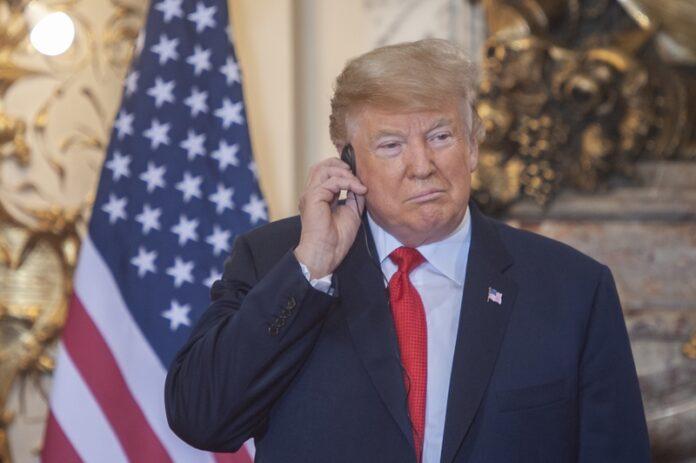
A medical professor from Washington State University’s Elson S. Floyd College of Medicine, Bruce Davidson, has proposed that President Donald Trump may have suffered a stroke in 2025. Davidson made this assertion based on noticeable behavioral changes and physical symptoms Trump has exhibited in recent months. The White House has strongly denied these claims, dismissing them as unfounded and politically driven.
Davidson discussed his theory on The Court of History podcast, hosted by biographer Sidney Blumenthal and historian Sean Wilentz from Princeton University. The professor suggested that the stroke might have occurred on the left side of Trump’s brain, which controls the right side of the body, and estimates that the event could have happened six months ago or earlier.
“I think his stroke was on the left side of the brain, which controls the right side of the body,” Davidson shared with the podcast hosts. He backed this theory with several observable alterations in Trump’s physical behavior.
Davidson cited videos showing Trump moving his feet in a shuffle, contrasting with older footage of the president confidently striding across golf courses. He also mentioned incidents of Trump holding his right hand with his left and fumbling over words earlier in 2025, although he acknowledged that Trump’s speech seems to have improved recently.
Davidson also noted what he believes to be instances of excessive daytime sleepiness, a condition known as hypersomnolence seen commonly in stroke patients. Trump has been reportedly seen appearing to doze off in public, including during White House events. Furthermore, Davidson identified footage of Trump using his left hand to hold the railing while descending the steps of Air Force One, despite being right-handed, as consistent with having had a stroke on the left side of the brain.
Davidson did not specify the type of stroke he believes Trump may have suffered. However, he stated that, if his evaluation is accurate, it appears that Trump has made a significant recovery.
These claims follow months of public speculation about Trump’s health. The president has often been seen in public with visible bruises on his hands, which he has tried to hide with makeup. Trump was also diagnosed with chronic venous insufficiency, a condition causing lower leg swelling, which the White House confirmed in July 2024. To manage the swelling, Trump wears compression socks and has admitted to taking more aspirin than advised by his doctors.
In an interview with The Wall Street Journal in January, Trump openly discussed his health issues, including his use of aspirin for cardiac prevention. He also clarified that he underwent a CT scan, not an MRI, to rule out cardiovascular issues, contradicting initial reports about advanced imaging conducted following his annual physical exam. According to Dr. Sean Barbabella, the scan revealed no abnormalities.
Trump expressed regret for undergoing the advanced imaging as it further fueled speculation about his health. The medical evaluation was conducted in October 2025 at Walter Reed National Military Medical Center, with an official note from October 10 confirming the follow-up but providing limited details about the procedures carried out.
Another episode that sparked public interest occurred on September 11, 2025, when Trump appeared at an event with one side of his face seeming droopy. Social media users speculated that this could indicate a stroke, but no diagnosis was confirmed. Facial drooping is a common symptom of stroke, which occurs when blood flow to a part of the brain is disrupted, affecting muscle control on one side of the face.
In addition to physical symptoms, Davidson suggested that Trump’s behavior during his second term could also align with post-stroke changes. He conveyed that strokes are serious, life-threatening events that can trigger a variety of patient responses, ranging from humility and gratitude to euphoria or increased risk-taking.
“Some people respond with humility and gratitude. Others become euphoric—’I was at the cliff of death, and now I’m back,'” Davidson said. “And some think, ‘That was my chance to die, and I didn’t—so now I’m going to do everything I wanted to do, because the next one may be fatal.'”
The White House swiftly refuted Davidson’s claims. Press Secretary Karoline Leavitt asserted that Trump remains in excellent health and dismissed the allegations as politically motivated attacks. Leavitt described the allegations as “absolute bullshit” and labeled Davidson as a left-wing nut job.
In a statement, Leavitt highlighted Trump’s dedication to work and his accessibility to the public, comparing it to the health concerns surrounding former President Joe Biden during his term in office. She accused the media of promoting false narratives amidst declining public trust in journalism.
Health queries surrounding aging political leaders have become a common theme in American politics. Biden, who was 82 years and seven months old when he left office, faced consistent questions about his physical and mental fitness. Trump, who will be 82 years and seven months old by the end of his current term if he serves it completely, is set to become the oldest president in U.S. history.
The bruising on Trump’s hands first garnered widespread attention in February 2025, when discoloration on his right hand was visible through makeup during an Oval Office meeting with French President Emmanuel Macron. At the time, Leavitt attributed the bruising to Trump’s frequent handshaking and daily aspirin use, describing him as a man of the people who meets more Americans than any other president in history.
Months later, Barbabella explained during a July press briefing that the bruising was consistent with minor soft tissue irritation from frequent handshaking combined with aspirin use, part of a standard cardiovascular prevention regimen.
Despite the White House’s denials and medical explanations, public scrutiny of Trump’s health continues. The absence of detailed medical records and the president’s own inconsistent statements about his imaging procedures have only fueled speculation. The discrepancy between initial reports of an MRI and Trump’s later correction that it was actually a CT scan raised additional questions about transparency.
Davidson’s claims, while speculative without direct access to the president’s medical records, add to a growing list of health-related concerns that have surfaced during Trump’s second term. The visible physical symptoms — from hand bruising to swollen ankles to apparent fatigue during public events — have been documented by multiple news outlets over several months.
Chronic venous insufficiency, with which Trump has been diagnosed, occurs when veins in the legs fail to efficiently return blood to the heart. This can cause swelling, discomfort, and visible changes in the lower extremities. While generally not life-threatening, the condition is more common in older adults and can signal broader cardiovascular issues if left unmanaged.
Trump’s admission that he takes more aspirin than recommended also raises medical questions. While low-dose aspirin is commonly prescribed for cardiovascular prevention, taking excessive amounts can increase the risk of bleeding and bruising — potentially explaining the visible marks on the president’s hands that have drawn so much attention.
As Trump nears the midpoint of his second term, questions about his health continue unabated. Whether Davidson’s stroke theory holds any truth or is merely unfounded speculation, the ongoing debate underscores broader concerns about presidential health transparency and the physical demands placed on the nation’s oldest leaders.