


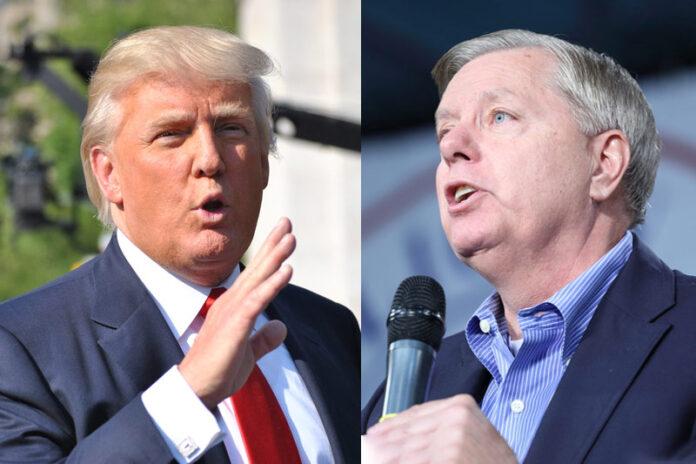
Republican Senator Lindsey Graham urged President Donald Trump to assassinate Iran’s Supreme Leader during a Fox News appearance on Sunday, January 13, 2026, as massive protests spread across Iran amid economic collapse and deadly government crackdowns.
Graham appeared on “Sunday Morning Futures” with Maria Bartiromo, where he called Ayatollah Ali Khamenei a “modern-day Hitler” and advocated for killing the Iranian leader.
The South Carolina senator told Fox viewers he would “kill the leadership that are killing the people” in Iran. Graham framed the proposed assassination as necessary to end state-sponsored terrorism throughout the Middle East. He compared Khamenei to historical tyrants and denounced him as a “religious Nazi,” urging Trump to act as protests engulfed all 31 provinces of Iran with an estimated death toll exceeding 500.
The assassination proposal immediately split Trump’s coalition. Steve Bannon, the MAGA influencer and former White House strategist, publicly criticized Graham as “gross” and warned that Israeli or American involvement could strengthen Tehran’s grip on power rather than weaken it. “Right now, I think any kind of Israeli or American involvement in Tehran just strengthens the regime,” Bannon said on his podcast, calling Graham’s rhetoric “sick.”
Economic disaster drove the nationwide protests after the rial collapsed to record lows against the dollar. The currency crisis left ordinary Iranians struggling to afford basic necessities as food prices soared. Human rights organizations report more than 500 deaths and over 10,600 arrests as Iranian security forces conducted a near-total internet blackout to limit information flow about the government’s violent response.
Graham cited Venezuela as a precedent when urging Trump to remove Khamenei, referencing the recent U.S. military operation that captured President Nicolás Maduro on January 3, 2026. The senator’s remarks came as Trump told reporters the United States military is considering “very strong options” regarding Iran. “The military is looking at it, and we’re looking at some very strong options. We’ll make a determination,” Trump said aboard Air Force One.
International law prohibits targeted killings outside armed conflict, applying to both military and intelligence operations. Legal scholars have debated whether assassination of foreign leaders during peacetime violates international norms, particularly when no state of war exists between nations. The United States has historically maintained policies against political assassination, though exceptions occurred when officials characterized targets as imminent threats.
The Iranian uprising represents the most significant challenge to the Islamic Republic’s authority since 1979. Demonstrations began on December 28 at Tehran’s Grand Bazaar over the rial’s collapse and quickly spread to urban and rural areas nationwide. The government’s internet shutdown suggests officials view the unrest as an existential threat to regime stability, with protesters chanting “death to the dictator” in reference to Supreme Leader Khamenei.
Bannon’s warning about American involvement reflected concerns among foreign policy analysts that external intervention might rally Iranians around their government despite widespread discontent. “Make Iran great again? We don’t care about Iran, and we don’t care about making Iran great again,” Bannon said, criticizing what he called Graham’s “sick” approach to foreign policy.
The rial collapse devastated savings and purchasing power for Iranian citizens already facing limited economic prospects due to international sanctions and domestic mismanagement. Rising food prices hit lower-income families particularly hard, creating conditions that historically preceded major political upheaval. Six hospitals in Tehran alone recorded 217 protester deaths on the night of January 8, mostly from live ammunition.
Trump’s “very strong options” statement left unclear whether his administration would seriously consider Graham’s assassination proposal or pursue conventional diplomatic and economic pressure. The president has indicated Iranian officials contacted him seeking negotiations, though he warned “we may have to act before a meeting.” Options reportedly include military strikes, cyberweapons, expanded sanctions, and internet restoration efforts.
Graham’s Hitler comparisons followed a pattern in American political rhetoric where officials characterize foreign adversaries through World War II references. The comparison to Hitler specifically has been applied to various leaders over decades, though repeated use has led analysts to question whether such rhetoric maintains its intended impact or becomes diluted through overuse in political discourse.
The Graham-Bannon split illustrated broader debates within Trump’s coalition about America’s role in promoting regime change abroad. While both supported aggressive foreign policies previously, they differ on whether direct military action against Iranian leadership would advance American interests or create unpredictable consequences harming strategic objectives in the Middle East region.
Legal experts emphasized that international law’s prohibition on targeted killings outside armed conflict represents a fundamental principle designed to prevent political assassinations from becoming normalized statecraft tools. The restriction aims to maintain limits on violence between nations even when diplomatic relations break down. Violations could invite similar actions by other nations against American officials or allies.
The massive detention campaign with over 10,600 arrests could further inflame tensions if prisoners face torture or lengthy sentences. Iran’s judicial system has historically imposed harsh penalties against political dissidents, and the current arrests’ scale suggests authorities view the protest movement as requiring comprehensive suppression rather than limited response to economic grievances.
Graham’s reference to ending state-sponsored terrorism echoed longstanding American accusations that Iran funds and directs militant groups throughout the Middle East. These charges formed a central component of U.S. policy toward Iran for decades, though officials pursued various strategies—from sanctions to diplomatic engagement to military pressure—without achieving consensus on the most effective approach for containing Iranian influence.
As reports emerged of hundreds of deaths across Iran, the international community faced questions about responding to government crackdowns while protests continued across all 31 provinces. The unrest’s scale suggested deep-seated dissatisfaction with Iran’s leadership extending beyond typical political opposition, potentially representing a fundamental challenge to the Islamic Republic’s legitimacy in citizens’ eyes after nearly five decades of clerical rule.