


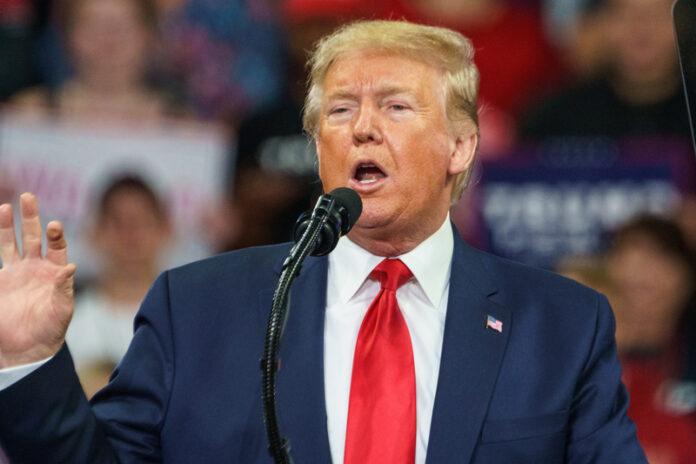
President Donald Trump suggested on Saturday that military action could be taken against Mexico, escalating rhetoric following the dramatic capture of Venezuelan leader Nicolás Maduro. The 79-year-old president made the remarks during an appearance on Fox & Friends, alleging that Mexico is controlled by drug cartels rather than its democratically elected government.
“Something’s going to have to be done with Mexico,” Trump told Fox host Griff Jenkins, making a similar allegation he had leveled against Maduro and Venezuela before ordering the military strike that resulted in the Venezuelan leader’s capture. Trump claimed Mexican President Claudia Sheinbaum, 63, has repeatedly rejected offers of American military assistance to combat drug cartels operating within her country’s borders.
The president characterized Sheinbaum as “a good woman” but insisted the cartels, not the president herself, control Mexico. Trump said Sheinbaum has told him she does not want U.S. military aid. He then posed a direct question: Does Sheinbaum want the United States to take out the cartels?
Trump justified his comments by citing the drug crisis in the United States, stating that drugs kill hundreds of thousands of Americans and arguing that decisive action is necessary to stem the flow of narcotics across the southern border.
The Mexican government responded swiftly to Trump’s Venezuela operation. Sheinbaum condemned the U.S. military action in Venezuela and called for ceasing aggression against the Venezuelan government.
Speaking from Mar-a-Lago, Trump also directed threatening language toward Colombian President Gustavo Petro, 65. Trump said of the Colombian leader that he makes cocaine, adding that Petro needs to watch his ass. The president went further, predicting that Petro is not going to be doing it very long.
The warnings came as part of a broader pattern of threats against Latin American nations following the Venezuela operation. Secretary of State Marco Rubio, 54, joined Trump in targeting Cuba, claiming the island nation tried to colonize Venezuela from a security standpoint. Trump characterized Cuba as a failing nation and suggested it would eventually require U.S. intervention.
Cuban President Miguel Díaz-Canel and his government have maintained close ties with the Maduro regime in Caracas. Trump revealed that a lot of Cubans were killed during the Venezuela operation. The president announced that the United States will temporarily run Venezuela until a safe transition can be arranged.
The U.S. military strike in Venezuela on January 3, 2026, resulted in the capture of both Maduro and his wife, Cilia Flores. The operation marked a dramatic escalation in U.S. intervention in Latin America.
Trump’s comments about Mexico carry particular weight given the country’s status as a key U.S. ally and trading partner. The president’s suggestion of potential military action represents a significant departure from traditional diplomatic relations between the neighboring countries.
The drug cartel situation in Mexico has been a longstanding security concern for both nations. Mexican cartels control major trafficking routes that funnel narcotics into the United States, contributing to the opioid crisis and other drug-related problems. However, previous Mexican administrations have consistently rejected U.S. military intervention on Mexican soil, viewing such proposals as violations of national sovereignty.
The Havana government faces its own challenges, with Cuba experiencing severe economic difficulties and social unrest.
Trump emphasized his friendly relationship with the Mexican leader while simultaneously questioning her control over her own country. This dual approach reflects Trump’s pattern of personalizing diplomatic relationships while maintaining aggressive policy positions.
Vice President Delcy Rodríguez remains in Venezuela following Maduro’s capture. The administration’s temporary governance of Venezuela raises questions about international law and the precedent being set for future interventions in the region.
The broader implications of Trump’s Saturday comments extend beyond immediate security concerns. By publicly threatening military action against multiple sovereign nations, the president has created uncertainty about U.S. intentions throughout Latin America. The Venezuela operation demonstrated that such threats are not merely rhetorical, raising the stakes for regional leaders trying to navigate relationships with Washington.