


An assault on two villages in Kwara state, Nigeria, by armed assailants resulted in the deaths of at least 162 people, with some reports suggesting the death toll could be as high as 170. This information was relayed by Mohammed Omar Bio, a Member of Parliament, while Amnesty International and Reuters also cited a death toll of around 170.
The attackers targeted the villages of Woro and Nuku in the Kaiama region, taking villagers hostage and executing them. As they retreated, they set fire to homes and businesses. The group behind the attack has not yet claimed responsibility.
Kaiama regional politician, Saidu Baba Ahmed, stated that security operations were ongoing to locate survivors in the vicinity. He was on the ground assisting military personnel in the recovery process and searching the surrounding areas.
The leader of the village was unaccounted for after the incident. As the violent attack progressed, many villagers with gunshot injuries fled into the surrounding bushland.
According to survivors, the attackers demanded that the villagers accept Sharia law. The villagers resisted, which led the attackers to respond with gunfire.
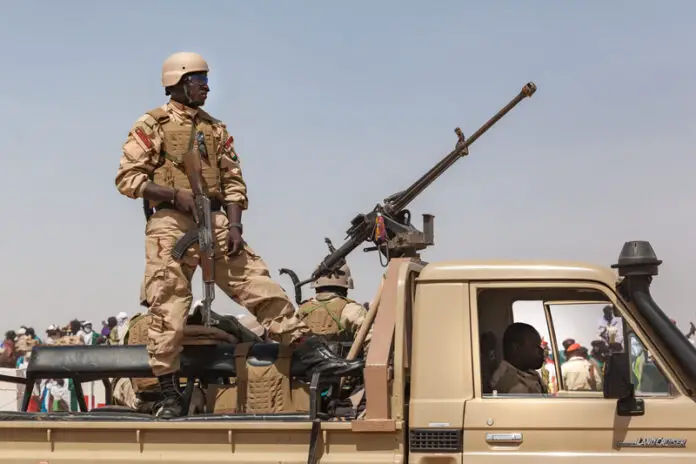
In response to the attack, President Bola Ahmed Tinubu ordered the deployment of an army battalion to the Kaiama district. The military will spearhead “Operation Savannah Shield,” a new initiative to safeguard local communities. Tinubu described the attack as “cowardly and barbaric,” highlighting the villagers’ resistance against hardline rule.
AbdulRahman AbdulRazaq, Governor of Kwara state, labeled the attacks as cowardly acts carried out by terrorists frustrated by counter-terrorism measures in place across the state.
Amnesty International criticized the security failures that allowed the attack to happen, noting that the assailants had been sending warning letters to villagers for over five months prior to the assault.
Earlier this month, another attack occurred in Doma village, Faskari area of Katsina state, where gunmen killed at least 13 people, as reported by police spokesman Abubakar Sadiq Aliyu. Local government officials suggest that the death toll could be higher, with some sources indicating over 20 fatalities.
Just last week, armed extremists in the northeast killed at least 36 people in separate attacks. In January, 177 churchgoers were kidnapped from three churches in Kurmin Wali, Kaduna State, with 166 of them released in early February, according to the Christian Association of Nigeria.
Nigeria is currently dealing with numerous security crises, with groups linked to the Islamic State active in the country’s northern regions.
Last month, the Nigerian military announced a coordinated offensive against terrorist groups in Kwara state. The military said their operations had neutralized or killed 150 individuals and significantly degraded the sustainment capability of the terrorists.
Due to the escalating violence, local authorities in Kwara state imposed curfews and schools were closed for several weeks before reopening on Monday.
The alarming rise of violence in Nigeria has caught international attention. President Donald Trump has criticized Nigeria for failing to protect Christians, designating it a “Country of Particular Concern” for religious freedom in October 2025. He stated that “Christianity is facing an existential threat in Nigeria” and that “thousands of Christians are being killed.”
On February 3, 2026, Gen. Dagvin Anderson, head of U.S. Africa Command, announced the deployment of a small U.S. military team to Nigeria, following discussions with President Tinubu. This move comes after U.S. forces conducted airstrikes on Islamic State-affiliated militants in Nigeria on December 25, 2025.
Kwara state, located in Nigeria’s central region, has been increasingly targeted by armed factions who raid villages, kidnap locals, and steal livestock. The state borders Niger state, which also suffers from rising attacks.
The assault on Woro and Nuku marks a significant episode in Nigeria’s ongoing security crisis. Despite claims of progress in combating armed groups, Nigeria continues to experience mass casualty attacks.
Many Nigerians, both in the northern and southern regions, have expressed dissatisfaction with the government’s handling of the violence. Critics argue that politics often overshadow urgent security issues as communities continue to endure deadly attacks and kidnappings.