


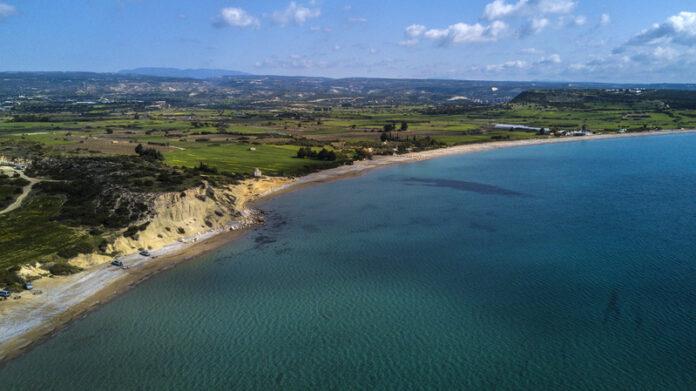
Authorities in Cyprus have confirmed that a body discovered on Avdimou beach has been identified as Vladislav Baumgartner, a Russian businessman who once served as CEO of Uralkali, one of the world’s largest potash producers. The identification came through DNA analysis after the body was found in a semi-destroyed state, requiring the involvement of an independent expert from abroad.
Baumgartner, 56 years old, was reported missing from his home in Limassol, Cyprus, on January 7, 2026. His body was discovered on January 15, 2026, on the beach located within the British Sovereign Base Areas on the Mediterranean island. The British Sovereign Base Areas police, who maintain jurisdiction over the territory, stated that an investigation into the circumstances and cause of death is ongoing. Relatives have been notified of the identification.
According to the investigation, Baumgartner had been staying in an apartment above a business in Limassol. On the day of his disappearance, he took a taxi to the Pissouri coastal area, where he intended to follow a rock climbing route. The circumstances surrounding his death remain under investigation, with authorities working to determine whether the incident was accidental or involved other factors.
The discovery of Baumgartner’s body has drawn international attention, in part because around the same time as Baumgartner’s disappearance, Alexey Panov, a Russian diplomat, died at the Russian embassy. The embassy characterized the diplomat’s death as a suicide, though the proximity of the two deaths has sparked speculation about potential connections.
Baumgartner became internationally prominent in September 2013 when Belarusian authorities placed him under house arrest following his detention at Minsk airport. He had been traveling for meetings when he was arrested in connection with a dispute between Uralkali and its Belarusian partner, state-owned Belaruskali. The businessman was charged with harming the Belarusian economy, with authorities alleging 100 million dollars in damage.
The charges stemmed from Uralkali’s decision to pull out of a joint venture with Belarusian Potash Co. The partnership had been responsible for exporting potash, a key ingredient in fertilizer, and the joint venture accounted for approximately a quarter of the world’s potash at the time. Uralkali accused Belarus of conducting independent exports in violation of their agreement, prompting the Russian company’s withdrawal from the arrangement.
The dissolution of the partnership had significant ramifications for the global potash market. The withdrawal raised fears of a price war, as the joint venture had been instrumental in maintaining market stability and pricing coordination. Belarusian President Alexander Lukashenko claimed that Uralkali and Baumgartner’s actions harmed his country’s economy, leading to the criminal charges against the executive.
Following his detention in Belarus, Baumgartner was released two months later and extradited to Russia, where prosecutors launched an abuse of office probe against him. The case drew international scrutiny, with many observers viewing it as politically motivated amid strained relations between Moscow and Minsk. The charges were ultimately dropped in 2015, allowing Baumgartner to resume his business activities.
After the conclusion of the legal proceedings, Baumgartner returned to senior business roles in Russia’s corporate sector. He had been living in Cyprus for several years before his disappearance, having established residence on the island nation.
The 2013 dispute that led to Baumgartner’s arrest represented one of the most significant confrontations in the post-Soviet business landscape. Uralkali, as one of the world’s largest potash producers, wielded considerable influence over global fertilizer markets. The company’s decision to abandon its partnership with Belaruskali disrupted established trading patterns and created uncertainty about pricing and supply for agricultural producers worldwide.
The global potash market is dominated by a small number of major producers, making coordination among these suppliers particularly important for market stability. When Uralkali exited its arrangement with the Belarusian company, it effectively ended a pricing cartel that had maintained higher prices for the commodity.
The British Sovereign Base Areas, where Baumgartner’s body was discovered, comprise territories on Cyprus that remained under British sovereignty. Avdimou beach, where the body was found, falls within this jurisdiction, explaining why the British Sovereign Base Areas police are conducting the investigation rather than the Cypriot authorities.
The investigation continues as authorities work to piece together the final hours of Baumgartner’s life and determine what led to his death on the rocky coastline. The involvement of international experts in the DNA identification process underscores the complexity of the case, particularly given the condition in which the body was discovered and the high-profile nature of the deceased.