


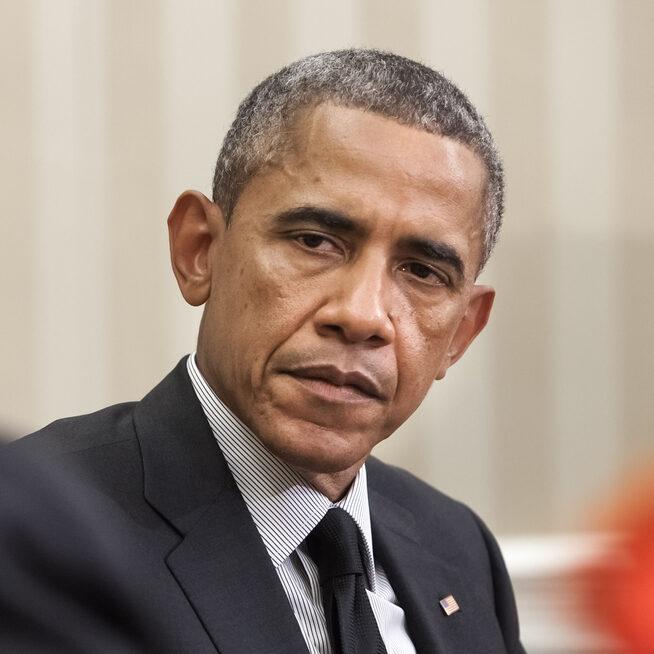
Former President Barack Obama has responded to a controversial video posted to President Donald Trump’s Truth Social account depicting him and former first lady Michelle Obama as apes, calling the incident part of a broader “clown show” happening on social media and television.
The video, which featured the Obamas’ faces superimposed on apes set to “The Lion Sleeps Tonight,” was posted to Trump’s Truth Social account on February 5 and remained online for about 12 hours before being deleted on February 6. The clip also included false claims about fraud in the 2020 election and featured content related to The Lion King.
In an interview with political commentator Brian Tyler Cohen, Obama addressed the video and the current state of political discourse without directly naming Trump. Obama said a majority of Americans find this behavior deeply troubling. He noted that as he travels around the country, he meets people who still believe in decency, courtesy and kindness.
Obama continued with a pointed critique of the degraded political environment, calling it a clown show happening on social media and on television. He said there doesn’t seem to be any shame about this among people who used to feel like they had to have some sort of decorum and a sense of propriety and respect for the office.
The incident occurred during Black History Month, adding an additional layer of insensitivity to the imagery. Depictions of Black individuals as apes have a long, painful history as a racist trope used to dehumanize and demean African Americans, making the video particularly offensive given that the Obamas were the first Black president and first lady in American history.
The White House’s response to the controversy evolved over several days. Press Secretary Karoline Leavitt initially defended the post, calling the reaction fake outrage and describing it as content from an internet meme video. Leavitt urged the press to report on something that matters to the American public. As criticism mounted, the White House changed course. A White House official later stated that a staffer erroneously made the post, attempting to distance Trump from responsibility for the video. However, the explanation raised questions about White House social media protocols and oversight.
When asked about the incident, Trump refused to apologize. Trump said he didn’t make a mistake. He explained that he liked the beginning of the video and passed it on, suggesting that nobody probably reviewed the end of it. On Thursday, when questioned about whether he had fired or disciplined the staffer who allegedly posted the video erroneously, Trump said no staffer has been fired over the post.
The post received widespread backlash from both political parties, demonstrating how the imagery crossed traditional partisan lines in its offensiveness.
South Carolina Senator Tim Scott, the only Black Republican in the Senate, was among the most vocal critics. Scott called it the most racist thing he had seen from the White House and said Trump should remove the video. California Governor Gavin Newsom called it disgusting behavior by the president. Republican Senator Katie Britt also condemned the post, saying the content should never have been posted.
Trump was reportedly furious with both Scott and Britt for their public criticism of the post, illustrating the tension between those willing to call out racially offensive content and loyalty to the administration.
The incident is not the first time Trump has targeted Barack Obama with controversial claims. Trump was a leading voice in the so-called birther conspiracy, which falsely claimed that Obama was born in Kenya and therefore ineligible to serve as president. That conspiracy theory, which Trump promoted for years, was repeatedly debunked but served to question the legitimacy of the nation’s first Black president throughout his time in office.
Obama served as president from 2009 to 2017, winning two terms and representing a historic milestone in American history. His presidency stood in stark contrast to the current political climate he described in his interview.
The use of artificial intelligence to create manipulated videos has become an increasingly concerning phenomenon in politics. These AI-generated videos can spread rapidly on social media platforms before being fact-checked or removed, potentially influencing public opinion and normalizing content that would have been unthinkable in previous political eras.
In his interview, Obama emphasized his belief that most Americans reject the degraded state of political discourse. He noted that while traveling around the country, he continues to meet people who still believe in these values despite the controversial content dominating headlines and social media feeds.
The former president’s measured response reflected his characteristic approach to political attacks, focusing on broader principles rather than personal grievances. By framing the issue as one affecting the dignity of the presidential office itself rather than just himself personally, Obama positioned the controversy as a question about American values and norms.
Obama’s comments about the loss of shame among political figures pointed to a fundamental shift in how elected officials conduct themselves in the social media age. The traditional guardrails of political decorum, which once restrained even fierce partisan opponents from certain types of personal attacks, have eroded significantly in recent years.
The controversy over the video also highlighted ongoing debates about presidential use of social media and the responsibilities that come with official government accounts. Trump’s frequent use of Truth Social for official communications has blurred the lines between personal opinions and presidential statements, creating challenges for accountability and diplomatic relations.
The video incident occurred as the nation continued to grapple with questions of racial justice and equality. The willingness of some officials to condemn the video across party lines suggested that certain boundaries remain, even in a highly polarized political environment, though the delayed response and initial defense from the White House raised questions about those boundaries’ strength.
For Michelle Obama, who has maintained a relatively low public profile since leaving the White House, the video represented yet another instance of the unique scrutiny and attacks faced by the nation’s first Black first lady. Throughout her time in the White House and afterward, she faced criticism and caricatures that often had racial undertones.
The former first lady has spoken in the past about the challenges of maintaining dignity in the face of such attacks. That philosophy appeared to guide the Obamas’ response to the latest controversy.
As the story continued to develop, questions remained about the broader implications for political discourse and the role of social media in shaping public conversations about race, dignity and presidential conduct. Obama’s characterization of current politics resonated with many Americans weary of constant controversy, though it remained to be seen whether such criticism would prompt any changes in behavior from those he described as lacking shame.