


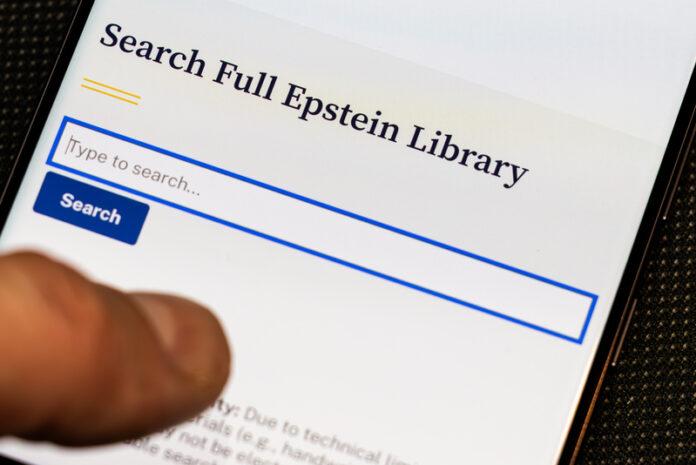
The Justice Department released over 3 million pages of records related to Jeffrey Epstein, marking the most extensive public disclosure in the case of the disgraced financier and convicted sex offender. The release came over a month past the deadline set by Congress and included 180,000 images and 2,000 videos.
Deputy Attorney General Todd Blanche said the release marks the end of a comprehensive review process. The documents reveal extensive connections between Epstein and numerous high-profile figures, with hundreds of references to President Donald Trump appearing throughout the files.
The Department of Justice said claims against Trump are unfounded and false. The president signed the Epstein Files Transparency Act on November 19. Before this disclosure, only a small fraction of the records had been released.
The documents include investigative records on Ghislaine Maxwell, who was convicted of sex trafficking in connection with Epstein’s criminal enterprise. Epstein died in jail in August 2019 while facing charges in a sprawling sex trafficking case. He had previously been convicted in 2008 in Florida for soliciting sex from a minor.
Among the newly released materials is a draft memo dated May 1, 2007, seeking approval to present a sealed, 60-count indictment to a grand jury. The memo was addressed to Alex Acosta, who at the time served as the U.S. attorney in the Southern District of Florida. The document indicated that the FBI considered Epstein an extremely high flight risk and a continued danger to the community based on his continued enticement of underage girls.
A 32-count draft indictment prepared against Epstein before his 2007 non-prosecution agreement also appears in the files. The charges included conspiracy to travel for illicit sexual conduct, facilitation of unlawful travel, sex trafficking of minors, enticement of a minor and travel to engage in illicit sexual conduct. The draft indictment identified 19 victims, with the youngest being 14 years old.
The document reveals the government planned to charge co-conspirators alongside Epstein with conspiracy to procure women under the age of 18. The co-conspirators’ names are redacted, but they are described as assistants who helped schedule appointments, make calls and pay victims. The draft indictment has a handwritten note reading “old draft” and is unsigned by Acosta.
Epstein ultimately served only 13 months in prison following his 2008 conviction in Palm Beach. The controversial plea agreement allowed him to avoid federal charges and continue operating in elite social circles.
The newly released files include footage from an interview between former Trump adviser Steve Bannon and Epstein conducted in 2019. “Do you think you’re the devil?” Bannon asked Epstein during questioning about morality issues. The interview was intended for a documentary about Epstein’s life among the global elite.
Ed Martin was removed as the DOJ’s weaponization czar, according to sources, though the timing coincided with the massive document release. The departure marks another development in the Trump administration’s handling of Epstein-related matters.
Images from the latest release appear to show Andrew Mountbatten-Windsor kneeling over a woman whose face is redacted. The former prince has long been linked to Epstein but has denied any wrongdoing in his association with Epstein and Maxwell. He has never been criminally charged. A spokesman for Buckingham Palace said the palace would not provide additional comment.
The files also reveal financial connections to international figures. Bank statements suggest Epstein made $75,000 in payments to accounts connected to Lord Mandelson. “I have no record or recollection of receiving the sums,” Lord Mandelson said.
Text messages between Epstein and Miroslav Lajčák, the national security adviser to Slovakia’s prime minister, came to light in the files. Lajčák resigned after the messages were revealed, in which the two lightheartedly discussed women and a forthcoming meeting with a Russian official.
Other prominent names appearing in the documents include Commerce Secretary Howard Lutnick, billionaire Elon Musk, Richard Branson, Sarah Ferguson, former President Bill Clinton, Steve Tisch, Kevin Warsh and Brett Ratner. Being featured in the files does not indicate wrongdoing, as many connections were social or business-related.
Steve Tisch issued a statement saying he and Epstein had a brief association that he deeply regrets. Tisch said they exchanged emails about adult women and discussed movies, philanthropy and investments, but that he did not accept Epstein’s invitations and never went to his island.
The release represents a significant moment in the ongoing effort to expose the full extent of Epstein’s criminal network and his connections to powerful figures across business, politics and entertainment. Federal prosecutors have faced mounting pressure from lawmakers, victims’ advocates and the public to provide complete transparency regarding the investigation.
Sixteen files were removed from the Justice Department’s website on January 30, 2026, less than a day after they were posted. No explanation was provided for the removal. The missing files included photographs and images that had been part of the initial release, raising questions about the department’s commitment to full disclosure.
The document release process has been complicated by the massive volume of material collected during the investigation. The files span more than a decade and include extensive correspondence, financial records, photographs and video footage from multiple properties owned by Epstein.
Epstein’s network extended across continents, with connections to figures in the United States, United Kingdom and other countries. His ability to cultivate relationships with influential people despite his 2008 conviction has remained a subject of intense scrutiny and investigation.
The Justice Department indicated that additional documents may be released as the review process continues, though officials have not provided a specific timeline for further disclosures. The complexity of the case and the sensitive nature of many documents have contributed to delays in making all materials public.