


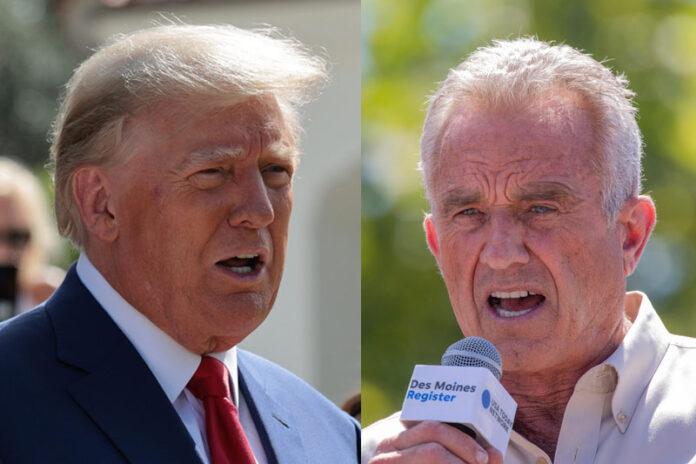
The Trump administration has quietly muzzled Health and Human Services Secretary Robert F. Kennedy Jr., restricting his public promotion of vaccine skepticism and controversial health proposals as Republicans brace for what they fear could be devastating midterm elections in November.
Multiple sources within the White House confirmed that President Donald Trump has personally intervened to limit Kennedy’s media appearances and public statements about vaccines, with advisers warning that the health secretary’s views could trigger political blowback that Republicans cannot afford ahead of the 2026 midterms.
The move represents a dramatic reversal for Trump, who elevated Kennedy to lead the nation’s health apparatus under the banner of “Make America Healthy Again” following his January 20, 2025 inauguration. Kennedy had campaigned on promises to challenge pharmaceutical companies and investigate vaccine safety, positions that energized parts of Trump’s base but alarmed public health experts and moderate voters.
Republican strategists have grown increasingly anxious about the political environment as Trump’s approval ratings hover around 35-41% across various polls. A CNN survey conducted in late March showed the president’s overall approval at 35%, just one point off his all-time low in the network’s polling, while his economic approval hit a career-low 31%. The ongoing Iran conflict, now in its sixth week, has compounded these challenges. Internal party polling suggests that Kennedy’s anti-vaccine rhetoric could cost the GOP crucial suburban voters, particularly mothers concerned about recent measles outbreaks affecting babies too young for standard immunizations.
“We lose the midterms,” one Republican source said, expressing the prevailing fear within the party’s congressional leadership about maintaining control of both chambers.
The administration’s decision to sideline Kennedy comes as Republicans face mounting challenges across multiple fronts. Vice President JD Vance departed Friday morning for Pakistan to lead high-stakes negotiations with Iran, marking his highest-profile diplomatic mission to date. The talks in Islamabad, scheduled to begin Saturday, aim to transform the fragile two-week ceasefire announced April 8 into a lasting peace agreement. Questions persist about whether the truce will hold following continued Israeli strikes in Lebanon, which Iran insists violates the terms of the deal.
Kennedy had planned to launch a podcast aimed at exposing what he calls “lies” that have made Americans sick, but White House Chief of Staff Susie Wiles has reportedly shelved the project indefinitely. The health secretary has also been excluded from recent press briefings and high-profile public events, a notable absence given his initial prominence in the administration.
The controversy over Kennedy’s role intensified after a federal judge in March blocked his sweeping overhaul of the nation’s childhood vaccine schedule. U.S. District Judge Brian Murphy ruled that Kennedy had improperly replaced all 17 members of the CDC’s Advisory Committee on Immunization Practices with appointees the judge deemed “distinctly unqualified.” The ruling invalidated Kennedy’s decision to reduce recommended childhood vaccinations from 17 to 11, a major setback for his vaccine agenda.
Democrats have seized on the administration’s apparent chaos over health policy. Former Vice President Kamala Harris, who recently indicated she “might” seek the presidency in 2028, criticized what she described as the White House’s willingness to subordinate public health to political calculations. Harris has remained coy about her future plans, telling interviewer Sharon McMahon, “I haven’t decided,” when asked directly about another presidential run.
The political stakes extend beyond vaccines. Republicans face a treacherous electoral landscape shaped by economic uncertainty stemming from the Iran war, which disrupted oil supplies through the Strait of Hormuz and drove gas prices sharply higher. The U.S. fertility rate has dropped to an all-time low, declining 23 percent since 2007 according to new CDC data, adding to anxieties about America’s demographic future that conservatives have sought to address. Roughly 700,000 fewer babies were born last year compared with the nation’s 2007 peak.
Trump allies including conservative commentators have urged the president to stay focused on core issues like immigration and the economy rather than allowing Kennedy’s health crusade to dominate headlines. Some within the MAGA movement view Kennedy’s sidelining as a necessary sacrifice to preserve congressional majorities.
The administration’s internal tensions over health policy mirror broader divisions within the Republican coalition as Trump navigates his second term. Defense Secretary Pete Hegseth has claimed “overwhelming victory” in Operation Epic Fury, the U.S. military campaign against Iran, asserting that American forces “decimated Iran’s military and rendered it combat ineffective for years to come.” But the president faces criticism from unexpected quarters including Pope Leo XIV, who condemned Trump’s threat that “a whole civilization will die tonight” as “truly unacceptable.”
Kennedy’s diminished role represents a significant retreat for one of Trump’s most high-profile cabinet appointments. The environmental lawyer and longtime vaccine skeptic had promised to fundamentally reshape federal health agencies and challenge what he describes as corporate capture of regulatory bodies. His reconstituted vaccine advisory panel has been blocked by federal courts, and his changes to the childhood immunization schedule remain on hold pending appeal.
For now, those ambitions appear frozen as Republicans prioritize political survival over ideological battles. Whether Trump can navigate the competing pressures of his base’s expectations and electoral realities may determine not just Kennedy’s future but the fate of the GOP’s congressional majorities come November.
The White House did not respond to requests for comment about Kennedy’s restricted public schedule or the administration’s strategy for addressing vaccine policy ahead of the 2026 midterm elections.