


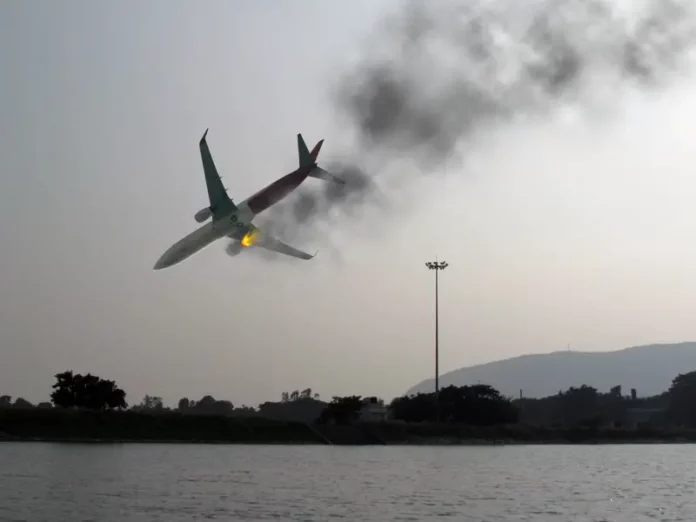
A relaxed inspection schedule — quietly approved by federal regulators more than a decade ago — likely allowed a hidden flaw to fester inside the left engine of a UPS cargo jet, leading to the fiery crash that killed 15 people in Louisville last fall, investigators testified Wednesday.
Had the original inspection interval remained in place, the MD-11 that disintegrated at Muhammad Ali International Airport on Nov. 4, 2025, would have been torn down for a detailed look at the very parts that failed, according to testimony delivered during a two-day National Transportation Safety Board hearing that concluded May 20, 2026.
Instead, mechanics never got close enough to see the trouble brewing deep inside the engine mount — a steel bearing and metal sheath buried near the pylons, almost impossible to examine without pulling the engine off the wing.
A Schedule Stretched on Old Data
The board’s questioning, documented in hearing testimony, revealed that Boeing leaned on older data in 2015 when it asked the Federal Aviation Administration to extend the inspection schedule. The manufacturer’s request did not appear to account for seven separate instances on other MD-11s in which the same critical engine mount parts had been found failing — sometimes well before planes reached even the original inspection limit.
The FAA signed off after a month’s review. Regulators did not ask for additional information.
The change pushed the inspection interval from once every 19,900 takeoff-and-landing cycles to once every 29,260 — a stretch Boeing pursued so airlines could bundle major maintenance tasks together and minimize aircraft downtime. After the schedule was relaxed, three more instances of bearing flaws turned up before the Louisville crash.
The doomed UPS jet had logged 21,043 cycles. Under the original schedule, it would have been on a maintenance stand long before it ever rolled toward the runway that November evening.
“Safety is a shared responsibility between the airline, the manufacturer, and the regulator. And the NTSB is attempting to parse out the roles and responsibilities of each of those three entities,” said aviation safety expert Jeff Guzzetti, a former crash investigator who has tracked the proceedings closely.
Risks That Were Misjudged
Both Boeing and FAA officials conceded during testimony that they had misunderstood what was at stake. Neither side recognized that the failure of the steel bearing and its surrounding metal sheath could cascade outward — eventually breaking the lugs that secure an MD-11’s engines to its wings.
Once those lugs gave way, there was nothing left to hold the engine in place.
The plane lost its left engine while accelerating down the runway. Only one other crash, decades earlier, involved a similar plane model shedding an engine, and that incident was blamed on improper maintenance — not the design flaw now under scrutiny.
Greg Raiff, who owns several aviation maintenance companies, was among the industry voices weighing in on the cascading missteps. The hearing also made clear that key safety information was not flowing between Boeing, the FAA and the operators who needed it most.
The 15 Lives Lost
The crash killed all three pilots aboard — Capt. Dana Diamond, 62; Capt. Richard Wartenberg, 57; and First Officer Lee Truitt, 45 — men remembered by colleagues for “their professionalism, service and love for flying.”
Twelve people on the ground also died. Twenty-three more were injured.
Three Grade A Auto employees were among those killed: John Loucks, 52, a heavy equipment operator known as “John Boy” and described by coworkers as the heart of the yard; Megan Washburn, 35, a bilingual customer service agent and scrap metal buyer who left behind a 20-year-old son and a 12-year-old daughter; and Trinadette “Trina” Chavez, 37, a mother of two remembered by her family as a beautiful soul with an unforgettable smile.
John Spray, 45, was bringing scrap metal to Grade A when the plane came down. His close friend Tony Crain, 65, was with him. The two were inseparable that day.
Matthew Sweets, 37, a University of Louisville business graduate, devoted husband and father, was affectionately called “Maddie” by his sister. Ella Petty Whorton, 31, was described by her family as an innocent person at the wrong place at the wrong time. Louisnes “Lou” Fedon, 47, a father of four, died alongside his 3-year-old granddaughter, Kimberly Asa, who had been named after her grandmother. Family told WLKY the two were best friends, always together.
Carlos Fernandez, 52; Angela Anderson, 45; and Alain Rodriguez Colina also perished.
Mayor Craig Greenberg confirmed in the days after the disaster that all missing persons had been accounted for, and the death toll would not climb further. But for the families left behind, the numbers offer no comfort — only the weight of what the NTSB’s findings now suggest: that the catastrophe was, in the most painful sense of the word, preventable.
The board has not yet issued a final probable cause, but its message this week was unmistakable. A bureaucratic decision made a decade ago, built on incomplete data and approved with little pushback, helped clear a runway for tragedy.