


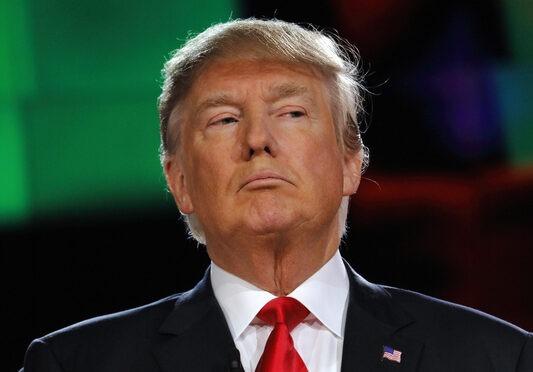
President Trump set tongues wagging in Washington this week after joking that he might stick around the White House for another “eight or nine years,” a comment that landed with a thud among constitutional scholars even as it drew laughter from the business leaders in the room.
Speaking at the White House Small Business Summit on Monday, May 4, 2026, the 79-year-old president veered off script while pitching legislation tied to his administration’s tax-cut policies for the business community. The off-the-cuff remark immediately reignited a long-running debate over whether Trump intends to test the boundaries of the 22nd Amendment — and whether his cognitive fitness is up to the task of even finishing his current term.
“When I get out of office in, let’s say, eight or nine years from now, I’ll be able to use it. I’ll be able to use it myself,” Trump quipped to the crowd, which broke into laughter and applause.
Term Limit Talk Returns
The 22nd Amendment, ratified in 1951, is unambiguous: no person shall be elected to the presidency more than twice. Trump is currently serving his second term, which began with his inauguration on January 20, 2025, and is set to expire in 2029. But the president has spent much of the past year flirting with the idea of staying put — sometimes calling himself a “two-term president,” other times teasing a 2028 run.
In March 2025, during a telephone interview with NBC News, Trump insisted he was “not joking” about wanting to serve a third term and claimed there were “methods” to get around the constitutional barrier. “A lot of people want me to do it,” he said at the time, before adding that it was “very early in the administration.”
Allies have taken the hint. Rep. Andy Ogles (R-Tenn.) has proposed resolutions to amend the 22nd Amendment to allow presidents with non-consecutive terms to seek a third. The Trump organization, meanwhile, has been selling “Trump 2028” hats, fueling speculation that the trial balloons are more than just rhetorical exercises.
Constitutional reality, however, is stubborn. Amending the document requires a two-thirds vote in both the House and Senate, followed by ratification from three-quarters of the states — a near-impossible threshold in today’s polarized climate, particularly with significant Republican losses widely expected in the November midterms.
Cognitive Concerns Resurface
The “eight or nine years” line might have been brushed off as vintage Trump bravado were it not for the mounting questions about his health. On the same day he made the comments, the commander-in-chief appeared to doze off while standing, his face drooping, as an aide delivered remarks beside him.
Trump has been diagnosed with chronic venous insufficiency and has been spotted with swollen ankles and severe bruising on his hands — discoloration he has attributed to a high daily dose of aspirin. Reports indicate he is also dealing with serious fatigue, struggling to stay awake during public events.
The president has nonetheless insisted his health is “perfect,” frequently bragging about acing the Montreal Cognitive Assessment, or MoCA — a screening tool typically administered to patients suspected of suffering from dementia. At the summit, Trump launched into a rambling description of what he claimed was the test’s opening question, though his account did not match the actual assessment.
“You know the first question is very easy. They always show the first question: ‘You have a lion, a bear, an alligator, and a — what’s another good — a squirrel, OK?’ Which is the squirrel?” Trump said, before claiming that “nobody’s gonna get all 30 questions correct” except him.
That boast has not impressed medical professionals. Dr. Jonathan Reiner, a CNN medical analyst and cardiologist, has criticized the president for treating a dementia screening tool like a trophy, arguing that any sitting president should undergo a comprehensive medical, cognitive, and psychiatric assessment rather than rest on the laurels of a basic neurological screen.
Iran And The Economy
Beyond the term-limit teasing, Trump used the summit to tie U.S. economic performance directly to national security. He argued that continued pressure on Iran was necessary to prevent nuclear escalation and claimed Tehran’s leadership structure had been significantly weakened by his administration’s posture.
The president boasted of “record, record business” and warned that letting Iran obtain a nuclear weapon was non-negotiable. Aides framed the remarks as a continuation of the doctrine he and Vice President Vance have championed since taking office: that prosperity at home depends on projecting strength abroad.
Political Headwinds Mount
The timing of Trump’s third-term musings, first reported on May 5, 2026, could hardly be worse politically. With his approval rating sliding to historic lows and Republican strategists bracing for steep losses in November, the president is reportedly desperate to influence GOP primaries against opponents and dissenters.
Whether the joke about staying through 2034 was a slip, a strategy, or simply a senior moment, the reaction in Washington was swift. Critics see a president flirting with authoritarian fantasies. Supporters see a leader having fun at a friendly venue. The Constitution, for now, sees only one way out of the White House — and the clock on Trump’s second term is already ticking toward 2029.