


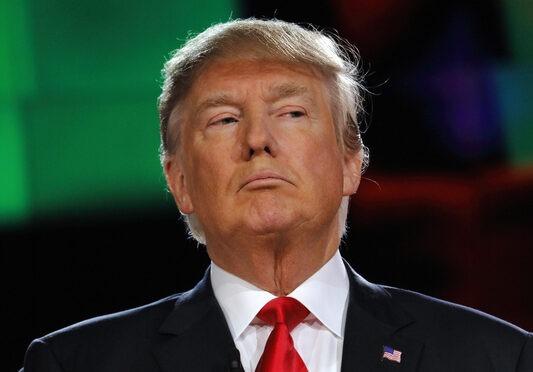
President Trump astonished members of the press by announcing he was disregarding Americans’ economic struggles as he manages the ongoing conflict with Iran — then reinforced the statement days later, describing it as “a perfect statement” he would reiterate.
The striking conversation took place on May 12, 2026, when a journalist inquired about the degree to which the financial burden on American households was pushing the president to broker an agreement with Tehran. His reaction was swift and definitive.
“I don’t think about Americans’ financial situation. I don’t think about anybody. I think about one thing: You cannot let Iran have a nuclear weapon,” Trump told reporters before departing for an important negotiation session in Beijing.
When pressed on whether Americans’ financial circumstances were a consideration, the president responded, “Not even a little bit.”
Fuel Costs Rise During Waterway Blockade
The statements surfaced at a challenging political juncture. Following U.S. and Israeli military operations against Iran in late February, costs for fuel, food, and other goods have increased substantially. The average gasoline price nationwide has jumped roughly 50 percent since the military action started, exceeding $4.50 per gallon, based on American Automobile Association figures.
A significant portion of this increase stems from Iran’s closure of the Strait of Hormuz, a critical shipping channel for petroleum transport worldwide. This obstruction has destabilized international energy sectors and intensified inflation challenges already affecting American households.
A survey conducted by PBS News/NPR/Marist in mid-May indicated that 63 percent of Americans attribute the surge in fuel costs to Trump. The president’s support levels have declined proportionally with rising prices.
Trump stated he was “satisfied” with higher fuel expenses in exchange for achieving his military targets, characterizing the expense as brief. He expected relief to arrive promptly once the blockade concludes, mentioning that Iranian ships were already stocked with petroleum ready to enter global supply chains.
Trump Reinforces Position During Television Interview
Rather than distance himself from the comments, the president affirmed them. During a Fox News discussion with host Bret Baier recorded while he was in China and broadcast on May 15, Trump was presented with footage of his May 12 statements and questioned whether he supported them.
“That’s a perfect statement. I’d make it again,” he told Baier, characterizing the journalist’s initial inquiry as “a fake question.”
Trump acknowledged there would be “immediate challenges” during the negotiation phase and while the waterway remained obstructed, but contended the sacrifice was warranted. He referenced his prior economic achievements, mentioning inflation stood at 1.7 percent in the three months preceding the conflict. Current official statistics reveal a contrasting picture: the Consumer Price Index climbed to 3.8 percent year-over-year in April 2026 — the most elevated reading since May 2023 — primarily because of a 28.4 percent annual increase in fuel costs. For the initial time in thirty-six months, worker compensation is falling behind inflation.
“My policies are working incredibly,” he stated.
Opposition Criticizes, Allies Defend
The comments provoked immediate and extensive objections from the opposition party, who utilized the statements as proof that the president lacks awareness of ordinary voters’ everyday challenges. Members of the governing party rushed to provide support, repeating Trump’s contention that stopping a nuclear-armed Iran supersedes temporary fiscal hardship.
The political circumstances could scarcely be more precarious. As the November midterm races approach, the majority party is preserving narrow control of both legislative branches. Ascending expenses and a president openly dismissing voter concerns about finances represents the exact type of public relations challenge governing party operatives had endeavored to circumvent.
Trump, however, suggested he is not concerned with the electoral considerations. “I’m not going to let the election determine what’s going to happen with respect to Iran, because they cannot have a nuclear weapon,” he stated.
On the legislative level, the Secretary of Defense Pete Hegseth and top military leaders presented testimony regarding the conflict’s progression. Trump has subsequently characterized the Iran peace negotiations as “on life support” after dismissing Tehran’s most recent negotiating response as “totally unacceptable,” asserting it inadequately addressed Iran’s atomic capabilities.
China Meetings Frame Iran Negotiations
The president’s statements coincided with his two-day visit in Beijing alongside Chinese President Xi Jinping, where Iran was expected to figure prominently in discussions. Xi extended the American leader an exclusive viewing of a private courtyard at Zhongnanhai, the seat of Chinese authority. Trump additionally toured the Temple of Heaven during his stay.
Xi commenced the bilateral discussions with a deliberate statement: “We should be partners, not rivals.” Trump commended what he termed a “fantastic relationship” shared by the two powers and highlighted commercial agreements finalized throughout the visit. Secretary of State Marco Rubio indicated American strategy regarding Taiwan had not shifted following the discussions, though China cautioned that disagreements concerning the territory might threaten the overall partnership.
Observers in Beijing during Trump’s arrival voiced doubt regarding the summit’s achievements, and the president’s invitation of prominent U.S. business executives to participate in the journey was largely interpreted as a tactic to obtain improved trade conditions with China.
Trump concluded his two-day China trip and flew back to the capital, where his forthright remarks about American economic hardship — and his unwillingness to backtrack — is anticipated to shape political discourse for the foreseeable future. On May 16, the president transmitted Iran a revised atomic proposal, cautioning that prompt advancement was essential to avert severe repercussions.