


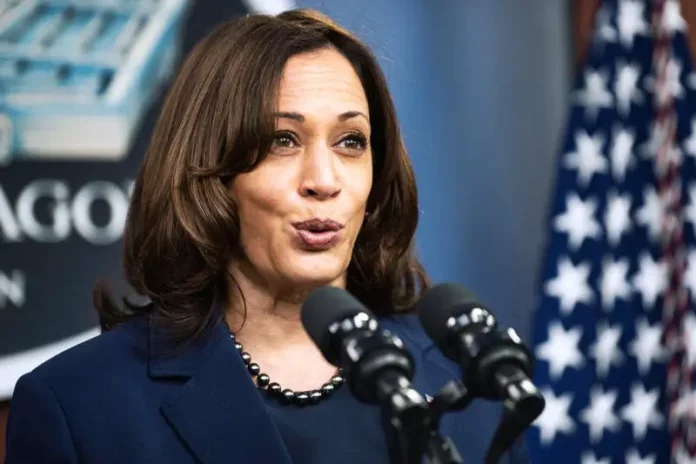
Former Vice President Kamala Harris predicted on June 17, 2026, that President Donald Trump’s nascent Iran deal will damage Republican prospects in the upcoming November midterm elections, drawing comparisons to former President Barack Obama’s controversial 2015 nuclear agreement during remarks at a climate summit in Vienna.
Speaking at the Austrian World Summit hosted by the Schwarzenegger Climate Initiative on Tuesday, Harris characterized the Trump administration’s emerging memorandum of understanding with Iran as “a war the American people did not want” and “a war of choice,” adding that Trump “has proven himself to be entirely self-indulgent.”
The failed 2024 presidential candidate seized on the opportunity to restart a political debate over which strategy proved more effective at limiting Iran’s regional power, drawing direct parallels between Trump’s current negotiations and Obama’s Joint Comprehensive Plan of Action, which Trump withdrew from during his first term.
Harris told the Vienna audience that whatever is being negotiated, Trump is going to declare victory, and the country will end up where it was after the JCPOA and call that a victory, referring to the same agreement he previously withdrew from. She dismissed the emerging framework as “really, it’s a concept of an agreement” rather than a substantive policy achievement.
The Trump administration’s memorandum of understanding with Iran has not been publicly released. Administration officials say the framework would restore shipping access through the Strait of Hormuz while obligating Tehran to cease its nuclear weapons program and its backing of terrorist groups. Success depends on Iran proving within 60 days that it has genuinely ended its pursuit of nuclear weapons and its funding of terrorist networks.
Harris connected the Iran negotiations directly to consumer pain at the pump, arguing there is a direct correlation between what she called Trump’s “war of choice” and elevated gas prices. She estimated the average American has spent $500 more since the conflict started because of the administration’s approach.
Republicans are entering the November midterm elections amid widespread anxiety over persistently high costs for fuel and food that continue to burden many American households. Trump administration officials have repeatedly emphasized that the memorandum of understanding should bring lower prices at gas stations starting this summer, framing economic benefits as a central justification for the diplomatic gambit.
Oil prices appeared to validate at least part of the administration’s economic argument, falling on Monday, June 16, 2026, to their lowest levels since early March after news of the tentative U.S.-Iran framework sparked optimism that shipping through the Strait of Hormuz could soon return to normal. The critical waterway has been a flashpoint for tensions between Washington and Tehran for months.
Despite the potential for lower energy costs, Harris expressed confidence that Democrats would capitalize on voter unease with Trump’s foreign policy approach. Harris said she is certain Democrats will prevail in the midterms thanks to support from Americans of all backgrounds and political leanings.
The former vice president’s Vienna remarks represented her most sustained public criticism of the Trump administration’s Iran policy since losing the 2024 presidential election. Her decision to make the comments at a climate summit rather than a traditional foreign policy venue underscored her attempt to frame the Iran question as connected to broader quality-of-life issues affecting American voters, from gas prices to geopolitical stability.
Comparisons to Obama’s 2015 nuclear deal have reemerged as the Trump administration finalizes its own Iran framework. The Obama agreement, formally known as the Joint Comprehensive Plan of Action, was one of the most polarizing foreign policy initiatives of the past decade. Trump made withdrawing from the accord a centerpiece of his first-term agenda, arguing it provided insufficient constraints on Tehran’s nuclear program and regional behavior.
Now, with Trump pursuing his own diplomatic opening with Iran, Harris and other Democrats have sought to turn the tables, suggesting the president is repeating Obama’s alleged mistakes while simultaneously trying to claim credit for a breakthrough. The political reversal has created an unusual dynamic in which Democrats defend their previous Iran engagement while attacking Trump’s current efforts, and Republicans defend Trump’s new deal while maintaining their criticism of Obama’s original framework.
The agreement, soon to be released publicly, will determine if Tehran is prepared to end decades of international isolation in exchange for sanctions relief and normalized relations with Western nations. For the deal to succeed, Tehran must demonstrate concrete actions during the 60-day negotiating window, not merely promises of future compliance. Administration officials have suggested verification mechanisms will be far more robust than those in the Obama-era agreement.
Harris’s Vienna address signals that Democrats intend to make Trump’s Iran policy a campaign issue heading into the midterms, betting that voters will view the negotiations as either reckless or insufficiently different from the Obama approach Trump spent years denouncing. Whether that message resonates with an electorate primarily focused on kitchen-table economics remains an open question, but Harris’s willingness to preview the attack line suggests Democrats see political opportunity in Trump’s diplomatic pivot.
The midterm elections will provide the first electoral test of whether Trump’s Iran gambit helps or hurts Republican candidates. With gas prices dropping and the Strait of Hormuz potentially reopening, Republicans believe they can campaign on delivering tangible economic relief. Democrats like Harris are betting that voters will instead see a president repeating past mistakes while claiming unearned credit for a flawed agreement.