


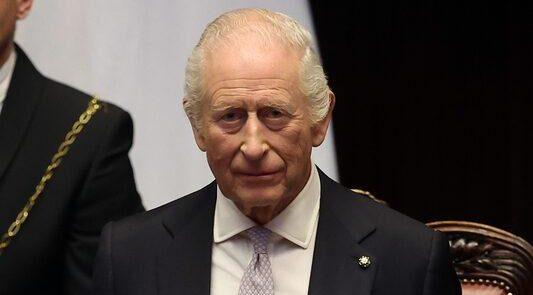
King Charles III has given royal shoppers and soft-toy enthusiasts something to smile about, unveiling a whimsical new line of plush toys through the Royal Collection Trust that is already generating buzz — and is practically guaranteed to delight his three grandchildren.
The collection, dubbed “Tea at the Palace,” features a range of Jellycat-style stuffed characters inspired by the quintessentially British tradition of afternoon tea. Joining the line are a smiling teapot, a fluffy teacup, a Battenberg cake, a cucumber sandwich, and a strawberry cupcake, each designed with the stitched black eyes and cheerful expressions that have made the Jellycat brand a cultural phenomenon in recent years. The items are available through the Royal Collection Trust’s online shop and in person at the Buckingham Palace Garden Shop throughout the summer.
According to People, the shop’s official description promises buyers a teatime experience of its own: when three plush keyrings from the collection are purchased together, they arrive in a specially designed afternoon tea gift box meant to evoke the feeling of unwrapping a real teatime spread.
The launch arrives at a moment when Jellycat — a British brand founded in London in 1999 by brothers Thomas and William Gatacre — has never been more popular. The BBC reported that the company doubled its profits in 2025 compared to the prior year, driven by an explosion of demand among children and adults alike for its plush food items and bag charms. The brand’s signature style, with its rounded forms and hand-stitched expressions, has become a recognizable shorthand for a particular kind of cozy, comforting design sensibility — one that the Royal Collection Trust has now embraced in a decidedly palatial key.
The timing of the launch has prompted widespread speculation that King Charles drew his inspiration closer to home. Princess Charlotte, 11, is widely reported to be a devoted Jellycat fan who has amassed a substantial collection of the toys, and her grandfather has previously shown a fondness for incorporating her tastes into his own public gestures — including reportedly wearing friendship bracelets she made for him. Marie Claire noted that Charlotte’s enthusiasm for the brand appears to have been a key influence behind the new royal range. Her brothers, Prince George, 12, and Prince Louis, 8, are said to share her passion for the toys.
The Wales children’s love of Jellycats came into sharp public focus in May 2025, when Prince William, Prince of Wales, and Catherine, Princess of Wales, attended a Buckingham Palace garden party and were presented with a pair of plush toys by Mateo Robayna, the younger brother of Liz Hatton, a teenage photographer who had died of cancer in November 2024 at the age of 17. Mateo chose the gifts because the toys had been a beloved favorite of his late sister, who would give them to people who made her happy. Catherine, Princess of Wales, received a tarte au citron plush, while Prince William was gifted a pickled onion design. The moment was deeply emotional, with Catherine saying she had loved Liz’s creativity and pledging to stay in touch with the family.
Prince William’s reaction to the gifts offered an unguarded glimpse into the Wales household’s Jellycat enthusiasm. “My children will love these,” he told the gathering. “They are children’s currency.” Catherine later added that the fish and chips Jellycat made her think of Liz — a sentiment that underscored how thoroughly the brand has woven itself into the emotional fabric of everyday life, royal or otherwise.
Even beyond Kensington Palace, the Jellycat craze has taken hold in the broader royal family. Princess Lilibet, the four-year-old daughter of Prince Harry, Duke of Sussex, and Meghan, Duchess of Sussex, was seen sporting the brand’s Amuseable Rainbow Bag — which retails for $40 — in a video posted to the Instagram account of Meghan’s lifestyle brand, capturing a mother-daughter moment as the pair searched for berries in their Montecito garden.
The “Tea at the Palace” range represents a deft piece of cultural timing by the Royal Collection Trust, positioning one of Britain’s most enduring institutions alongside one of its fastest-growing consumer trends. Afternoon tea itself has a long and formal history — the custom is generally traced to 1840, when Anna Maria Russell, the seventh Duchess of Bedford, introduced the practice to fill the long stretch between luncheon and the evening meal. That tradition, now reborn in plush form with smiley faces and squishy filling, appears to have found its natural audience: not just in palace gift shops, but in the bedrooms of the next generation of the royal family itself.