


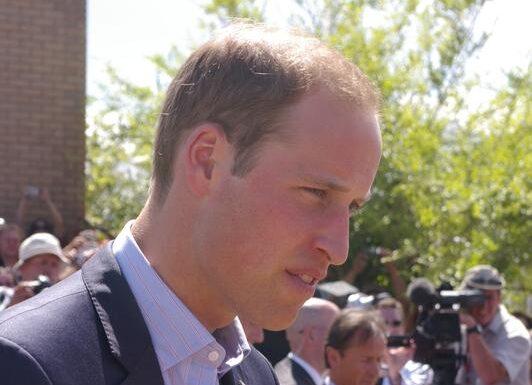
Prince William is preparing to overhaul the way the Royal Family handles its property empire when he takes the throne, signaling a sharp break from longstanding practices that have allowed non-working royals to live in palaces at little or no cost. The Prince of Wales, 43, intends to ban sub-letting by family members and could stop those who do not perform official duties from occupying royal residences rent-free, royal insiders revealed on June 7, 2026.
The disclosures come days after a bombshell [National Audit Office report] (NAO)(https://www.mirror.co.uk/news/royals/william-will-make-changes-hes-37260320) exposed the murky financial arrangements behind some of Britain’s most famous addresses — chief among them, the deals enjoyed by William’s disgraced uncle, former Prince Andrew, Duke of York.
Sources close to the future king said he wants to “look under the hood” of royal operations to ensure the institution is “fit for purpose in the modern era.” The planned review echoes the early housekeeping moves made by King Charles III at the start of his own reign, but William’s allies suggest his approach will be more aggressive — and more public.
The Andrew Problem
The catalyst for William’s rethink is impossible to miss. The NAO report, released June 2, 2026 — the first such audit in 20 years — revealed that former Prince Andrew was pocketing rental income from three cottages on the grounds of Royal Lodge in Windsor while paying only a “peppercorn rent” on the 18th-century mansion himself.
Andrew paid £7.5 million in repairs when he took over the lease in August 2003 and has not been required to pay monthly rent since. A valuation by Robin Edwards of property buying agency Curetons estimated the Duke of York could have been earning up to £180,000 per year from the sub-lets, with the cottages’ “unique setting, security and prestige” commanding between £7,500 and £15,000 per month.
The NAO did not name Andrew’s tenants, identify which cottages were rented out, or specify how long the arrangements had been in place. The opacity has fueled calls for him to “come clean,” with critics branding the arrangements “shocking.”
A Wider Web of Discounted Rents
Andrew is not the only family member benefiting from preferential terms. The audit found that King Charles personally pays the rent for his nieces, Princess Beatrice, 37, and Princess Eugenie, 36, through his private “privy purse.” Neither is a working royal.
Princess Beatrice lives at St James’ Palace at a discounted rate of 68 percent of open market value. Princess Eugenie occupies Ivy Cottage at Kensington Palace at 64 percent of market value. Coverage of the report in early June 2026 described the discounts as over 30 percent below market value. Both palaces are maintained by the Sovereign Grant — the public funds that bankroll the monarchy.
In total, the report found that the Royal Household provides 11 working members of the family with residences at no cost in exchange for their official duties. Andrew’s household and staff alone occupy 12 properties owned by either the Crown Estate or the Royal Household.
William is said to be acutely conscious of how those arrangements look to a public squeezed by the cost of living — particularly when the beneficiaries do not perform public duties.
Leading by Example at Forest Lodge
The prince has already begun setting a different standard. William recently made public the terms of his lease at Forest Lodge, the Grade II listed mansion in Windsor where he, Catherine, Princess of Wales, and their three children will continue to live when they become king and queen. The couple pays £307,500 a year — £100,000 more than the previous tenants. A separate figure of £307,200 has also been reported.
Crucially, a clause in the Waleses’ lease explicitly prohibits the subletting of three cottages on the Forest Lodge grounds — a pointed contrast to the practices uncovered at Royal Lodge.
A Buckingham Palace spokesperson said the household was “grateful” for the report, calling it “in line with the Royal Household’s commitment to transparency.” The spokesperson added that the findings would help “clarify or contextualize a number of points regarding royal properties.”
Change ‘on My Agenda’
William has been telegraphing his ambitions for months. In a conversation with actor and television host Eugene Levy for Apple TV+ in October 2025, the prince declared, “change is on my agenda – change for good,” adding that he wanted to “question things more.” He also stressed that “the most important thing in my life is family.”
Sources describe him as “mindful of how much the monarchy costs” and ready to be “hands-on” in restructuring the institution into a leaner outfit. His activities the week of June 1 underscored the message: William toured pubs at St George’s Park in Staffordshire and put 600 acres of royal farmland up for sale.
The royal calendar in the days ahead offers little respite from the scrutiny. The family gathered June 6, 2026, to mark the wedding of Peter Phillips and Harriet Sperling, an occasion that briefly papered over reported rifts. Peter Phillips is the son of Princess Anne and her first husband Captain Mark Phillips — making him Queen Elizabeth II’s eldest grandchild. Harriet Sperling is a pediatric nurse from Gloucestershire.
The property questions raised by the NAO are unlikely to fade, and William’s allies are making clear that when the crown passes, the rules will change.