


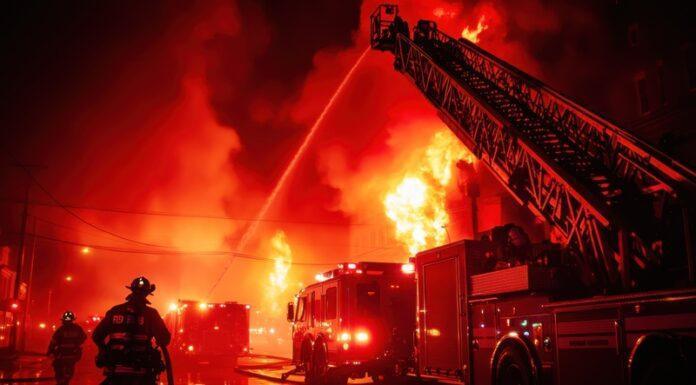
A fire tore through a shoe factory in the south-eastern Chinese city of Jinjiang on Thursday, killing at least 28 people and leaving an unknown number injured in one of the deadliest industrial disasters to strike the region in years. The blaze broke out at the Huiteng Footwear factory around noon local time (05:00 BST), sending thick black smoke pouring across the skyline of a city known worldwide for its footwear manufacturing.
Footage circulated by state media captured the ferocity of the fire, showing enormous plumes of smoke rising above the building and figures who appeared to be stranded on the roof, waiting for help as flames consumed the floors below. The images offered a grim window into the chaos that gripped the site during the crucial early minutes of the emergency.
Rescue Effort at the Scene
Hundreds of rescue workers rushed to the factory as the fire spread, and more than 200 people were evacuated from the property. It remains unclear how many of those caught in the disaster suffered injuries, and officials had not released a full accounting of the wounded.
Investigators believe the fire may have originated on the factory’s ground floor, where flammable materials were stored. That early assessment, if confirmed, would point to the kind of hazard that has repeatedly turned Chinese workplace accidents into mass-casualty events, as fast-moving flames trap workers on upper floors with limited escape routes.
Xi Demands Accountability
President Xi Jinping addressed the disaster, saying the blaze had inflicted “major casualties” and demanding that those responsible be held “strictly accountable.” He said the incident reflected the intense scrutiny now surrounding the factory’s owners and the local safety oversight meant to prevent such catastrophes. Authorities moved quickly against the company, detaining several people who work for the factory’s owners and freezing the firm’s bank account as part of a formal investigation into corporate liability and potential compensation for victims and their families.
China’s ‘Shoe Capital’
Jinjiang, in Fujian province, occupies an outsized place in the global footwear industry. The city is frequently called China’s “shoe capital” and is reported to manufacture roughly 20% of the world’s sports shoes, making its sprawling network of factories a linchpin of international supply chains. That prominence lends the disaster a wider resonance, drawing attention to the working conditions inside plants that produce goods sold across the globe.
The scale of the loss also underscores the persistent gap between China’s manufacturing ambitions and the safety standards inside some of its factories. Fires at industrial sites have long ranked among the country’s most lethal accidents, and each one tends to trigger a burst of enforcement, inspections and public reckoning before the pace of production resumes.
A Renewed Push on Fire Safety
Thursday’s tragedy comes as China is in the midst of a national campaign to prevent fires in high-rise buildings. That effort was launched after a fire ripped through several Hong Kong apartment buildings in November 2025, killing 168 people in a disaster that shocked the region and prompted a sweeping review of building safety practices.
The Hong Kong catastrophe had put a spotlight on flammable materials, blocked exits and inadequate fire suppression — precisely the sorts of failures that investigators will now be examining at the Huiteng Footwear factory. The fresh loss of life so soon after that campaign began raises pointed questions about how thoroughly new precautions have reached the country’s vast industrial base.
Industrial fires have periodically devastated China’s factory towns. A blaze at a shoe factory in the city of Wenling, in Zhejiang province, killed 16 workers in January 2014, when firefighters needed about three hours to extinguish the flames. Such incidents have prompted repeated pledges to tighten workplace safety, even as accidents in the country’s enormous manufacturing sector have remained a recurring danger.
For now, the focus in Jinjiang remains on the immediate aftermath: identifying the dead, treating the injured and determining exactly how the fire began. With the death toll reported as a preliminary figure and the number of injured still unknown, the full human cost of the disaster may not be clear for some time. Officials have given no timeline for the investigation, though Xi’s call for strict accountability suggests the inquiry will be swift and closely watched.