


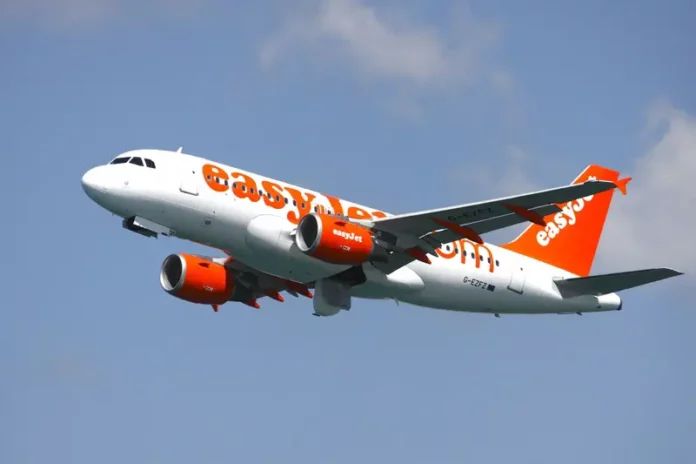
A dispute between two British families that began at the departure gate turned so volatile in the air that the captain of a Liverpool-bound easyJet flight abandoned the journey and steered the aircraft back to the Canary Islands on Tuesday, July 22, 2026, according to Spanish air traffic control. Roughly ten passengers were caught up in the confrontation aboard flight EZY3352, which departed Tenerife South Airport just before 8 p.m. local time.
The trouble erupted about 30 minutes after departure. Flight-tracking data showed the Airbus A320-214 looping around at 1,425 feet before turning back toward the island it had just left. The 186-passenger jet, originally due to arrive at Liverpool John Lennon Airport at 4:06 a.m., touched down again at Tenerife South at 9:05 p.m.
Spanish air traffic controllers said the flight crew radioed to report a fight on board and to request that police meet the plane on arrival. A group of about ten passengers had begun brawling, they said, and the captain elected to return because of the "danger this posed to the safety of the flight.” Controllers said crews and passengers are increasingly forced to endure such episodes, and offered their support to those involved.
Eight Removed, No Arrests
Police were waiting when the plane landed, but a spokeswoman for Spain’s Civil Guard said no one was arrested. Eight people were escorted off the aircraft — two adults and six minors — all of whom had been traveling together and all of whom were confirmed to be British nationals. The spokeswoman said all eight people taken off the plane were identified and that no arrests took place.
Investigators traced the root of the confrontation to the terminal, before anyone had stepped on board. According to the Civil Guard, a heated argument flared between two families inside the airport and spilled over onto the aircraft once they were seated, which is what ultimately prompted the return. The spokeswoman added that officers were not aware of any physical fighting on board. Police said they could not determine what had set the two families against each other.
Accounts of the number of people involved varied slightly. Air traffic control and some reports put the figure at around ten, while others described roughly a dozen passengers, and the Civil Guard’s count of those actually removed was eight. What the sources agreed on was the sequence: a terminal quarrel, an in-flight escalation, a captain’s decision to turn back, and a police reception on the tarmac.
After the passengers were removed and the situation was resolved, the aircraft resumed its route and continued on to Liverpool. An easyJet spokesman said the flight returned to the airport and was met by police because of a group of customers behaving disruptively, then completed the journey. The airline said its cabin and ground crews are trained to act quickly to protect the safety of the flight and other travelers, and that it does not tolerate disruptive behavior toward its staff.
Fines and a Possible Flying Ban
Under standard Spanish procedure for air incidents, unless officers directly witness a crime, the response generally centers on formally identifying the person flagged as the cause of the disturbance, removing them from the aircraft and issuing a fine. The Spanish Air Safety and Security Agency (AESA), the state body responsible for enforcing civil aviation standards, can penalize breaches of Spanish air safety law. Fines for the standard category of breach range from around £50 to nearly £40,000. Offenders can also be billed for the cost of any diversion and hit with a flying ban by the airline.
Tougher consequences may be on the horizon. Last month, the government floated a proposal that could bar passengers who disrupt flights from traveling with any carrier rather than just the one on which they misbehaved. Officials at the Department for Transport and Home Office are working on a program to circulate data about disruptive travelers among airlines.
Part of a Wider Pattern
The incident lands amid a run of unruly behavior on flights bound for Liverpool this year, several of which have forced diversions and, in some cases, prosecutions. Passenger Fintan Wyatt insisted on speaking with the pilot aboard an easyJet service traveling from Sharm El-Sheikh to Liverpool on Jan. 6, 2026. Passenger Catherine Bellis assaulted her boyfriend and cabin crew on a Ryanair flight from Tenerife to Liverpool. Passenger Callum Kerr, from Warrington, died after collapsing on a Jet2 flight to Manchester Airport on June 21.
Other carriers have faced their own airborne confrontations. Footage recently captured an easyJet captain wrestling an apparently intoxicated passenger to the floor of a holiday jet, as a crew member helped restrain the man in the rear galley. In May, a drunken man and woman were arrested aboard an easyJet plane from Gatwick to Antalya, Turkey; passengers alleged the woman had been drinking from a bottle of vodka and spat at someone, while the man reportedly boasted about having been in jail and threatened anyone who complained.
For the families at the center of the Tenerife return, the immediate consequences were logistical and disruptive rather than criminal. The pilot’s decision, controllers stressed, was made in the interest of everyone else on board — and the plane cleared runway 07 without further incident on its way back down.