


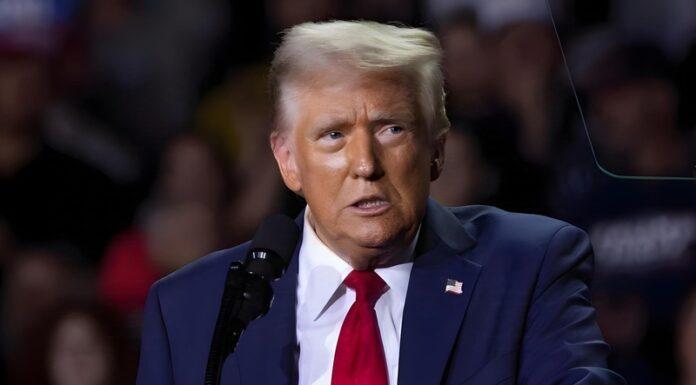
The sudden death of a close ally nine years his junior has left President Donald Trump confronting a question he rarely addresses in public: his own mortality. According to a report, the death of South Carolina Sen. Lindsey Graham left the 80-year-old president unusually subdued, prompting him to turn inward in private conversations with his inner circle.
Graham, 71, died July 11 from natural causes tied to an aortic dissection — a rupture in the body’s largest blood vessel extending from the heart. The senator had shown no obvious signs of ill health. Days earlier he had flown to and from the Ukrainian capital of Kyiv, where he met July 10 with Ukraine’s President Volodymyr Zelenskyy, before returning home to his Capitol Hill residence.
Sources described a president grappling with the abruptness of it. In those private talks, Trump reportedly asked whether Graham’s hectic travel schedule might have worn down the active 71-year-old. He also started examining Graham’s family history, searching for a genetic explanation for why a man who seemed healthy could die so quickly and without warning.
A President Confronting His Own Age
Trump has long insisted he retains the mental and physical stamina the job demands. He frequently boasts that he has “aced” three cognitive tests designed to screen for early signs of dementia, framing the results as proof of his intelligence. Neither Trump nor the White House has explained why he has taken so many.
Yet visible health issues have emerged during his second term. Dark bruises have appeared on his hands, sometimes concealed with makeup, while his swollen ankles and tendency to doze off publicly have attracted attention.
Trump spoke emotionally about Graham in the days following his death, calling him “a tough loss” and saying the senator was “like family” during a July 12 appearance on NBC’s “Meet the Press.”
Trump acknowledged his 80th birthday on June 14 with mixed feelings, saying it was not a milestone he welcomed. He has also spoken publicly about his uncertain prospects for the afterlife, telling a Georgia audience in February that he hoped for heaven but had doubts.
The Last Phone Call
Trump said Graham phoned him around 7 p.m. after returning from Ukraine to discuss the Safeguard American Voter Eligibility (SAVE America) Act. The senator sounded tired but otherwise normal, Trump recalled — understandable exhaustion after international travel. They made plans to meet again soon.
Trump told Welker the call could have been Graham’s last. Paramedics were called to the senator’s home Saturday night after a cardiac arrest. Graham had celebrated his 71st birthday the day before and was set to appear on “Meet the Press” Sunday morning.
Graham had served in the Senate since 2003 and sought the Republican presidential nomination in 2016 — a campaign during which he was among Trump’s sharpest GOP critics before withdrawing. He later became one of the president’s most reliable allies and a frequent golf partner. Vice President JD Vance remembered him as a lawmaker who fought fiercely for his convictions, adding that Graham had the best sense of humor in the Senate.
Mortality and Legacy
The introspection follows two brushes with death of Trump’s own. A bullet grazed him at a rally in Butler, Pennsylvania, in July 2024, killing supporter Corey Comperatore. In April, another shooter tried to take his life at the White House Correspondents’ Association dinner. Both times, his first public instinct was a message of unity.
Political commentator David Rothkopf, speaking on The Daily Beast Podcast, argued that Trump’s emphasis on attaching his name to structures and creating monuments stems from concerns about how history will remember him, describing the president as sensing death’s approach. Whether that reading holds, the pattern of how Trump mourns is well established. For those he admired — people like activist Charlie Kirk and former wife Ivana Trump — his tributes read as heartfelt. Toward foes such as actor and director Rob Reiner or former FBI Director Robert Mueller, they turn caustic.
Trump ordered flags flown at half-staff until 6 p.m. on July 18 in Graham’s honor. Sen. Tim Scott, the state’s other Republican senator, called the loss a reminder that life is fleeting. Press secretary Karoline Leavitt said the president looked forward to delivering a heartfelt eulogy at the funeral service on Tuesday.