


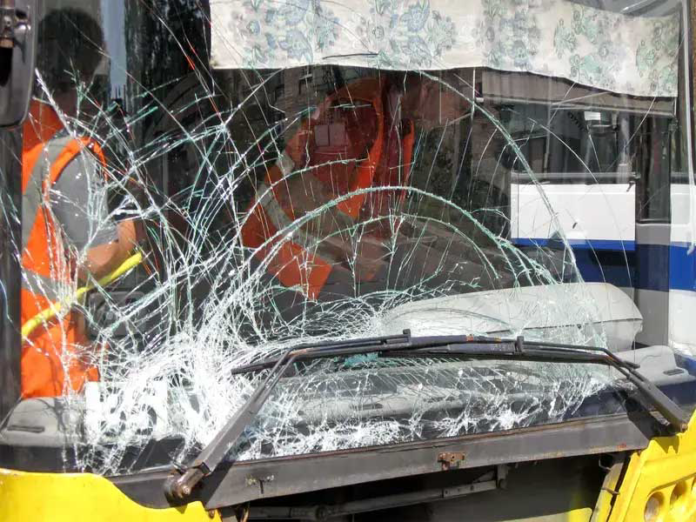
At least five people were killed and 16 others injured on Saturday after two buses slammed into each other in a head-on collision in southern Peru, authorities said.
The crash took place along the southern Panamerican Highway in Tacna, a town near the border with Chile, police told The Associated Press. The circumstances that led to the collision were not immediately clear, and investigators had not publicly determined a cause. Details on the identities of those killed were not released.
The impact was severe enough to draw in at least one nearby vehicle. Agustín Choquecota, a farmer who said he was driving a pickup truck transporting livestock at the time, described being caught up in the wreckage as the vehicles careened across the road. He told Radio Unio he was “dragged along by the impact after one of the buses involved in the accident veered out of its lane.”
Victims Rushed to Local Hospital
The injured were taken to the Hipólito Unanue de Tacna hospital, where medical staff worked to treat the survivors. Eddy Vicente, director of the hospital, told reporters that the majority of those injured were stable, while a 24-year-old man remained in serious condition with multiple fractures. Hospital officials did not provide a further breakdown of the ages or conditions of the remaining patients.
The Panamerican Highway in the Tacna region is a critical artery for both passenger and commercial traffic, carrying travelers and goods across the Peru-Chile frontier. Long-distance buses frequently ply the route, connecting Peruvian cities with the border crossing that funnels tourists, workers and freight between the two countries.
A Persistent Highway Danger in Peru
On Saturday’s collision is part of a grim pattern on the country’s roads. Traffic safety experts have long pointed to structural weaknesses in how Peru monitors and regulates road transportation, and they warn that emergency response after crashes tends to be slow and poorly coordinated. Many of those specialists argue that meaningful change will require reform at the legislative level rather than piecemeal enforcement.
The toll of that gap is measured in lives. Official figures show that 3,428 people died in traffic accidents across Peru in 2025 — a staggering annual count that underscores how deadly the country’s highways can be. Head-on collisions involving intercity buses on mountainous or high-speed stretches of road have repeatedly ranked among the most catastrophic incidents.
Weak oversight, combined with the sheer volume of bus travel in a country where many residents rely on ground transportation to cross vast distances, has left safety advocates frustrated. The combination of aging vehicles, driver fatigue on long routes and inconsistent enforcement of traffic rules has been cited in previous crashes, though authorities did not link any specific factor to on Saturday’s incident.
Investigation Into the Cause
As of the latest reports, officials had not confirmed what triggered the collision. The account from Choquecota, the farmer whose pickup was caught in the crash, suggested that one of the buses had strayed out of its lane before the impact — but that description came from a witness rather than an official finding, and police had not verified the sequence of events.
Peruvian authorities routinely open investigations into fatal bus crashes to examine factors such as vehicle condition, driver behavior and road conditions. It was not immediately known whether either bus operator faced scrutiny, or how many passengers had been aboard the two vehicles in total.
The crash added to a difficult stretch of transportation-related emergencies reported across the wider region, but for the families in Tacna, the immediate concern remained the survivors still being treated at the local hospital. Officials had not announced a timeline for releasing additional information about the victims or the results of the investigation.
Peru has seen repeated calls for tougher regulation of its intercity bus industry following mass-casualty crashes in recent years. Advocates say the persistent death toll — thousands of lives lost annually — reflects systemic problems that individual accidents alone cannot capture. Whether on Saturday’s collision prompts renewed pressure for the legal changes experts have urged remains to be seen, as the region absorbed yet another deadly day on its highways.