


A gunman shot and killed a Mexican social media influencer during a livestream in the volatile northwestern state of Sinaloa, authorities said Wednesday, a brazen public killing that laid bare the growing peril facing content creators in a country gripped by organized crime. César Gastélum, a TikTok personality with a following exceeding 650,000, was slain Tuesday night in Culiacán, the Sinaloa state capital.
The killing unfolded in front of an audience. A video of the attack, viewed by The Associated Press, shows Gastélum laughing with two other men in the parking lot of a Kentucky Fried Chicken when armed assailants on a motorcycle approached. One dismounted, drew a gun and opened fire. The attackers then sped away. The shooting happened just blocks from the local prosecutor’s office and during rush hour, in Tres Ríos.
Mexican authorities suggested the killing was tied to cartel violence but stopped short of blaming any single group. The country’s Security Cabinet and local prosecutors said an investigation remained open, noting that Gastélum had posted videos in which he “alluded to a faction of a criminal group.”
Mexican President Claudia Sheinbaum addressed the death at her morning news conference Wednesday, telling reporters the “perpetrators must be arrested.” Authorities needed to establish the motive behind the homicide, she said.
A Young Star Caught in a War Zone
Gastélum built a large following across TikTok, Instagram and other platforms, mostly posting comedy clips and videos set to Mexican regional music. He sometimes used the term “bélico” in his videos, language associated in certain Mexican communities with cartel culture. On his Instagram account, he shared images of his travels, nights out and poses in front of luxury cars. One post showed him at the grave of Leobardo Aispuro, known as “El Gordo Peruci,” a social media figure killed in December 2024 in a shooting authorities connected to rival Sinaloa Cartel factions.
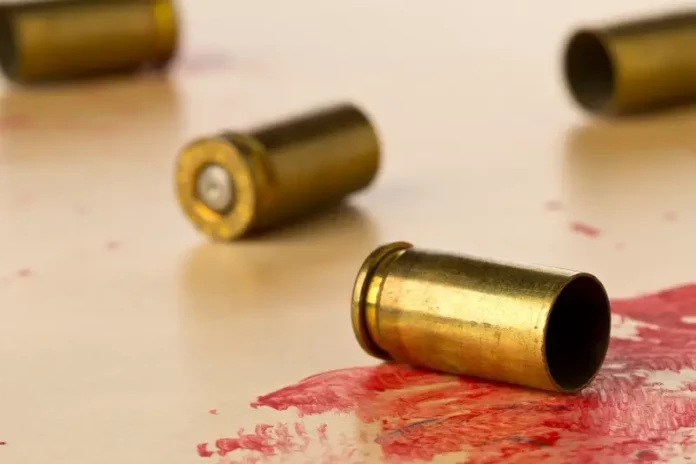
On the livestream, Gastélum and his companions were wearing bright orange coats and bags of the kind used by delivery drivers. Local media reported the outfits initially led police to believe the victim was a courier, before officials learned his identity. Investigators cordoned off the site and began examining cartridge casings and surveillance footage for clues. No arrests had been made as of Wednesday, and it was not clear whether Gastélum had received any threats.
Culiacán sits at the center of a conflict that has torn through Sinaloa in recent years, driven by warring branches of the Sinaloa Cartel — Los Chapitos and La Mayiza, also known as Los Mayos. At the peak of the bloodshed, bodies were dumped across the city bearing a faction’s calling card. Los Chapitos would leave a pizza or pizza box on a corpse. Los Mayos would leave a sombrero, and wearing the hats around Culiacán grew dangerous because it could suggest loyalty to one side. On the night he died, Gastélum was filmed in a white sombrero. By Wednesday, tributes and condolences appeared across his social media pages, while candles burned at the site of the attack.
A Grim Pattern of Livestreamed Deaths
This marks the second occasion in just over twelve months that gunmen have fatally attacked a social media personality while they were broadcasting in real time. In May 2025, beauty content creator Valeria Márquez, 23, was shot to death during a TikTok livestream from a salon in Jalisco, a state in Mexico’s central region.
David Saucedo, a Mexican security analyst, said influencers are killed or menaced for a variety of reasons. Some, he said, had ties to a criminal faction in a contested area, produced content for it or carried on romantic relationships with cartel members. Others laundered money for criminal groups or spread information in ways that resembled the work of a journalist. Saucedo said cartels want to dictate and control the regions where they operate, turning creators into channels for spreading criminal messages.
The pattern extends beyond Sinaloa to other areas dominated by organized crime, particularly Jalisco. Following Márquez’s killing, U.S. Treasury officials sanctioned five figures from a prominent Mexican criminal organization, including the main suspect in her death. The sanctions targeted the Jalisco New Generation Cartel (CJNG), which the Trump administration blames for a large share of the fentanyl and other illegal drugs reaching the United States.
The CJNG was led by Nemesio Rubén “El Mencho” Oseguera Cervantes until Mexican military forces killed him in February; U.S. authorities had offered a $15 million reward for information leading to his capture. A cartel commander closely tied to him, Ricardo Ruiz Velasco, was also sanctioned and identified by the Treasury Department as the prime suspect in Márquez’s murder and her alleged romantic partner. On Wednesday, the U.S. government announced financial rewards totaling as much as $102 million for tips resulting in the capture or prosecution of eight CJNG commanders.
Gastélum’s death comes as Mexico’s government faces mounting pressure from President Donald Trump’s administration to crack down on cartel violence — a demand made all the more urgent by the disturbing reality that, twice now in little more than a year, content creators have been killed while livestreaming.