


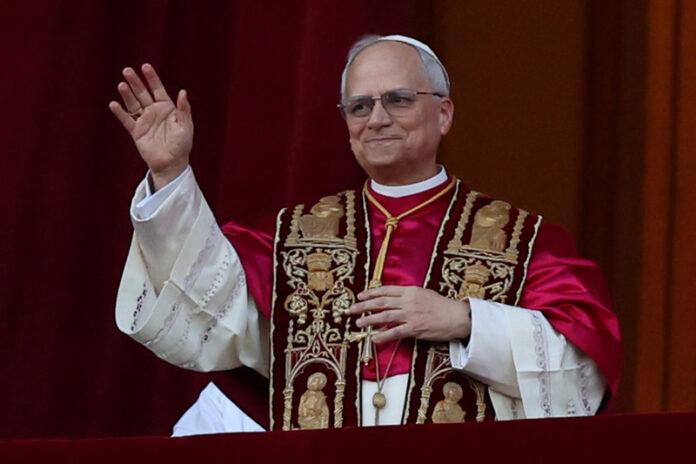
During his inaugural American network interview as pontiff, Pope Leo XIV used his platform to champion immigration and national openness — ideals that stand in stark opposition to the restrictive border policies championed by the Trump administration. The 70-year-old pontiff, who spoke Wednesday from the Borgo Laudato Si’ papal gardens near Rome, offered NBC anchor Tom Llamas a vision of the United States defined by its historic embrace of newcomers from every corner of the globe.
When asked what he cherishes most about his homeland, Leo highlighted the nation’s founding principles and commitment to liberty before emphasizing its multigenerational tradition of “having invited for generations people from around the world to be part of America.” The timing carried unmistakable weight: his words arrived as the White House pursues an agenda centered on immigration restriction.
Leo becomes the first pontiff born in the United States — a Chicago native whose unique position lends particular resonance to his remarks on American domestic policy. Though NBC’s Lester Holt had previously interviewed Leo during a global media gathering last year, Wednesday’s broadcast represented his first appearance on U.S. television since his papal election.
From Grandparents Who Crossed Oceans
The pope anchored his observations in family history, referencing genealogical research completed last year. Both his grandparents arrived as immigrants, he explained, and his maternal ancestry includes “people who were both slaves and slave owners.” That mixed heritage, he suggested, informs his understanding of what constitutes one of the nation’s greatest strengths — a perspective he pledged to continue defending.
Public Confrontation Between Rome and the White House
Relations between Leo and President Donald Trump have deteriorated into open hostility. Trump has labeled the pontiff “weak on crime” and “terrible for foreign policy,” while Vice President JD Vance, who converted to Catholicism as an adult, has questioned Leo’s grasp of church doctrine. The pope, for his part, has described the administration’s migration measures as “inhuman.” He maintains he harbors no trepidation about the White House and will continue proclaiming gospel teachings as the church’s fundamental obligation.
The administration declined to respond to the pontiff’s remarks when contacted Wednesday.
A July 4 Pilgrimage Instead of a Presidential Invitation
The clash has manifested through symbolic choices alongside verbal sparring. Though the White House invited Leo to Washington for the country’s 250th anniversary festivities, the Vatican announced he would instead visit Lampedusa, Italy — the southernmost Italian territory and initial landing point for migrants surviving Mediterranean crossings.
On July 4, 2026, Leo led a procession and celebrated Holy Mass on the island. Father Antonio Spadaro, undersecretary at the Vatican office governing culture and education, characterized the decision as intentional. An American pontiff chose on the U.S. national holiday not to commemorate national boundaries but to stand at what Spadaro termed the wounded threshold of the Mediterranean. The gesture itself, Spadaro maintained, functioned as an unofficial declaration.
Spadaro portrayed the journey as offering an alternative vision rather than direct confrontation, noting it occurred as the United States elevated the closing of its doors to migrants as a banner issue — something an American pope grasped intimately. Leo avoids accusatory rhetoric, Spadaro explained, but reminds the world that the dignity God grants each person precedes any national boundary.
In a written message to the United States preceding the anniversary, Leo articulated the matter in distinctly Catholic language. Safeguarding human life, he argued, demands that nations receive, shelter and support those crossing borders seeking safety. Extending kindness and welcome to migrants, he contended, reflects the inherent worth belonging to every individual.
The NBC conversation, the written correspondence and the Lampedusa journey collectively reveal a unified Vatican stance — responding to the administration’s enforcement measures not through direct confrontation but through persistent affirmation of migrants’ moral standing. For a pope sharing the president’s birthplace, disagreement over national character has emerged as one of the most prominent tensions dividing Rome from Washington.