


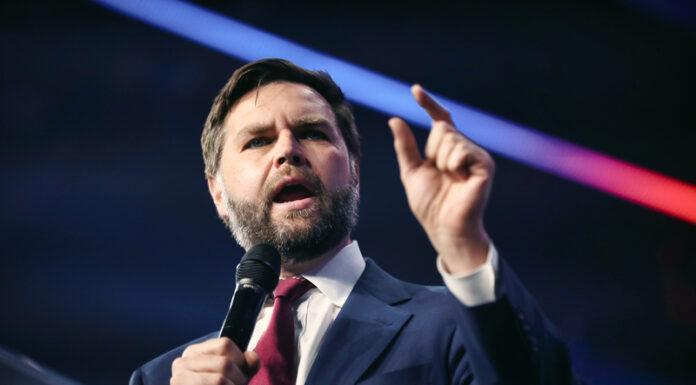
Of all the people who might know whether President Donald Trump plans to anoint a successor, his own vice president turns out not to be one of them.
Trump declined on Tuesday, Oct. 20, 2026, to say whether he would back Vice President JD Vance in a 2028 campaign, telling reporters in the Oval Office — with Vance standing directly behind him — that the subject has never come up between them.
A Reporter Never Finished the Question
The exchange came during an Oval Office event announcing a new whistleblower reward program. A reporter began asking the president about Vance’s remarks in an interview a day earlier, in which the vice president said he expected Trump’s endorsement if he ran. Trump cut in before the question was out, praised Vance’s talent and character, then got to the part about the two never having discussed it.
“I don’t think we’ve ever talked about it. You know, who would believe that?” Trump said. Vance agreed from behind him and nodded along as the president added that it was far too early, that the midterms had to come first and that everyone would see how it goes.
Why a Delay Wouldn’t Be Weird
Vance’s side of the story aired Monday, Oct. 19, on “2WAY TONIGHT,” in an interview with journalist Mark Halperin conducted aboard Air Force Two. Halperin put a panel’s prediction to him: that Vance is 99 percent to 100 percent certain to run, and that Trump would sit on an endorsement for a long while to toy with him and play the game out.
Asked whether the endorsement would come the moment he announced, Vance didn’t pretend to know. “I would think so, but I don’t know, man,” Vance said. “I haven’t talked to him about it.”
Halperin pushed, suggesting it would be strange for a sitting vice president to tell the president he was running only to be told the president needed time to think it over.
“No, I don’t think it’d be weird,” Vance replied. “Again, I think I would get his endorsement.”
He continued: “But I also think there’s something to be said for people actually running their own race, and because the president’s endorsement is so dispositive, you could absolutely see a scenario where the president says, ‘You know what? We need to let, like, this race play out and not, like, preemptively prejudge the results.'”
Having never raised it with Trump, Vance said, he couldn’t speak to the president’s thinking on the matter. He also said he could turn out to be terrible at the parts of a presidential campaign he has never faced — the media scrutiny, the pressure, the policy proposals. For now, he said, he has not made up his mind about 2028 and is focused on electing as many Republicans as possible in early November.
The Rivalry Trump Keeps Encouraging
The former Ohio senator leads comfortably among Republicans in a New York Times aggregation of recent 2028 polling, making him the clear front-runner for the nomination. Trump has repeatedly encouraged a competition between Vance and Secretary of State Marco Rubio for that nomination, a dynamic Vance once joked about by invoking the president’s old reality show, “The Apprentice.”
Vance has also said there is a chance he doesn’t run at all, noting that Second Lady Usha Vance is not a big fan of politics and that the couple have four small children.
The Endorsement Vance Wouldn’t Give
The same interview produced a sharper break with the president. Trump threw his support behind Israeli Prime Minister Benjamin Netanyahu in a Truth Social post ahead of Israel’s Oct. 27 election. Vance would not follow. He said he endorses American candidates and that the midterms are where his attention is. “I’m not getting involved in Israeli elections,” he told Halperin.
He has gotten involved in a foreign race before. Earlier in 2026, Vance traveled to Budapest, Hungary, to support Hungarian Prime Minister Viktor Orbán, whom Trump had endorsed. Orbán lost.
Both men have spent the final stretch before the Nov. 3 midterms campaigning for Republican candidates around the country — Vance was at a rally at Hyder Warehouse in Hendersonville, N.C., on the same day his interview aired. Whether the endorsement comes, and how quickly, remains a conversation neither man says he has had with the other.