


Pope Leo XIV’s doctors have delivered the news every cancer patient hopes to hear, just eight days after surgeons removed part of his lung.
Leo needs no further treatment after lung cancer surgery, his personal physician, Dr. Luigi Carbone, and Prof. Stefano Margaritora, the thoracic surgery professor who led his surgical team, said in a Vatican press office bulletin on Wednesday, Oct. 21, 2026. The final laboratory work on tissue taken during the Oct. 13 operation at Rome’s Agostino Gemelli University Hospital was completed that day.
“The final histological reports and molecular biology analyses of the tissue removed during the Holy Father’s surgery have been completed today,” the doctors said. “The results have confirmed that the condition was a pulmonary adenocarcinoma and that the disease was localized. A subsequent oncological evaluation has confirmed that no further therapy is required.”
Why “Localized” Was the Key Word
Localized means the cancer had not spread beyond the lung.
Pulmonary adenocarcinoma is the most common type of lung cancer, accounting for roughly 40 percent of all cases. It moves slowly and often turns up in people who never smoked. It is also the most common subtype of non-small cell lung cancer and begins in the mucus-making cells that line the lungs.
The numbers attached to that diagnosis swing hard on one question — whether the disease has traveled. The five-year relative survival rate for non-small cell lung cancer is 67 percent when the cancer has not spread outside the lung. It falls to 40 percent at the regional stage, when the disease has reached nearby structures or lymph nodes, and to 12 percent once it has spread to other parts of the body.
Surgeons removed the lower lobe of the pope’s right lung in a minimally invasive, camera-guided procedure. The operation itself ran about 90 minutes, though Leo was in the operating room roughly three hours. There were no complications, his doctors said at the time. He woke normally and was back in his room after a brief observation period.
Back in the Popemobile
Leo, 71, had announced on Oct. 11 that routine medical tests turned up a nodule on his lung and that he would need surgery, adding that it had been found early. He was discharged from the Gemelli on Saturday afternoon, Oct. 17, after blood tests and a chest X-ray showed he was well enough to return to the Vatican.
He had not stopped working while he was there. On Friday, Oct. 16, he telephoned Russian President Vladimir Putin and urged him to call a ceasefire in the Russian-occupied Ukrainian city of Oleshky.
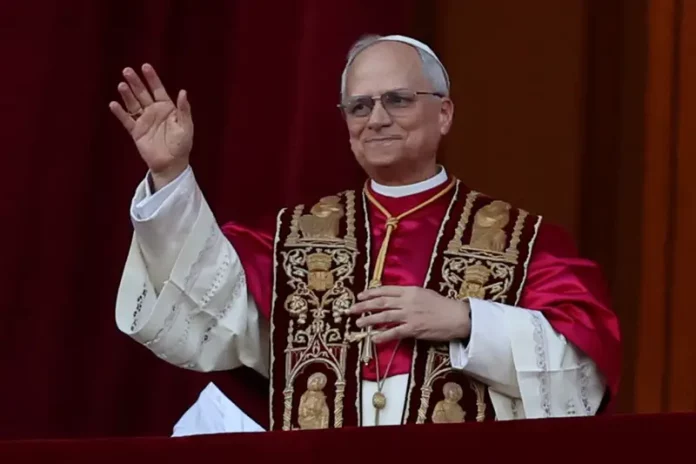
On Sunday, Oct. 18, Leo appeared at the window of his Vatican residence overlooking St. Peter’s Square to lead a prayer, and the crowd below cheered. Three days later he was down in the square itself for his weekly general audience with pilgrims, riding the popemobile for the first time since the operation. Leo, the former Cardinal Robert Prevost, a Chicago native and the first American pope, was elected the church’s 267th pontiff in May 2025.
The Thin Air Waiting in Cuzco
Officially, the hardest test of his recovery is still on the calendar. Leo is scheduled to leave Nov. 6 for a 12-day trip to Uruguay, Argentina and Peru, returning Nov. 17 — 19,000 miles, multiple flights, two helicopter rides, and a stopover in Cuzco, high in the Peruvian Andes at an elevation of 11,000 feet. Peru holds a particular place in his life. He was bishop of Chiclayo there, and he holds Peruvian citizenship.
Margaritora told Vatican News on Saturday, Oct. 17, that recovery from Leo’s type of surgery typically takes a couple of weeks. There were “no clinical reasons” against a long flight in about three weeks, the surgeon said. The Vatican’s secretary of state has indicated the pontiff may need to adjust the pace of his schedule to aid his recovery.
Before the diagnosis, Leo — who plays sports including tennis and often uses the papal retreat at Castel Gandolfo, near Rome — was generally believed to be in good health. He is easing back into his duties now, and from the window on Sunday, Oct. 18, he thanked the people who had prayed for him.
“This experience has made me feel particularly close to all those who are experiencing illness and a condition of frailty,” Leo said.