


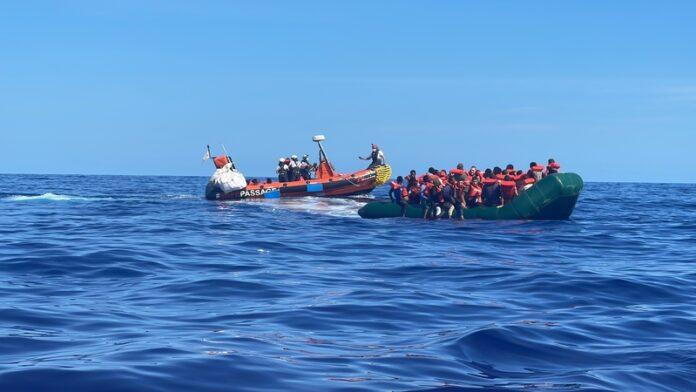
Only one passenger came out of the water alive after a wooden boat bound for Spain rolled over off the Senegalese coast.
The death toll from the capsizing climbed to 39 on Monday, Nov. 9, 2026, after more bodies were found, Senegal’s emergency services said. The boat had left Saint-Louis in northern Senegal for the Spanish coast and overturned off Kébémer, a town north of Dakar, the capital, over the weekend of Nov. 7-8.
“Smugglers and traffickers charged them for a dangerous journey on boats that were not fit for the sea,” Amy Pope, who leads the International Organization for Migration, said in a statement.
The figure moved twice before it reached 39. Senegal’s Interior Ministry said Sunday, Nov. 8, that at least 21 people had died and that rescuers were searching for possible survivors. The Senegalese Press Agency reported at least 34 dead on Nov. 8, a toll the rights group Action for Human Rights and Friendship confirmed.
How many people were aboard remains unknown. The ministry did not give a number, and several passengers are still believed to be missing.
Where the Pirogue Went Over
The vessel was a pirogue, the long wooden boat used along this stretch of the West African coast. It capsized off the Loumpoul dunes in the Kébémer department, between Dakar and the northern city of Saint-Louis, according to media accounts.
Most of the victims came from the Leona and Thieppe districts of that same department, according to local media reports.
Thousands of young Senegalese have taken this route, traveling in uncovered wooden canoes across roughly 1,300 kilometers (about 800 miles) of the Atlantic Ocean to reach Europe. They go looking for better economic conditions. Many young people at home face high unemployment and poverty amid an economic crisis.
Faye Vows to Target the Networks
President Bassirou Diomaye Faye offered his condolences and vowed to clamp down on the networks behind the crossings. The Interior Ministry said the government was determined to fight people smuggling, including through closer cooperation with neighboring countries.
On Friday, Nov. 6, Senegalese authorities said they had intercepted 142 migrants on a similar boat heading for Spanish territory. The passengers included nationals of several West African countries.
The Island at the Other End
At the far end of the route, officials on El Hierro, one of Spain’s Canary Islands, declared an emergency on Saturday, Nov. 7, after a surge in arrivals. Officials there said more than 3,300 people had come ashore aboard around 30 boats since the start of November. The island is home to about 11,400 residents.
“This is precisely what has led us to declare an emergency in order to ensure a framework of cooperation with higher-level institutions,” Alpidio Armas, who heads El Hierro’s island council, said on Spanish television. He said conditions at the island’s hospital had become undesirable.
Arrivals to the Canary Islands hit a record 46,000 in 2024. They then fell sharply, as surveillance increased and Spain deepened its cooperation with African governments.
Off Kébémer, the work was not finished. The Interior Ministry described its count as provisional while search operations continued, and the toll rose again Monday, Nov. 9, as more bodies were recovered.
The Atlantic crossing to the Canaries has killed thousands of people in recent years. The migrant rights group Walking Borders counted 635 deaths in the first five months of 2026 alone.
A Dawn Capsizing Near Joal
Late last year, on Dec. 24, 2025, a pirogue with about 100 people aboard flipped at dawn near Joal, a coastal town in western Senegal, after reportedly setting out from the Saloum Delta. At least 12 people died, at least 32 survived, and others were left missing.