


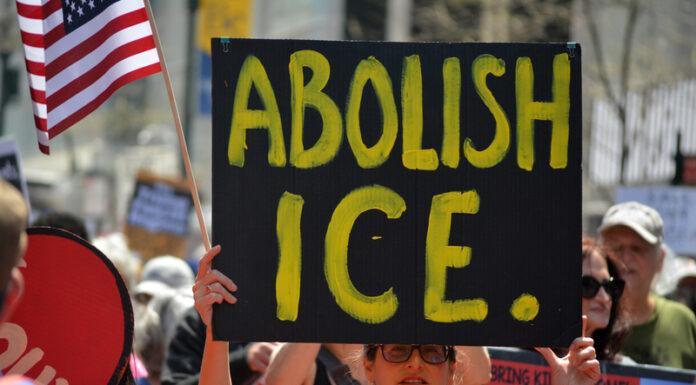
The streets of Los Angeles have become a battleground between federal forces and immigration protesters, transforming America’s second-largest city into the epicenter of a constitutional crisis over presidential power and state sovereignty.
President Donald Trump escalated federal intervention in Los Angeles on Monday, June 9, 2025, deploying 700 active-duty Marines and authorizing an additional 2,000 National Guard troops as protests against immigration raids continued. The unprecedented military response, now totaling about 4,000 troops, has drawn fierce opposition from California officials and legal challenges.
The president’s approach to the crisis was crystallized in his stark warning to protesters: “They spit, we hit.” Trump claimed demonstrators had engaged in physical provocation against federal agents, justifying what he characterized as a necessary federal response to restore law and order.
Speaking to reporters on Monday, June 9, Trump defended the escalating military deployment, suggesting he felt compelled to increase force levels to prevent violence from spiraling out of control. When asked about the deployment of Marines, Trump initially said, “We’ll see what happens” before confirming the decision. The president characterized the situation as potentially leading to an insurrection, though he stopped short of formally invoking the Insurrection Act.
The protests originated on Friday, June 6, when Immigration and Customs Enforcement conducted raids throughout Los Angeles County, resulting in the arrest of 35 Mexican citizens, according to Mexican President Claudia Sheinbaum. Demonstrators initially gathered near the Edward R. Roybal Federal Building and Metropolitan Detention Center in downtown Los Angeles, chanting “ICE out of LA” while opposing the administration’s deportation operations.
The situation deteriorated rapidly over the weekend as National Guard troops deployed tear gas, flash-bang explosives, and pepper balls to disperse protesters in multiple locations across Los Angeles County. The most violent confrontations occurred in Paramount and Compton, where demonstrators hurled rocks and cement at Border Patrol vehicles while federal agents in riot gear attempted to maintain control. Multiple vehicles were set ablaze, including several autonomous Waymo taxis in downtown Los Angeles on Sunday evening.
California Governor Gavin Newsom and Attorney General Rob Bonta filed a federal lawsuit on Monday challenging Trump’s deployment, arguing it violates the Tenth Amendment and state sovereignty. Newsom called the military presence “illegal and immoral,” emphasizing that Trump federalized the California National Guard without proper state authorization for the first time since the Selma to Montgomery marches in 1965. The lawsuit seeks to return command of the National Guard to state control.
Trump posted on Truth Social on Monday that Los Angeles would be “completely obliterated” without his Guard deployment, directing coordination between multiple federal agencies. The president expressed support for border czar Tom Homan’s suggestion that Governor Newsom should be arrested for possible obstruction of immigration enforcement, telling reporters, “I would do it if I were Tom. I think it’s great.”
The White House justified the deployment under Title 10, allowing the president to federalize the National Guard during instances of rebellion or threats to federal authority. Defense Secretary Pete Hegseth confirmed that the 700 Marines from the Marine Corps Air Ground Combat Center at Twentynine Palms were activated on Monday and began arriving in Los Angeles on Tuesday. These Marines are from the 2nd Battalion, 7th Marines, 1st Marine Division, trained in de-escalation, crowd control, and rules for the use of force.
Los Angeles Police Chief Jim McDonnell held a news conference on Monday, acknowledging the deployment of Marines and describing it as presenting “logistical challenges” and “risks confusion” during critical incidents. McDonnell emphasized that the LAPD has decades of experience managing large-scale demonstrations and stressed the need for open communication between all agencies to avoid escalation. The department mobilized an additional 400 officers to respond to the ongoing protests.
The protests have expanded significantly beyond the initial federal building area, with demonstrators marching throughout downtown Los Angeles and into surrounding communities. On Monday evening, police declared another unlawful assembly and began dispersing hundreds of protesters gathered outside the federal detention center using tear gas and less-lethal munitions. The LAPD reported that two officers were injured when motorcyclists attempted to breach police lines, while five police horses also sustained minor injuries during crowd control operations.
Los Angeles Mayor Karen Bass called for an end to federal immigration raids during a Monday news conference, stating that the fear and uncertainty they created led directly to the unrest. Bass described feeling like Los Angeles was being used as a “test case” for federal takeover of local authority, calling the National Guard deployment a “chaotic escalation.” She urged protesters to remain peaceful while criticizing the federal government’s approach as experimental and unnecessary.
The Department of Homeland Security characterized the targeting of law enforcement in Los Angeles as “despicable,” while Acting ICE Director Todd Lyons criticized local officials for what he described as delayed responses to federal requests for assistance. Federal officials have indicated that immigration enforcement operations will continue despite the protests, with several dozen arrests already made throughout the demonstrations.
Mexican officials have actively engaged in the situation, with Consul General Carlos González Gutiérrez confirming that legal services would be provided to detained Mexican nationals. President Sheinbaum emphasized that the arrested individuals “are not criminals” and urged the United States to respect their rights. Mexico has expressed concern about the escalating military response and called for de-escalation.
The military escalation has sparked nationwide political debate about presidential power and federal intervention in local affairs. U.S. Northern Command confirmed that approximately 1,700 National Guard members were operating in the greater Los Angeles area by Monday, with the full 4,000 troops expected to be in position by Wednesday. This represents the largest domestic military deployment for civil unrest since Hurricane Katrina, and the first time Marines have been activated for domestic crowd control in decades.
Several protest organizations, including the Party for Socialism and Liberation and the Los Angeles chapter of the Democratic Socialists of America, have announced continued demonstrations through the week. Union leader David Huerta, president of SEIU California, was arrested during the protests and treated at a hospital for injuries sustained during his arrest, drawing additional criticism from labor organizations.
The confrontation between federal authorities and protesters shows no signs of immediate resolution, with both sides remaining entrenched in their positions. The deployment of active-duty Marines represents a significant escalation that legal experts say treads in “uncharted legal waters” regarding the use of military force for domestic law enforcement. The situation has drawn international attention and raised fundamental questions about the balance between federal immigration enforcement and state sovereignty in the American constitutional system.