


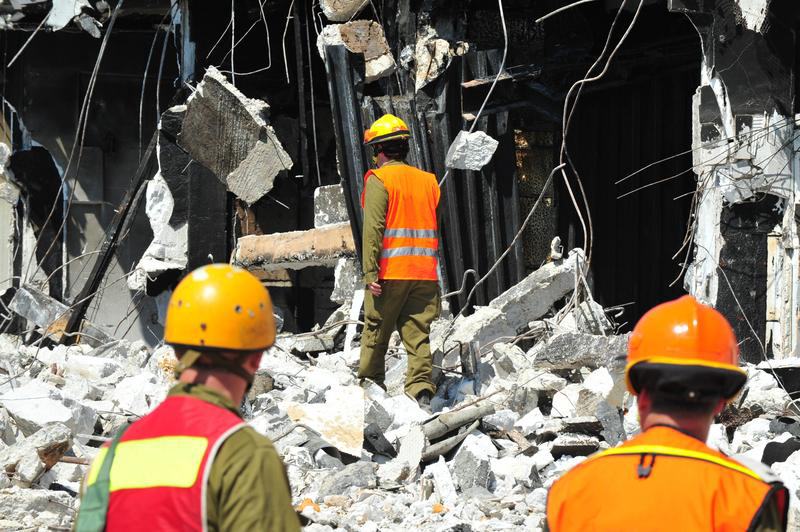
At least 22 people were killed and 16 injured when two buildings collapsed in the Al-Mustaqbal neighbourhood of Fez, Morocco, marking one of the deadliest structural failures in the country in recent years.
The two four-story buildings housed eight families in Fez, Morocco’s third-largest city. One building was unoccupied at the time of collapse, while the adjacent structure was hosting an Aqiqah celebration, a traditional Muslim ceremony marking the birth of a child.
The unoccupied building collapsed first, triggering the adjacent building’s collapse. The injured were transported to the university hospital as search and rescue operations continued on Wednesday.
Both structures had shown signs of cracking before the collapse. An investigation has been opened to determine the exact cause of the disaster.
The neighbourhood was evacuated following the incident as emergency crews worked to locate anyone still trapped beneath the rubble.
The buildings were constructed in 2006 under the City Without Slums program, a self-construction initiative aimed at providing housing for residents.
“We are deeply saddened by this tragedy,” said one official involved in the rescue operations.
This marks the second fatal collapse in Fez this year. A previous collapse in May killed 10 people in a building that had already been designated for evacuation.
The tragedy underscores ongoing concerns about structural safety across Morocco. Adib Ben Ibrahim, housing secretary, said in January that approximately 38,800 buildings across the country had been classified as being at risk of collapse.
The collapse ranks among the worst building disasters in Morocco since the fall of a minaret in Meknes, which killed 41 people in 2010.
Fez serves as one of Morocco’s major cultural and economic centers. The city is preparing to host the Africa Cup of Nations this month and will serve as a host city for the 2030 FIFA World Cup.
The collapse occurred amid broader tensions over living conditions in Morocco. Anti-government protests swept through major cities in October, with demonstrators criticizing deteriorating public services and infrastructure.
“The situation is urgent and requires immediate attention,” one housing advocate stated regarding the thousands of at-risk buildings.
Three people were killed during the October protests when demonstrators attempted to storm a security headquarters. Over 400 people were arrested before the violence subsided.
As rescue operations continued on December 10, 2025, authorities warned that the death toll could rise as crews worked through the debris. The prosecutor’s office indicated the casualty count remained preliminary as the search for additional victims progressed.
The disaster has intensified calls for stricter enforcement of building safety regulations and more comprehensive inspection programs for at-risk structures.
Emergency response teams, including local authorities, security services, and civil protection units, mobilized immediately after receiving notification of the collapse.
The incident has raised questions about the adequacy of oversight for buildings constructed under government housing programs. The City Without Slums initiative, designed to address housing shortages, now faces scrutiny over construction standards and long-term structural integrity.
As Fez prepares to welcome international visitors for major sporting events, the collapse has cast attention on the contrast between investments in new sports facilities and the condition of residential buildings in established neighbourhoods.