


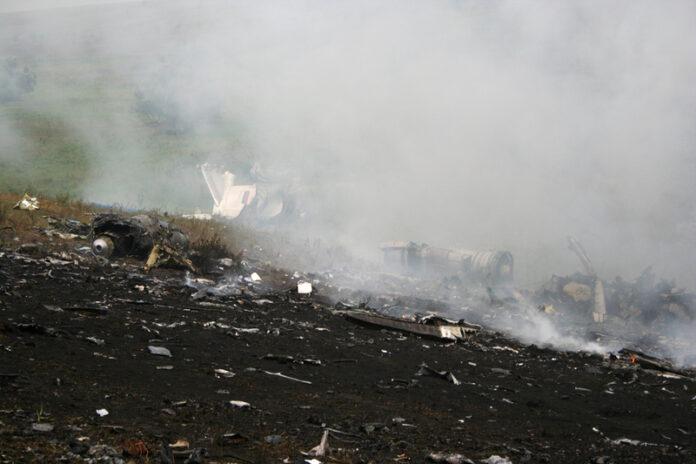
A private jet carrying Libya’s military chief and seven other people crashed near Ankara, Turkey, on Tuesday, December 23, 2025, killing everyone on board in what officials described as a tragic accident caused by a technical malfunction.
Gen. Muhammad Ali Ahmad al-Haddad, who served as army chief of staff for Libya’s UN-recognized government, died alongside four other senior Libyan military officers and three crew members when the Falcon 50 business jet went down in the Haymana district, approximately 70 kilometers south of Ankara.
The aircraft departed from Esenboga Airport at 8:10 p.m. local time on Tuesday, bound for Tripoli, Libya. At 8:33 p.m., the plane reported an electrical malfunction to air traffic control and requested an emergency landing. Air traffic controllers immediately redirected the jet back toward Esenboga Airport and initiated emergency procedures on the ground. However, the aircraft disappeared from radar at 8:36 p.m. while descending for the emergency landing.
Turkish search and rescue teams located the wreckage near the village of Kesikkavak during overnight operations. Security camera footage aired on local television showed the night sky over Haymana suddenly illuminated by what appeared to be an explosion. There were no survivors.
Libyan Prime Minister Abdul-Hamid Dbeibah confirmed the deaths in a statement on Facebook. “It is with deep sadness and great sorrow that we learnt of the death of the Libyan army’s chief of general staff, Lieutenant General Mohammed al-Haddad,” he said, calling the incident a “tragic accident” and a “great loss” for Libya.
The four other Libyan military officers killed in the crash were Gen. Al-Fitouri Ghraibil, head of Libya’s ground forces, and Brig. Gen. Mahmoud Al-Qatawi, director of the Military Manufacturing Authority. Also among the dead were an advisor to the chief of staff and a military photographer. The three crew members who perished have not been publicly identified. The jet was registered in Malta and had been leased.
Al-Haddad had been in Ankara for high-level defense talks aimed at boosting military cooperation between Turkey and Libya and addressing regional security issues. During his visit, he met with Turkish Defense Minister Yasar Guler and Chief of General Staff Gen. Selcuk Bayraktaroglu. The delegation participated in discussions focused on defense cooperation, with Turkish Land Forces Commander participating in the meetings.
Turkey’s Justice Ministry assigned four prosecutors to investigate the crash, a routine step in such incidents. The investigation is examining all aspects of the accident, including the reported electrical malfunction and the circumstances leading to the loss of contact with the aircraft.
Al-Haddad played a crucial role in leading UN-brokered military unification efforts in Libya, where armed forces have been divided along with the country’s other institutions. His position as the highest-ranking military officer in western Libya made him a central figure in attempts to reunify the fractured nation’s security apparatus.
Libya plunged into chaos following the 2011 uprising that toppled longtime dictator Muammar Gaddafi. The country remains split between rival administrations in the east and west, backed by various militias and foreign governments. Al-Haddad’s death drew condolences even from rival factions, including from Khalifa Haftar, head of eastern Libya’s rival administration whose forces al-Haddad had opposed during a 2019 advance on western Libya.
Turkey has been the main supporter of Libya’s western government but has recently taken steps to improve relations with the eastern-based administration as well. The Turkish Parliament approved a motion on Monday extending the troop mandate in Libya for another two years, just one day before the fatal crash.
Following the crash, Ankara’s Esenboga Airport was temporarily closed and several flights were diverted to other locations while emergency operations were conducted. The airport later resumed normal operations.
Turkey held a military ceremony at Murted airbase on December 27, 2025, to honor the Libyan delegation before their bodies were repatriated. Turkish Defense Minister Yasar Guler and Chief of General Staff Selcuk Bayraktaroglu attended the ceremony, where five coffins draped in Libyan flags were loaded onto a plane. Bayraktaroglu accompanied the bodies back to Libya.
Libya subsequently held its own military ceremony at the Defense Ministry in Tripoli on December 27, 2025, after the bodies of all eight victims arrived. The ceremony provided military honors for al-Haddad and the other senior officers who died in the crash.
The loss of al-Haddad represents a significant setback for efforts to stabilize Libya’s divided military structure. As a respected figure who had maintained dialogue across Libya’s political divisions, his role in the UN-backed truce committee and military unification process will be difficult to replace. The tragedy occurred as Libya’s western government was working to strengthen both internal cohesion and external partnerships, particularly with Turkey, which has provided critical support to the Tripoli-based administration.
Turkish officials emphasized the importance of relying on official statements during the investigation and urged the public and media to avoid unverified social media posts and speculation.
The incident marks one of the most significant losses of senior military leadership in recent Libyan history and comes at a critical juncture as the nation continues efforts to unify its fractured institutions and military forces under international mediation. Libya has indicated it will send a team to Ankara to work with Turkish authorities on the ongoing investigation into the crash.