


A West Virginia librarian was arrested on January 27, 2026, and charged with making terroristic threats after allegedly using TikTok to recruit someone to assassinate President Donald Trump.
Morgan L. Morrow, 39, of Ripley, West Virginia, was taken into custody following an investigation by the Jackson County Sheriff’s Department and the Jackson County Bureau of Investigations. Authorities said Morrow, who worked as a librarian at the Jackson County Public Library, posted videos on the social media platform that appeared to solicit violence against the president.
According to a criminal complaint, the sheriff’s office became aware of the threatening posts on the evening of January 25, 2026. The threats originated from a publicly accessible TikTok account belonging to Morrow. One video caption stated: “Surely a sniper with a terminal illness cannot be a big ask out of 343 million,” an apparent reference to the U.S. population.
Officers from the Jackson County Bureau of Investigations and Ravenswood Police Department arrived at Morrow’s home Sunday night. She was subsequently taken to the Jackson County Sheriff’s Office for additional questioning.
After being read her Miranda rights, which she acknowledged and waived, Morrow admitted during an interview that she authored the post. She further admitted the threat was directed at Trump, though she stated she did not intend or plan to personally carry out the threat.
Jackson County Sheriff Ross Mellinger described the content as disturbing. “Some of the posts were pretty graphic,” Mellinger said on Monday. “She was rather proud of her work.”
The comments on Morrow’s posts allegedly suggested violence against other political figures as well, including Stephen Miller, Larry Ellison, and Peter Thiel.
Morrow was charged with violating West Virginia code 61-6-24(b) by making and communicating a terroristic threat. Under West Virginia law, a person commits this offense when they threaten to commit a violent crime with the intent to terrorize another person or cause evacuation of a building or public place. The statute also covers threats made recklessly, without regard for the risk of causing terror.
Terroristic threat charges in West Virginia are serious felonies that can carry significant prison sentences. The offense involves communicating threats that are reasonably capable of causing fear, alarm, or disruption, particularly when made publicly through platforms like social media where they can reach wide audiences.
Following her arrest, Morrow was transported to South Central Regional Jail. She was arraigned on Monday before Magistrate Laura Pursley, who set a property and surety bond at $75,000. The bond was not paid, and Morrow remains in jail.
The FBI and Secret Service were notified of Morrow’s arrest, according to Sheriff Mellinger, who said he was in contact with both federal agencies. The U.S. Secret Service is responsible for protecting the president and investigating threats against the commander in chief. Such threats are taken seriously regardless of whether the person making them has the means or stated intention to carry them out, as the communication itself can inspire others or create fear.
The Jackson County Public Library, where Morrow had been employed, released a statement addressing the incident. “The comments recently made by an employee do not reflect the mission, values, or standards of conduct of our organization,” the library said. The statement emphasized that the views expressed were made in an individual capacity and do not represent the position of the organization. The library said it is addressing the matter internally in accordance with its established policies and procedures.
Sheriff Mellinger stressed that the arrest had no political basis. In its public statement, the Jackson County Sheriff’s Department clarified that this remains an ongoing criminal investigation involving documented and serious concerns, rather than a political action.oubling concerns, not a political statement.
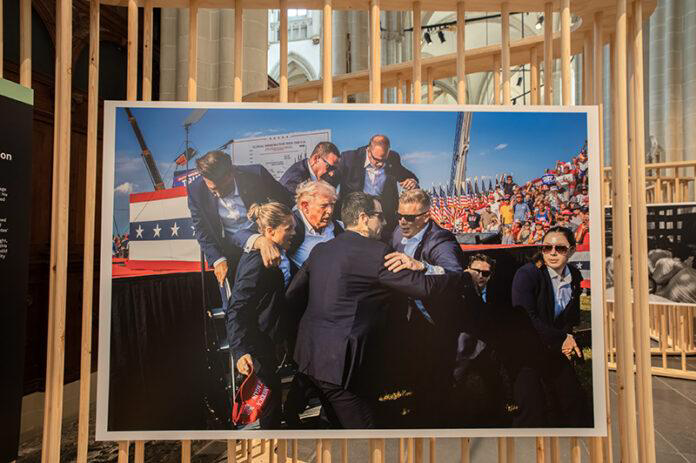
The case comes amid heightened concerns about threats against public officials and political violence. President Trump has been the target of assassination attempts in the past, and law enforcement agencies maintain strict protocols for investigating and prosecuting threats against the president and other protected officials.
Social media platforms have become increasingly scrutinized for their role in facilitating violent rhetoric and threats. While platforms like TikTok have community guidelines prohibiting threats and violence, enforcement remains challenging given the volume of content posted daily. Law enforcement agencies have developed specialized units to monitor social media for credible threats against public figures.
The investigation into Morrow’s case continues, and court records did not indicate when she will next appear in court. Prosecutors will need to demonstrate that her statements constituted a genuine threat rather than protected speech, though courts have generally held that true threats are not protected by the First Amendment.
Ripley, where Morrow lived and worked, is a small town in Jackson County, West Virginia.
The case highlights the ongoing challenges law enforcement faces in distinguishing between hyperbolic political speech and actionable threats in the digital age. While Americans have broad First Amendment protections for political expression, those protections do not extend to true threats of violence against individuals, particularly public officials.