


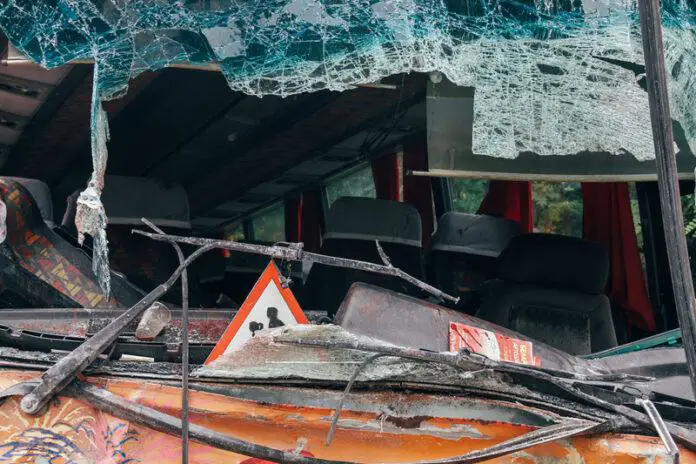
A head-on collision between a passenger bus and a cargo lorry in Morogoro Region, Tanzania, killed 10 people and injured 18 others on December 31, 2025. The accident occurred at Maseyu Village along the Morogoro-Dar es Salaam highway when a Mitsubishi Fuso passenger bus collided with a Howo cargo lorry. Both vehicles were engulfed in flames shortly after the collision.
The Morogoro Regional Police confirmed that the bus was traveling from Morogoro to Tanga Region. The lorry was transporting fertiliser from Dar es Salaam to Mbeya Region. All 10 deceased were passengers aboard the bus, including eight men and two women.
Among the 18 injured, nine were men and nine were women, with five children sustaining injuries—three boys and two girls. The injured were rushed to Morogoro Regional Referral Hospital for treatment. Scholastika Solomon confirmed that all the injured were in stable condition and were undergoing specialized treatment. The injured were received in varying conditions, including fractures and bruises on different parts of their bodies.
Preliminary investigations indicated that the accident was caused by negligence on the part of the lorry driver, estimated to be aged between 26 and 28. “It is alleged that the lorry driver attempted to overtake other vehicles without due care while it was heavily raining, making the road slippery,” the police said. Heavy rain had made the road slippery at the time of the collision, contributing to the dangerous conditions that led to the crash.
One of the survivors, Samson Mmali, described the moments leading up to the crash and the factors that worsened its impact. The lorry veered into their lane while overtaking, and the bus driver was also speeding, making it difficult for him to control the bus. This created a deadly situation that left little time for either driver to react.
Daniel Myala spoke to journalists about the rescue efforts and the importance of prompt emergency response. He called on drivers and other road users to strictly observe road safety regulations. By the time rescue teams arrived at the scene and carried out rescue operations, 10 people had already died.
The Morogoro Regional Fire and Rescue Brigade urged members of the public to report accidents and other emergencies promptly to enable swift rescue operations and reduce loss of life and property. Rapid response times can make a critical difference in accident outcomes, particularly when vehicles catch fire or passengers are trapped in wreckage. The brigade’s call for public cooperation reflects the challenges emergency services face in reaching accident sites quickly, especially on highways where crashes may not be immediately visible to passing motorists.
Tanzania has struggled with a persistent road safety crisis in recent years, with traffic accidents claiming numerous lives across the country. The nation’s highways have been the scene of multiple fatal crashes involving buses, lorries, and other vehicles. Road safety experts point to several contributing factors, including inadequate road maintenance, driver fatigue, mechanical failures, and unsafe driving practices such as speeding and reckless overtaking.
Weather conditions play a significant role in road safety throughout East Africa. During the rainy season, roads become slippery and visibility decreases, creating hazardous driving conditions. Drivers who fail to adjust their speed and driving behavior to match these conditions significantly increase the risk of losing control of their vehicles. Heavy commercial vehicles like lorries face particular challenges in wet conditions, as their weight and momentum make it harder to stop quickly or maneuver around obstacles.
The Morogoro-Dar es Salaam highway is a critical transportation artery connecting Tanzania’s commercial capital with inland regions. It carries substantial commercial and passenger traffic daily, making road safety on this route particularly important. The highway’s importance to Tanzania’s economy means that accidents on this road can have wide-ranging impacts beyond the immediate human tragedy, affecting commerce, supply chains, and regional connectivity.
Authorities once again urged motorists to exercise caution on highways, especially during the rainy season when road conditions are often hazardous. The repeated emphasis on driver caution reflects ongoing concerns about road safety compliance and the need for stronger enforcement of traffic regulations. Police said investigations into the accident are continuing.
The December 31 crash highlights the particular dangers posed by overtaking maneuvers on two-lane highways. When drivers attempt to pass slower vehicles without ensuring they have a clear view of oncoming traffic and sufficient distance to complete the maneuver safely, they put themselves and others at extreme risk. This risk multiplies in adverse weather conditions when stopping distances increase and vehicle control becomes more difficult.
Passenger bus accidents raise specific safety concerns because of the high number of occupants typically aboard such vehicles. When buses are involved in high-speed collisions or fires, the potential for mass casualties increases dramatically. Fire can spread rapidly through vehicles and create secondary dangers for both passengers and rescuers.
The involvement of a lorry transporting fertiliser adds another dimension to the accident. Cargo vehicles carrying various materials are a constant presence on Tanzania’s highways, supporting the nation’s agricultural and industrial sectors. However, the size and weight of these vehicles, combined with the nature of their cargo, can make accidents involving them particularly severe. Driver training and adherence to safety standards for commercial vehicle operators remain ongoing concerns for transport authorities.
Hospital officials continue the process of treating the injured and identifying the deceased. Doctors are attending to each patient according to the severity of their injuries. The stable condition of all 18 injured patients represents a positive outcome amid the tragedy, though some may require extended treatment and rehabilitation depending on the nature of their fractures and other injuries.