


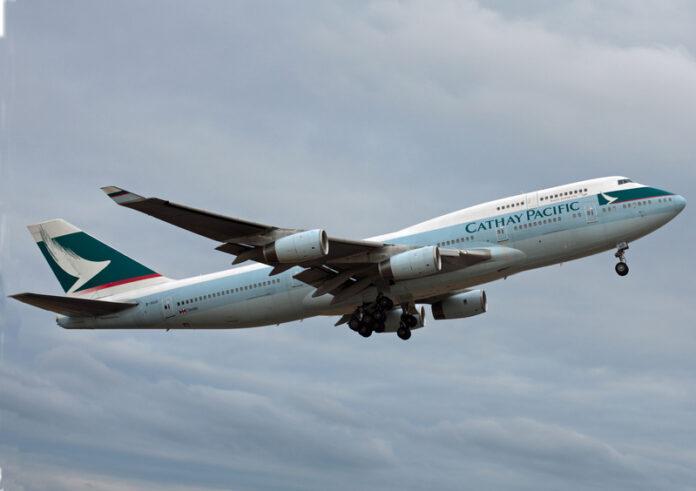
A 72-year-old passenger died after collapsing aboard a Cathay Pacific flight traveling from Amsterdam to Hong Kong, with police now investigating the cause of death following the incident on January 11, 2026.
Police received notification at 7:22 a.m. local time as the aircraft approached Hong Kong International Airport that a passenger had collapsed during the flight. The passenger was subsequently transferred to a hospital and certified dead, according to the Hong Kong Police Force.
Flight CX270 arrived at its destination at 7:38 a.m., where paramedics immediately boarded the aircraft to provide emergency medical services. The passenger was taken to North Lantau Hospital, where medical staff pronounced the individual dead.
The Hong Kong Police Force confirmed in a statement that a post-mortem examination will be conducted to ascertain the cause of death. Police are treating the case as a death on arrival and continue to investigate the circumstances surrounding the incident.
Cathay Pacific confirmed the death and detailed the crew’s response to the medical emergency. “The cabin crew immediately provided first aid when the passenger became unwell and called for ambulance service to be on standby before landing,” a spokesperson stated.
The passenger collapsed approximately 40 minutes before the scheduled landing at Hong Kong International Airport. During the emergency, the cabin crew deployed an automated external defibrillator in an attempt to revive the passenger and consulted ground-based physicians via satellite link to receive real-time medical guidance.
A spokesperson for Cathay Pacific stated that the crew followed standard inflight medical-emergency standard operating procedures throughout the incident. The airline extended its condolences to the passenger’s family following the tragedy.
Medical emergencies during flights, while relatively uncommon, require immediate and coordinated responses from airline crews trained in emergency procedures. Modern commercial aircraft are equipped with comprehensive medical kits that include automated external defibrillators, oxygen supplies, and various medications to address a range of potential health crises at altitude.
The deployment of an automated external defibrillator represents standard protocol when a passenger experiences cardiac symptoms or loses consciousness. These devices are designed to analyze heart rhythms and deliver electric shocks when necessary to restore normal cardiac function. Flight attendants receive regular training in cardiopulmonary resuscitation and the use of emergency medical equipment.
Satellite-based medical consultation services have become increasingly common in commercial aviation, allowing cabin crews to connect with ground-based physicians who can provide expert guidance during in-flight medical emergencies. These systems enable real-time communication between the aircraft and medical professionals who can assess symptoms, recommend treatments, and help determine whether a flight diversion is necessary.
Cathay Pacific announced that the airline will hold a safety stand-down this week to review lessons learned from the incident. Safety stand-downs allow airlines to pause regular operations temporarily to conduct comprehensive reviews of procedures, reinforce training protocols, and ensure all staff members understand updated safety measures.
The incident occurs amid heightened attention to airline safety following recent cabin disturbances. A 20-year-old passenger on the same airline attempted to open a door on a flight traveling between the United States and Hong Kong. That passenger was subsequently arrested following the mid-air incident.
Airlines operating long-haul international routes face unique challenges in managing medical emergencies, as aircraft may be hours away from the nearest suitable airport for emergency landings. The Amsterdam to Hong Kong route requires extended flight time, placing passengers in an environment where immediate hospital care is not accessible.
Medical professionals note that the cabin environment on commercial aircraft can pose challenges for passengers with certain health conditions. Reduced cabin pressure at cruising altitude decreases oxygen availability and can stress cardiovascular systems. Prolonged immobility during extended flights also increases risks for blood clots and other circulatory issues, particularly among older passengers.
Travel health experts recommend that passengers with known cardiovascular conditions or other serious health issues consult with physicians before undertaking long-haul flights. “Medical clearance is increasingly important for travelers undertaking extended international journeys, particularly those with pre-existing health conditions,” noted a travel health specialist.
The incident on Flight CX270 also highlights the importance of duty-of-care policies for companies whose employees engage in frequent international travel. Corporate travel managers are increasingly reassessing health protocols and insurance coverage to ensure adequate protection for business travelers, particularly those undertaking long-distance flights on a regular basis.
Airlines are required to carry automated external defibrillators on commercial passenger flights, with crew training requirements mandating regular recertification in emergency medical procedures, ensuring that flight attendants maintain current knowledge of life-saving techniques.
Hong Kong International Airport, one of Asia’s busiest aviation hubs, handles significant international passenger traffic annually. The airport maintains comprehensive emergency response capabilities, including on-site medical facilities and coordinated protocols with local hospitals for rapid transport and treatment of passengers requiring urgent care.
The identification of the deceased passenger underscores the international nature of the tragedy, affecting families across multiple countries. Consular services typically become involved in such cases to assist with repatriation procedures and provide support to family members navigating the complex processes required when a death occurs abroad.
Post-mortem examinations in cases of in-flight deaths serve multiple purposes, including determining the specific medical cause of death, identifying any contributing factors, and providing information that can inform future safety protocols. The results of such examinations require thorough analysis and laboratory test results.
The investigation by Hong Kong authorities will likely examine all aspects of the incident, including the timeline of events, the crew’s response, available medical equipment, and any factors that may have contributed to the passenger’s collapse. Such investigations help aviation authorities identify areas for improvement in emergency response procedures and medical equipment requirements.
Cathay Pacific, Hong Kong’s flag carrier, operates an extensive international network connecting the city to destinations across Europe, North America, Asia, and Oceania. The airline maintains rigorous safety standards and crew training programs designed to handle a wide range of in-flight emergencies.
The scheduled safety stand-down by Cathay Pacific demonstrates the airline’s commitment to continuous safety improvement and reflects industry best practices for responding to serious incidents. During such reviews, airlines examine every aspect of their emergency response protocols to identify potential improvements and ensure crews remain prepared for future medical emergencies.