


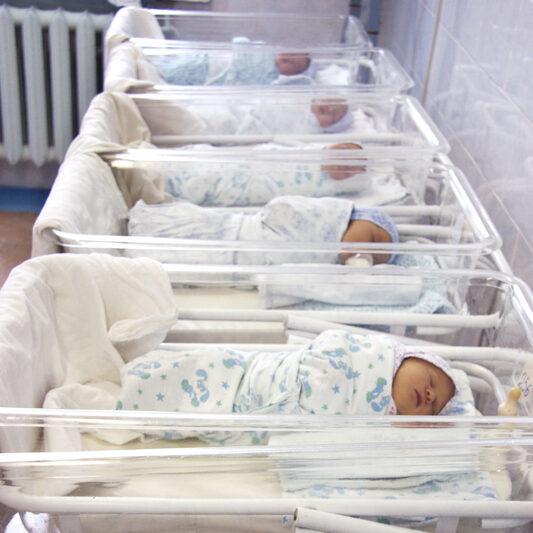
Russian authorities arrested two senior doctors on Wednesday, January 14, 2026, after nine newborns died at a Siberian maternity hospital earlier this month, triggering nationwide outrage over chronic staffing and funding gaps plaguing the country’s healthcare system.
The deaths occurred between January 4 and January 12 at Novokuznetsk Maternity Hospital No. 1, according to Russia’s Investigative Committee. The chief physician and acting head of intensive care face charges of negligence and causing death through negligence. Prosecutors allege the deaths resulted from “substandard performance of official duties.”
Investigators questioned staff, seized medical records, and launched forensic tests to determine the exact causes of death at the facility in Novokuznetsk, a city of half a million people in Siberia’s Kuzbass region. Chief physician Vitaly Kheraskov was suspended from his post while the investigation proceeds.
Between December 1, 2025, and January 11, the hospital delivered 234 babies. Thirty-two newborns required intensive care treatment, with 17 in critical condition suffering from “severe intrauterine infections.” Most victims were diagnosed with neonatal or intrauterine infections, pneumonia, and respiratory distress syndrome, with six of the nine babies being premature.
The hospital stated all newborns received care according to clinical guidelines, but acknowledged nine babies did not survive. Regional health authorities said the babies suffered from various diseases and died during childbirth or pregnancy. The facility suspended admissions due to high rates of respiratory infection.
The tragedy has sparked fierce criticism from politicians and commentators who question how Russia can address its demographic crisis when such incidents occur. Pro-Kremlin lawmaker Yana Lantratova called it “a crime against the country,” writing on Telegram: “In times of a demographic crisis, allowing several infants to die in one maternity hospital in such a short period is a crime against the country.”
Yekaterina Mizulina, head of a lobbying group that promotes internet censorship, accused local authorities of lacking “any shred of compassion” after the regional health minister confirmed the deaths on television but failed to express condolences to the families. “How can young people decide to have children when they see this kind of thing happening around them?” she asked.
Federation Council speaker Valentina Matvienko described the incident as a “tragedy” that must never be repeated. Kuzbass governor Ilya Seredyuk announced regional Health Minister Andrei Tarasov will inspect all maternity hospitals and perinatal centers “to ensure their readiness for the most complex cases.”
The scandal triggered nationwide repercussions. The governor of the Vologda region in northwest Russia—some 3,000 kilometers from Novokuznetsk—ordered major inspections of maternity hospitals. Health Minister Mikhail Murashko dispatched federal specialists to the Kemerovo region, with the team led by Roszdravnadzor head Alla Samoilova.
Russia’s Komsomolskaya Pravda tabloid reported the hospital was short dozens of staff, though the hospital denied this. Parents described staff withholding information about their children’s conditions, with one father learning his baby had died only after being told earlier that the delivery had gone smoothly. Another mother reported seeing ill staff members coughing and sneezing while moving around the ward without masks or gloves.
The deaths occurred during the New Year holiday period when many facilities operate with reduced staffing. One death was recorded during the first week of January 2026, with three more confirmed on January 8, and the remaining infants died shortly afterward during the holiday period.
Russia faces a severe demographic crisis that has intensified concerns about healthcare quality and accessibility. The country’s war in Ukraine has strained healthcare funding, with defense and security spending consuming massive budget resources while social spending remains constrained. Russia’s 2026 budget dedicates 38% to defense and security—the highest share since the Soviet era—while healthcare, education, and housing combined receive just 13% of the budget.
The tragedy has drawn attention to chronic underfunding and staffing shortages plaguing Russia’s medical system. Complaints about the Novokuznetsk maternity ward were widespread even before the deaths, with Federation Council social policy committee head Yelena Perminova noting “a great many complaints from women who gave birth there — about the staff and about the overall condition of the maternity ward.”
The other maternity hospital in Novokuznetsk remains open, serving the city’s residents while Hospital No. 1 remains under investigation. Forensic probes into each baby’s death are underway, with authorities working to determine whether additional charges will follow.
The case has become emblematic of broader systemic failures in Russia’s healthcare infrastructure at a time when the country grapples with demographic decline and resource allocation challenges exacerbated by ongoing military commitments. Public frustration continues mounting as citizens demand accountability and reforms to prevent similar tragedies at other facilities nationwide.