


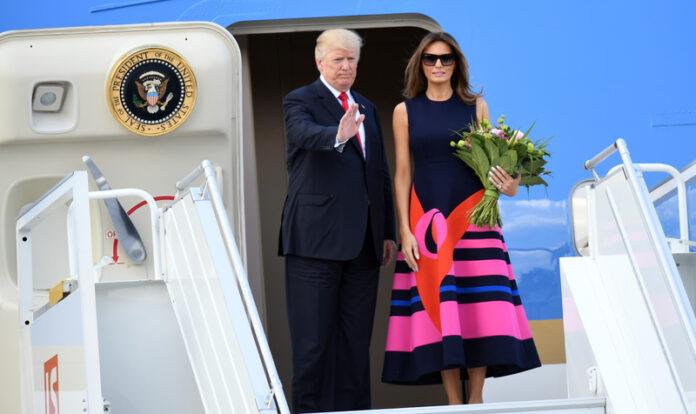
Documents released by the Department of Justice (DOJ) on January 31, 2026, show that a former assistant of convicted sex offender Jeffrey Epstein alleged to the FBI that Epstein introduced Melania Trump to Donald Trump.
The former assistant, who worked as a model before serving Epstein between 2005 and 2006, made this statement as part of a proffer agreement in July 2019. This revelation is among the three million pages of Epstein files that the DOJ has made public.
The testimony contradicts the narrative that both President Trump and First Lady Melania Trump have publicly shared about their meeting. The FBI document from November 2019 quotes the assistant saying, “ZEMPOLI [Zampolli] was trying to buy Elite Models with EPSTEIN. EPSTEIN introduced MELANIA TRUMP to DONALD TRUMP.”
The assistant testified under a proffer agreement, a legal deal that provides limited immunity in exchange for truthful statements, with false statements possibly leading to a five-year prison term. The document indicates the assistant was granted immunity for her testimony, although the specific charges have not been clarified.
Public accounts have long maintained that Zampolli introduced the couple at the Kit Kat Club in 1998. In response to the new documents, the White House pointed to a DOJ warning that came with the file release, stating that it might contain fabricated or falsely submitted content. The department also noted that before the 2020 election, the FBI received numerous false and sensationalist claims.
Zampolli, appointed as special envoy for global partnerships by President Trump, has traditionally been credited with bringing the couple together. This new testimony complicates that narrative and raises questions about the relationships within Epstein’s circle of acquaintances during the late 1990s.
The DOJ made public the files, which included about 2,000 videos and 180,000 images, said Deputy Attorney General Todd Blanche.
In October 2025, Melania Trump’s attorney threatened a multi-billion dollar lawsuit against claims linking her to Epstein’s social circle and demanded a retraction. In response, Wolff filed an anti-SLAPP lawsuit against the first lady in New York State Supreme Court on October 22, 2025, invoking free speech laws to counter her attempt to silence him.
The files also revealed Epstein’s connections to several members of President Trump’s inner circle. Weeks before Epstein’s death, Steve Bannon interviewed Epstein for a documentary. Elon Musk and Epstein exchanged emails about parties on Christmas Day 2012. Commerce Secretary Howard Lutnick also appeared in the documents, having corresponded with Epstein about a Caribbean meeting. These messages indicate a closer relationship between these individuals and Epstein than previously disclosed.
Epstein died by suicide in jail on August 10, 2019, while waiting to stand trial for federal sex trafficking charges. His death occurred shortly after his arrest in July 2019, around the same time the assistant provided her statement.
The DOJ warned that the released documents could contain fabricated or falsely submitted content since everything the FBI received from the public was included. Officials stated that inclusion in the documents does not automatically establish credibility or imply wrongdoing by any named individual. Many references to President Trump were found in the files, although most were forwarded news articles and media mentions rather than criminal evidence.
Notable names in the files include Bill Gates, Ghislaine Maxwell, Brett Ratner, and Kevin Warsh, showing Epstein’s extensive network across business, entertainment, and political sectors. Epstein exchanged text messages with Woody Allen, and wellness influencer Peter Attia appeared in the documents.
Katherine Keating, daughter of former Australian Prime Minister Paul Keating, offered to bring her sister to an Epstein-hosted dinner party, as per email exchanges in the files. These emails show Epstein’s efforts to cultivate relationships with the offspring of influential political figures.
Survivors of Epstein’s abuse criticized the document release, stating that it revealed their identities despite DOJ’s promises to safeguard their privacy.
After nearly 100 victims’ identities were exposed due to insufficient redactions, lawyers representing 300 survivors submitted an emergency request for the DOJ to remove its website. In response, the DOJ took down “several thousand documents” from its site to correct redaction failures that included victims’ names, banking details, and other personal information. One survivor reported receiving death threats after her private data was exposed.
The testimony from Epstein’s former assistant adds another dimension to the intricate web of Epstein’s connections with wealthy and influential individuals. Her statement, legally protected but given under penalty of perjury, is one of thousands of pieces of evidence now publicly accessible as investigators continue to probe Epstein’s network and activities.