


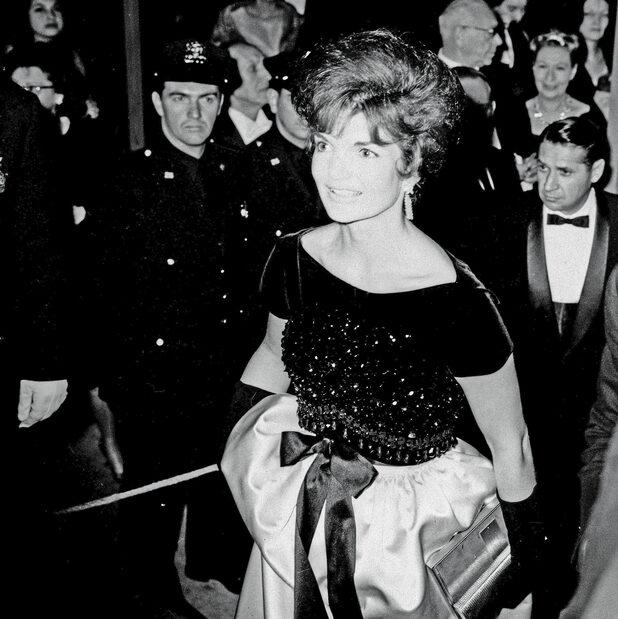
A personal letter penned by Jackie Kennedy in October 1964 has come to light amidst controversy at the Kennedy Center in Washington, DC. The letter foretells issues that have become reality under President Donald Trump’s management of the institution, six decades later.
The former first lady wrote to Roger Stevens, the founding chairman of the Kennedy Center, expressing her concerns about naming the national cultural center after her assassinated husband, President John F. Kennedy. She worried the institution may become a platform for political patronage and insisted on having a say in the selection of the director and trustees.
In her letter, Jackie Kennedy wrote, “He has a right to peace now,” highlighting her reluctance towards establishing another memorial to her late husband apart from his grave and presidential library.
She detailed stringent conditions for her support of the naming, even threatening to request Congress to change the center’s name if her conditions were not adhered to. Jackie Kennedy emphasized the necessity for trustees to prioritize the arts over political favors, specifically warning against the appointment of figures such as George Brown, who she described as being rewarded for past services or considered for future campaign contributions.
In February 2025, Donald Trump appointed himself as the chairman of the Kennedy Center, filling the historically bipartisan board with MAGA loyalists. Ric Grenell was appointed president, while Sergio Gor was named secretary. Trump also affixed his name to the exterior of the Kennedy Center, though an official name change requires congressional approval.
These changes sparked immediate outcry from the artistic community. Several performers canceled their shows at the Kennedy Center, leading to a significant drop in ticket sales. National Symphony Orchestra membership renewals dropped to 50 percent, while concert ticket purchases fell to 30 percent.
Several high-profile performers severed their ties with the Kennedy Center. The Washington National Opera ended its residency, the Martha Graham Dance Company canceled an upcoming show, and celebrated composer Philip Glass withdrew his world premiere. Renée Fleming, a Grammy-winning soprano, also withdrew from planned performances.
On February 4, 2026, Trump announced the Kennedy Center would close for two years, starting on July 4th. He described the center as tired, broken, and run-down, arguing the closure was necessary for quality construction.
“If we don’t close, the quality of construction will not be nearly as good, and the time to completion, because of interruption from audiences from the many events using the facility, will be much longer,” Trump stated.
The decision was defended by Grenell, who claimed the renovation was long overdue. Congress allotted 257 million dollars for the project.
Trump’s actions at the Kennedy Center have been sharply criticized by the Kennedy family. Jack Schlossberg, John F. Kennedy’s grandson, accused Trump of trying to tarnish JFK’s legacy. Maria Shriver, Kennedy’s niece, and Joe Kennedy III also publicly expressed their disapproval, condemning the changes as a betrayal of the public’s wishes.
The Kennedy Center, established as a living memorial to President Kennedy, has long served as the nation’s cultural hub, hosting opera, ballet, orchestral performances, theater, and other performing arts events. The center was named after President Kennedy, who was a strong proponent of the arts during his brief presidency. Federal funds were used for its construction and operation.
The resurfacing of Jackie Kennedy’s 1964 letter provides a glimpse into her careful consideration of protecting her husband’s legacy from political exploitation. The letter suggests that the trustees should be true patrons of the arts who would maintain the center’s integrity independent of political affiliations.
Recent developments at the Kennedy Center appear to validate Jackie Kennedy’s earlier fears about political patronage. Her cautionary words about trustees being appointed for past favors or in anticipation of campaign contributions seem particularly relevant given the current composition of the board.
Beyond changes in leadership, the Kennedy Center has faced significant financial obstacles, resulting from dwindling audiences and the departure of major performing groups. The decrease in ticket sales marks a dramatic downturn for an institution once regarded as one of the premier performing arts centers in the U.S.
Amidst these challenges, Trump’s decision to close the center for renovation marks a significant interruption in the institution’s history. The specifics of the planned renovations are as yet unclear, though Trump has expressed intentions to modernize the facility.
Jackie Kennedy’s 1964 letter, having resurfaced, lends historical perspective to ongoing discussions about the Kennedy Center’s future. Her words, written more than six decades ago, resonate with the concerns of artists, audiences, and Kennedy family members today.