


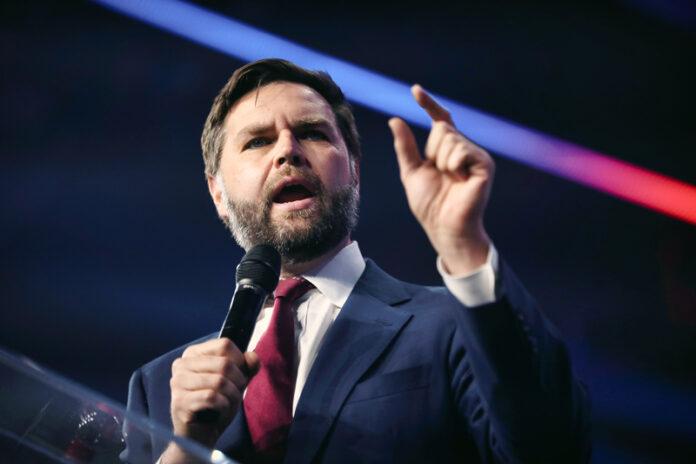
Vice President JD Vance stood by the arrest of independent journalist Don Lemon on Wednesday, January 4, labeling him “the dumbest man on television.” Vance claimed that Lemon, previously a CNN correspondent, broke federal law during his coverage of a protest against ICE in Minnesota the previous month.
Vance discussed Lemon’s arrest during his guest appearance on “The Megyn Kelly Show.” Lemon was arrested following his live coverage of protesters who disrupted a church service at Cities Church in St. Paul, Minnesota, on January 18. The protesters erroneously believed a pastor at the church was an immigration agent.
Lemon was taken into custody by federal agents on the night of February 4, 2026. He faced charges under conspiracy to deprive rights and the Freedom of Access to Clinic Entrances Act, also known as the FACE Act. Established in 1994, this act prevents individuals from obstructing religious freedom. Lemon was subsequently released without bail.
Asserting his First Amendment rights, Lemon has claimed that his arrest is an infringement on press freedom. However, Vance countered that Lemon violated the rights of the churchgoers.
During the interview, Vance stated, “I say first, Don, no one’s objecting to you standing outside of a church and protesting. No one’s saying you can’t protest the Trump administration’s immigration policies, frankly, or policies on anything else. What you cannot do is go into somebody’s house of worship and prevent them from exercising their First Amendment right to the free exercise of religion. That’s what happened.”
The vice president further explained that Lemon violated the FACE Act by thrusting a microphone into a minister’s face during the service.
Questions have been raised about Lemon’s actions during the protest as he is seen distributing donuts and coffee to protesters before the incident at the church. He was also spotted kissing Nakeema Armstrong, one of the three protest organizers arrested with him.
Lemon, during his livestream, paused recording to refrain from sharing particular details about the protest while organizers spoke. He assured church attendees he was “just photographing” as a journalist, but his activities prior to and during the demonstration have raised questions about his role.
According to reports, protesters impeded people from exiting the church during the disruption. The protest caused a disturbance during the religious service at St. Paul’s church, which was targeted based on false information about the church leadership’s involvement with immigration enforcement.
Vance made it clear that Lemon’s protest outside the church would have been legally protected, but disrupting a service inside the church was overstepping legal boundaries. Lemon, he said, can protest outside but not within a church without facing legal repercussions.
Responding to the charges, Lemon has termed the arrest as racially biased and pledged to continue his journalistic work.
The case has ignited a debate over the fine line between journalism and activism. While journalists commonly cover protests and interact with protesters for information, complications arise when their involvement appears to go beyond observation and documentation. Legal experts point out that press credentials do not offer immunity from laws that apply to all citizens, especially when actions exceed the scope of newsgathering.
Recent months have seen an increase in tensions over immigration enforcement in the Minneapolis area. The incident at Cities Church on January 18 mirrors broader conflicts between immigrant advocacy groups and federal authorities implementing stricter enforcement policies.
Vance’s derogatory reference to Lemon as “the dumbest man on television” during the Wednesday interview underscores the administration’s adversarial approach towards media figures it deems hostile.
Whether Lemon’s actions are considered criminal violations or protected journalistic activities will be determined by the court. Lemon’s legal team has indicated they will mount a robust First Amendment defense, setting the stage for a potential legal clash over press freedom and the boundaries of newsgathering in protest situations.
The case has drawn attention from journalism organizations and civil liberties advocates concerned about the precedent it could set for journalists covering protests. Nevertheless, prosecutors appear confident in their case, with Vance stating that the administration has evidence showing Lemon actively participated in actions that violated federal law, beyond his reporting duties.
The incident took place during a period of escalated immigration enforcement activities in Minnesota. As federal authorities intensified their enforcement efforts, anti-ICE protests have become more frequent.