


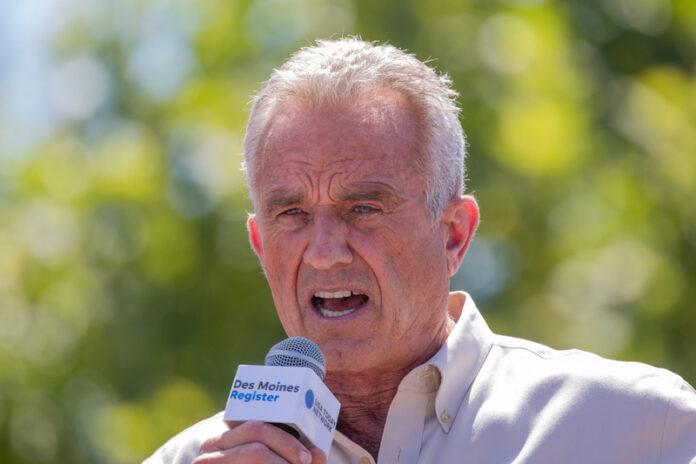
A federal advisory panel on autism, revamped by Health and Human Services Secretary Robert F. Kennedy Jr., called off its inaugural public meeting only days before it was to occur, while an alternate group of researchers convened their own session instead. The March 7 cancellation came with no explanation from HHS and marked the latest clash in a months-long dispute over Kennedy’s effort to steer federal autism research toward the long-discredited idea that vaccines cause autism.
On Tuesday, January 28, 2026, the Department of Health and Human Services announced appointments of 21 new members to the Interagency Autism Coordinating Committee, the federal advisory body that helps guide how roughly $2 billion a year in autism research and services funds are distributed. The broad roster changes removed all existing public members who were eligible for reappointment.
“These public servants will pursue rigorous science and deliver the answers Americans deserve,” Kennedy said of the new members.
The new lineup features several individuals known for promoting skepticism about vaccines, including the founder of the Autism Action Network and a fellow at the Brownstone Institute for Social and Economic Research.
Notably missing from the reconstituted committee were representatives from established research and advocacy groups such as the Simons Foundation and Autism Speaks, organizations that have led much of the scientific advancement in autism research over the last 20 years.
That exclusion prompted pushback. On March 3, 2026, a group of prominent scientists — many former federal committee members removed by Kennedy — formed the Independent Autism Coordinating Committee to create their own evidence-based research priorities. They planned their first meeting for March 19, the same day the federal IACC was supposed to hold its first public session under the new members. When the government panel unexpectedly canceled on March 7 without an explanation, the independent scientists went ahead with their meeting.
David Mandell, a psychiatry professor and autism researcher at the University of Pennsylvania who previously served on the committee, warned that most of the new appointees “appear to be people who adhere to untested, disproven, and sometimes dangerous ideas about what causes autism and the best ways to care for autistic people.”
The overhaul occurred as the Centers for Disease Control and Prevention indicated plans to fund research revisiting the long-discredited vaccine-autism link.
Kennedy’s actions went further in November 2025, when the CDC’s autism webpage was rewritten to state that the claim vaccines do not cause autism “is not an evidence-based claim.” Career scientists were not consulted, and infectious disease experts and pediatricians strongly criticized the change.
Alison Singer, president of the Autism Science Foundation and a three-term former committee member, described the new panel as “a complete and unprecedented overhaul, with no continuity from prior committees and a striking absence of scientific expertise.” Joshua Gordon, former director of the National Institute of Mental Health and IACC chair from 2016 to 2024, told The New York Times that he did not recognize a single scientist on the list whom he considered an expert in autism research.
The appointments also reduced representation of autistic self-advocates: the new committee contains only three self-advocates, the legal minimum, down from seven previously. Sam Crane, a self-advocate and disability law specialist who served two terms, criticized the opaque selection process. Kennedy’s pick to lead the revamped committee surprised some observers.
Dr. Sylvia Fogel, an instructor in psychiatry at Harvard Medical School, was chosen to chair the new committee. She acknowledged that large-scale studies have not shown a causal connection between vaccines and autism.
The dispute split Congressional Republicans. Senate Health, Education, Labor and Pensions Committee Chair Bill Cassidy, who cast the deciding vote to confirm Kennedy, cautioned that pursuing debunked theories “creates anxiety and a lot of self-recrimination.” Appropriations Chair Susan Collins, whose husband has a son with severe autism, said she did not think it was “helpful in any way to link it to vaccines, because the scientific evidence does not support such a link.”
A one-year review in February 2026 concluded Kennedy had violated several confirmation commitments — cutting vaccine research funding, withdrawing NIH grants, and canceling about $500 million in mRNA research, actions he had pledged not to take.
CDC data show that in 2022 one in 31 eight-year-old children received an autism diagnosis. Experts say much of the increase is due to better screening and expanded diagnostic criteria.
The controversy intensified in mid-March 2026, when a federal judge in Boston blocked Kennedy’s broader vaccine policy reforms, finding the administration’s actions arbitrary and capricious and not following established scientific procedures for vaccine recommendations. The administration said it would appeal. The federal IACC has not yet rescheduled the canceled meeting. Meanwhile, the independent group formed by ousted scientists continues its work, warning that without course correction federal autism research policy could be diverted from decades of evidence toward discredited theories.