


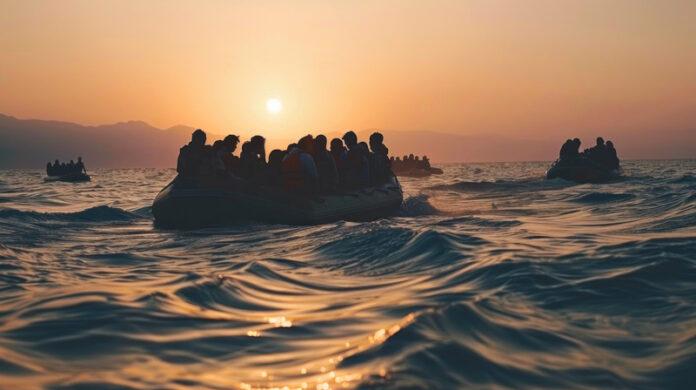
More than 70 migrants are feared dead after a wooden boat capsized in turbulent Mediterranean waters off the coast of Libya over Easter weekend, marking one of the deadliest migrant crossing disasters of 2026.
The overcrowded vessel departed the port of Tajoura, Libya, on Saturday afternoon carrying approximately 105 people attempting the perilous journey to Europe. Just hours into the crossing, the boat began taking on water in rough seas and overturned while still in Libyan waters—a search-and-rescue zone that falls under Libyan authority.
A German reconnaissance aircraft from Sea-Watch discovered the horrific scene, reporting they “found an overturned wooden boat with about 15 people desperately clinging to the hull.” Video footage captured by the rescue organization shows approximately a dozen men perched precariously atop the capsized vessel as others struggled desperately to pull themselves from the churning water.
Two passing commercial ships spotted the disaster and launched emergency rescue operations. Crews managed to save 32 survivors—all males from Pakistan, Bangladesh, and Egypt—before transferring them to an Italian Coast Guard patrol boat. One survivor is reported to be a minor. The rescued migrants arrived on Lampedusa early Sunday, the Italian island that has become a primary gateway for asylum seekers crossing the Mediterranean.
Rescuers recovered only two bodies from the water. The International Organization for Migration and the United Nations Refugee Agency both confirmed that more than 70 people remain missing and are presumed dead. Survivors told authorities that more than 100 passengers had crowded aboard when the vessel departed Libya. The IOM fears the actual number could have reached 120.
Filippo Ungaro, a spokesman for the United Nations Refugee Agency, said the migrants had been aboard a vessel “very unsuitable for crossing the Mediterranean.” The small wooden boat proved no match for the turbulent weather conditions and towering waves that battered it during the doomed journey.
Migrant rescue organization Mediterranea Saving Humans condemned European immigration policies, calling the shipwreck “not a tragic accident, but the result of policies by European governments that refuse to open safe and legal pathways” for migrants.
The Easter weekend disaster continues a deadly pattern in 2026. At least 683 migrants had died or gone missing in Mediterranean waters since January, according to the IOM’s tracking data—with this latest tragedy pushing the toll even higher. Last week, the Italian Coast Guard discovered 19 bodies after intercepting a dinghy in distress approximately 80 nautical miles from Lampedusa. In early February, 53 migrants—including two babies—perished when a rubber boat capsized off the coastal town of Zuwara in what rescuers described as severe winter weather conditions.
The Central Mediterranean route from North Africa to Europe remains the world’s deadliest migration corridor. More than 28,000 migrants have died or gone missing in Mediterranean waters since the IOM began comprehensive tracking in 2014. The grim tally grows each year as desperate people flee conflict, poverty, and persecution across Africa and Asia.
Many pay smugglers thousands of dollars for passage on overcrowded, unseaworthy vessels. Trafficking networks continue to exploit vulnerable migrants along the route, profiting from dangerous crossings while exposing people to severe abuse. The boats frequently depart from Libya, Tunisia, and other North African ports, aiming for Italy, Malta, or other European destinations.
Lampedusa, located closer to Africa than mainland Italy, has absorbed wave after wave of arriving asylum seekers over the past decade. The small island’s reception facilities frequently operate beyond capacity as migrants continue arriving from the Libyan and Tunisian coasts. According to the Italian government, 6,175 migrants have reached Italian shores since the start of 2026.
Sea-Watch’s reconnaissance aircraft continue monitoring Mediterranean waters as part of ongoing humanitarian efforts to locate migrants in distress. Multiple rescue organizations operate in the region, often coordinating with Italian authorities to respond to emergencies—though NGOs have repeatedly clashed with governments over rescue operations and port access.
The survivors now face an uncertain future as they begin the asylum process in Italy. Many migrants who successfully reach Europe endure months or years in reception centers while their cases wind through backlogged immigration systems. Others ultimately face deportation to their countries of origin.
As search operations continue, the death toll from this weekend’s disaster may still rise. Bodies can take days or weeks to surface, and many victims of Mediterranean shipwrecks are never recovered from the sea.