


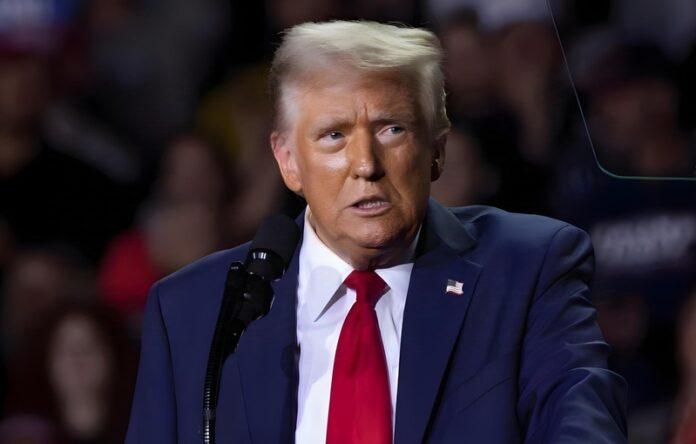
President Donald Trump has generated heated debate through his statements regarding King Charles, contending that the British sovereign privately endorses U.S. military involvement in Iran—a view that sharply contrasts with British Prime Minister Keir Starmer’s resolute resistance to military engagement.
These incendiary comments surface merely three weeks prior to King Charles and Queen Camilla’s planned official state visit to the United States scheduled for April 27–30, 2026, an event that royal observers now characterize as among the most sensitive diplomatic undertakings of his monarchy.
In remarks to The Telegraph, the 79-year-old president maintained that the 77-year-old king would have approached the Iran matter in a manner distinct from the present British administration. Trump remarked: “I think he would have taken a very different stand [on the war against Iran] but he doesn’t do that. I mean, he’s a great gentleman.”
Buckingham Palace moved promptly to separate the king from Trump’s depiction. A palace official conveyed to the Daily Beast that “the King is above politics”—an emphatic restatement of the royal household’s historical commitment to political impartiality.
This remark illustrates the fragile circumstances surrounding King Charles as he gets ready for his Washington journey during mounting friction between the Trump administration and NATO members regarding the Iran disagreement. Prime Minister Starmer has explicitly resisted intensified military operations in the Middle East, stating to Parliament that Britain was “not involved in the initial strikes against Iran” and will “not join offensive action now.” This position has produced an atypical public fracture in the traditionally robust U.S.-U.K. bond, with Trump asserting that Starmer is “no Winston Churchill.”
Royal commentator and TalkTV host Samara Gill, remarks on the Sun’s Royal Exclusive broadcast, labeled the forthcoming trip as possibly the biggest obstacle of Charles’ reign as sovereign. She emphasized that the king must engage in “diplomatic gymnastics” to address the matter, mentioning that Trump “listens to no one” with the possible exclusion of the king himself.
Regardless of the dispute, Trump has shown consistent praise toward the British sovereign, describing him as “a wonderful and brave man” and underscoring the depth of their connection. The pair encountered one another at Trump’s historic second state visit to Windsor Castle on September 17, 2025, when Charles greeted him with comprehensive royal ceremony—encompassing 1,300 military members, 120 horses, and an extravagant state meal.
Trump’s favorable sentiment toward King Charles appears to have produced unanticipated ramifications for Canada. According to a recently published work by British writer Robert Hardman titled “Elizabeth II: In Private. In Public. The Inside Story,” Trump’s reverence for the monarch conceivably prevented his scheme to annex Canadian land.
The publication, which is being released in installments via the Daily Mail, documents exchanges between Hardman and Trump in December at Mar-a-Lago in Florida. In their conversation, Trump disclosed his intention to pursue annexation of Canadian land bordering the U.S. but seemed to alter course when reminded that King Charles functions as Canada’s constitutional head.
Trump posed to Hardman whether Canadians continue to regard the king, demonstrating ignorance of Charles’ constitutional standing as Canada’s king. Upon being made aware that Charles persists in this position, Trump expressed displeasure with Canadian officials but seemed to abandon his annexation statements. The 79-year-old president remarked that he probably wouldn’t be able to manage Canada and its extensive background within the remaining three-and-a-half years of his administration.
Hardman documented that this signified “the closest I had heard to an acknowledgement that, as long as Canada had the King, Trump was not going to usurp him.”
Trump’s most recent criticism of Canada happened in March when he unveiled plans to team with Michigan Governor Gretchen Whitmer to “save The Great Lakes from the rather violent and destructive Asian Carp.” In that Truth Social message, he mentioned “the future Governor of Canada, Mark Carney,” repeating an insult he had previously made toward former Prime Minister Justin Trudeau and sparking renewed anxiety regarding his territorial intentions.
King Charles presented Canada’s throne speech in May, representing only the third instance throughout Canada’s past where a reigning sovereign delivered this address, with former occasions involving Queen Elizabeth II in 1957 and 1977. Throughout his speech, he was given an unexpected standing ovation following his comment that “the True North is indeed strong and free,” language broadly viewed as a covert signal to Trump about Canadian autonomy.
The April visit marks Charles’ inaugural state visit to the U.S. during his reign as king, despite having made 19 previous journeys to America. The agenda encompasses a state dinner at the White House and a presentation to both houses of Congress on April 28, marking the inaugural such address by a British monarch in more than thirty years. Congressional representatives have characterized the invitation as an occasion to “reaffirm” the enduring connection separating the two countries.
California Democratic Representative Ro Khanna sought a confidential session between the king and Epstein survivors, which Buckingham Palace rejected, pointing to continuing judicial examinations in the U.K. pertaining to Andrew Mountbatten-Windsor and ex-U.S. Ambassador Peter Mandelson connected to Jeffrey Epstein. Khanna subsequently made a public pronouncement that rejecting the session “diminishes the credibility of the monarchy for future generations.” Andrew was freed while awaiting investigation and Mandelson was freed under bail conditions.
In the lead-up to the visit, the 77-year-old sovereign confronts a remarkable responsibility: protecting his constitutionally mandated impartiality in political matters while maneuvering through what may represent the most turbulent stretch in U.S.-U.K. relations in recent memory. Given Trump’s perspective of him as a feasible collaborator and the British government being starkly opposed to escalated military engagement in Iran, Charles will require considerable diplomatic proficiency to safeguard the historic bond while evading the political struggle. Upon finishing the Washington trip, Queen Camilla will leave for Britain while Charles proceeds to Bermuda — his inaugural journey to the British Overseas Territory in his function as reigning sovereign.