


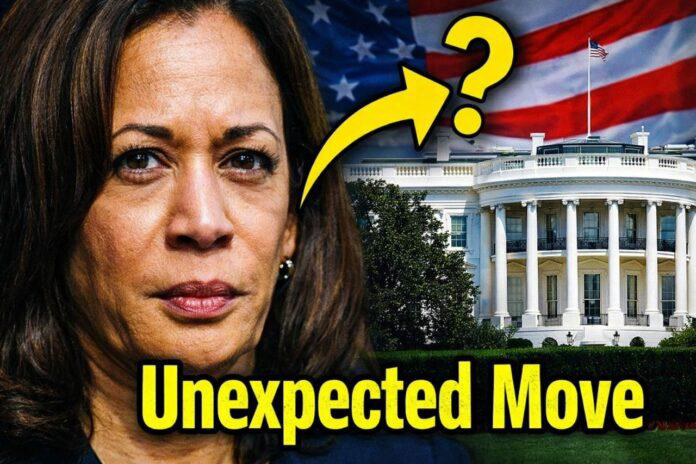
Kamala Harris is back in the spotlight — and this time, she’s not holding back. The former vice president has ignited a political firestorm with a fresh call to expand the Supreme Court, abolish the Electoral College, and grant statehood to Puerto Rico and D.C., signaling what many observers say looks unmistakably like the opening salvo of a 2028 presidential run.
Speaking on a call with the left-wing nonprofit Emerge on May 27, 2026, Harris unloaded on the Supreme Court’s recent decision in Louisiana v. Callais, which gutted a key provision of the 1965 Voting Rights Act. The ruling now requires voters who claim racial discrimination at the ballot box to prove “intentional discrimination” — a standard critics say is nearly impossible to meet.
“What they have done with this decision, by saying that the politics of redistricting is OK, is they are back-dooring racism through politics,” Harris told the group, according to remarks from the call.
A Comeback Tour Hiding in Plain Sight
The failed 2024 presidential nominee — who lost to President Trump in a bruising general election — has been anything but quiet. Between April and May 2026 alone, Harris appeared at four major events in four cities — including her first keynote since her 2024 defeat at the Arkansas Democratic Party’s Fisher Shackelford Dinner in Little Rock on April 25, where she called for a ‘revival of the American dream’ and blamed both parties for failing working Americans, the Public Counsel Awards Dinner in Beverly Hills on April 30, and a Las Vegas conversation on the Democratic agenda and 2026 midterms in May — a tempo that mirrors the early groundwork of a presidential campaign rather than the schedule of a retired politician.
Several recent polls now list Harris as an early front-runner for the 2028 Democratic nomination, and sources close to her camp confirm she is seriously considering entering the race. Her message on the Emerge call read less like a postmortem and more like a stump speech.
“Let’s invite a discussion about how do we push for statehood for Puerto Rico and D.C.; how are we thinking about the Electoral College,” Harris said, before pivoting to what she called the urgent need to “neutralize this red-state cheating.”
The Court-Packing Push Returns
Harris’s endorsement of “Supreme Court reform, including the notion of expanding the court” marks the highest-profile embrace yet of an idea Democrats have flirted with since the death of Ruth Bader Ginsburg in 2020. That vacancy allowed President Trump to appoint a third nominee to the bench, cementing the conservative majority that has since reshaped American law.
The court-packing chorus has grown louder in recent weeks. James Carville, the longtime Democratic adviser and strategist, dedicated a podcast episode last month to the same argument, declaring that if Democrats sweep the White House and both houses of Congress in 2028, they should immediately expand the court to 13 justices and admit Puerto Rico and D.C. as states.
Not everyone is buying it. Jed Rubenfeld, a professor of constitutional law at Yale Law School, called the court-packing proposals “idiotic and pernicious” in a sharp opinion piece published on May 19. Rubenfeld argued that expanding the bench would erase the last meaningful check on majority rule and shred the constitutional order in a single legislative stroke.
The Redistricting Earthquake
Harris’s broadside arrives as Republican-led states scramble to take advantage of the Callais ruling. Tennessee has already eliminated the state’s only Black-majority district in central Memphis, carving up a Democratic-leaning seat into three separate districts. Similar redistricting efforts are underway in Louisiana, Alabama, Georgia, and South Carolina — all states with at least one majority-Black district currently on the chopping block.
Voting is already underway in several of these states even as lawmakers redraw the lines, creating a chaotic legal and electoral landscape heading into the midterms. Democrats argue the new maps amount to legalized voter suppression. Republicans counter that the Supreme Court has simply restored neutral standards that had been distorted by decades of race-conscious mapmaking.
“What they are doing is intentionally… trying to suppress the voice of the people,” Harris said on the Emerge call, painting the GOP’s strategy as an existential threat to multiracial democracy.
A Sharper, More Combative Harris
The Harris who emerged Wednesday — and who reiterated her message in subsequent appearances through Thursday — sounded markedly different from the cautious candidate of 2024. She framed her party’s challenge in stark, almost martial terms, telling Emerge participants there is “a brutality at play on the other side and a ruthlessness,” and that Democrats “need to play to win.”
Allies say the shift reflects lessons learned from defeat. Critics, including some conservative commentators, argue Harris is simply chasing the party’s progressive base ahead of a crowded 2028 primary. Either way, her remarks have detonated across political media, drawing furious responses from Republicans and cautious admiration from Democrats who have spent more than a year searching for a standard-bearer.
Whether Harris formally enters the 2028 presidential race or not, her recent travel schedule — and her willingness to embrace some of the Democratic Party’s most aggressive structural reform proposals — suggests she intends to remain at the center of the conversation. The viral controversy over court packing and Electoral College abolition may be exactly the kind of attention her allies believe she needs to reclaim her standing as a national leader.
For now, the message from Harris is unmistakable: the silence is over, and the next campaign — whether she names it that yet or not — has clearly begun.