


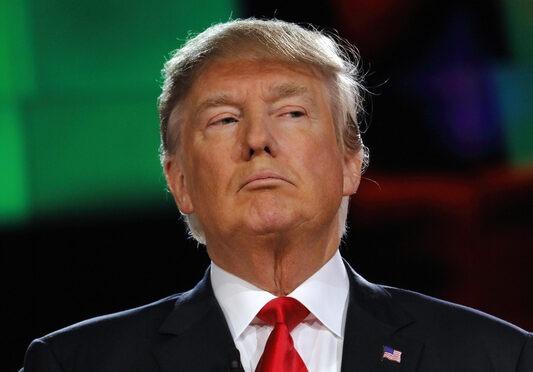
President Trump is moving to slash the military resources the United States has long kept on standby to assist NATO allies in a crisis, the latest and most consequential salvo in his escalating campaign of retribution against European partners who refused to back his war in Iran.
The administration intends to formally notify NATO partners later this week that the U.S. will, in the words of one official, “shrink the pool of military capabilities” it maintains in Europe, according to reporting published Wednesday. The exact nature and composition of the forces being wound down remains top secret, but the move marks the most concrete step yet in Trump’s drive to cool U.S. commitments to the 76-year-old alliance.
The president’s frustration has been building since February 28, 2026, when he launched military action against Iran without meaningful backing from NATO capitals. In the weeks that followed, allies including the United Kingdom and Spain refused to allow American forces to use their bases or airspace to strike Tehran — refusals that have since hardened into a full-blown diplomatic crisis.
The ‘Naughty and Nice’ List
The capability drawdown comes on the heels of a leaked internal scorecard, dubbed the “naughty and nice” list, in which administration officials catalogued which NATO members deserved punishment for their stance on Iran. The document reportedly floated suspending Spain from the alliance for refusing overflight rights, and even returning the Falkland Islands to Argentina — a swipe at the United Kingdom that would reward Argentine President Javier Milei, who has cultivated a warm rapport with Trump.
European officials have largely dismissed the most inflammatory penalties as unworkable. There is no legal mechanism within the North Atlantic Treaty for expelling an alliance member, and unilaterally handing British territory to Buenos Aires would face overwhelming diplomatic resistance. But analysts say the leak itself was the point.
“It’s difficult to believe that it would be a coincidence that these options would be leaked without there being some type of signaling intent to put pressure on some European allies,” Joel Linnainmäki, a research fellow at the Finnish Institute of International Affairs, told reporters in Brussels on May 7.
That message had been telegraphed months earlier. In December 2024, then-incoming Defense Secretary Pete Hegseth warned that “model allies that step up” would receive special favor — and those that did not would face consequences.
Germany Bears the First Blow
The first concrete punishment landed on Berlin. Trump announced the withdrawal of 5,000 U.S. troops from Germany after Chancellor Friedrich Merz told a group of German schoolchildren that Tehran had “humiliated” Washington with its resistance to the American military campaign. The president has since publicly floated extending that drawdown to Italy and Spain, and has threatened to suspend “difficult” countries from important or prestigious positions within NATO’s command structure.
British Prime Minister Keir Starmer has drawn particular venom from the White House. Trump has dismissed him as “no Churchill” and threatened to reassess U.S. diplomatic support for British claims to the Falkland Islands. Spanish Prime Minister Pedro Sanchez, who refused American use of bases on Spanish soil, has faced the confusing threat of expulsion from an alliance that has no expulsion procedure.
Trump has also rattled relations by reviving threats to invade Greenland, an autonomous territory of fellow NATO member Denmark — a posture that plunged the alliance into a historically unprecedented crisis in January, before a frenzy of diplomatic efforts pushed those threats to the back burner.
Pentagon Insists Nuclear Umbrella Holds
Defense Department officials have publicly stressed that the U.S. remains committed to providing a nuclear deterrent against attacks on Europe, even as the administration looks to hand conventional defense responsibilities over to continental partners. Trump, according to officials briefed on his thinking, expects European partners to assume “primary responsibility for the continent’s security.”
Precisely how the Pentagon will structure that handover remains unclear. What is clear is that the administration sees the capability drawdown not as a routine force-posture adjustment but as a tool of leverage — retribution dressed up as strategic realignment.
A Boost for Macron’s European Army
The turbulence has handed French President Emmanuel Macron, who has been pushing for a joint, coordinated European military force since 2018, an unexpected gift. Trump’s posture has lent fresh legitimacy to Macron’s long-standing argument that Europeans must build their own defense architecture rather than rely on Washington’s goodwill.
A recent analysis from RAND on how NATO allies might respond if the United States retrenches from Europe suggests the continent’s capitals are increasingly modeling a future in which the American security guarantee is partial, conditional, or absent altogether. The withdrawal of 5,000 troops from Germany has already accelerated those conversations.
For now, European officials are waiting for the formal notification Trump’s team has promised to deliver later this week — and bracing for what may come next. The White House has not publicly addressed the timing or scope of the planned reductions, and the Pentagon has declined to elaborate on which units or capabilities will be affected.
What once would have been unthinkable — an American president openly weaponizing the alliance’s military architecture against its own members — has, in the span of 16 months, become the operating principle of transatlantic relations.