


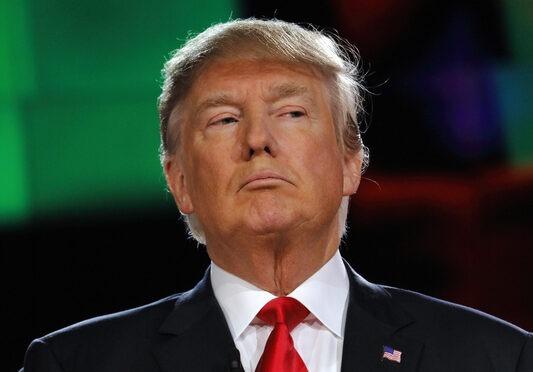
President Donald Trump delivered his most direct statement yet on a possible third term during a phone interview with NBC News on June 15, 2026, abandoning any pretense of joking and telling the network plainly: “No, I’m not joking.” He went on to suggest potential pathways around the constitutional barrier, saying, “There are methods which you could do it.” Pressed on specifics, Trump declined to elaborate but acknowledged that alternative routes had been discussed, adding: “That’s one… but there are others too.”
The NBC interview was the latest and sharpest entry in a pattern that has played out repeatedly since Trump returned to the White House — float the idea, let it detonate across the news cycle, then walk it back just enough to maintain plausible deniability.
The most striking example of that pattern came on October 27, 2025, when Trump told reporters aboard Air Force One en route to Japan that he would “love to” run again. “I would love to do it,” he said, while also claiming he had his “best numbers ever.” When pressed on whether he was ruling out a third term, he kept his answer deliberately ambiguous: “Am I not ruling it out? I mean, you’ll have to tell me.”
Then, on October 28, 2025, aboard Air Force One en route to South Korea, the president appeared to pump the brakes — slightly. “If you read it, it’s pretty clear,” Trump told reporters. “I’m not allowed to run. It’s too bad.” He also dismissed the vice-presidential loophole scenario outright, saying, “You’d be allowed to do that, but I wouldn’t do that. I think the people wouldn’t like that. It’s too cute. It’s not — it wouldn’t be right.”
The pair of statements, delivered within 24 hours of each other on the same overseas trip, captured perfectly the dynamic Trump has mastered: advance and retreat, provoke and hedge, always keeping the conversation alive without ever fully committing.
At the February 2026 State of the Union address, Trump again referenced the third-term question — this time joking about whether his current term should even be considered his second or third, given his view that his first term was stolen. The room laughed. Constitutional scholars did not.
What gives the speculation its staying power is not just Trump himself, but the infrastructure being built around the idea. Steve Bannon told The Economist that “he’s going to get a third term… People ought to just get accommodated with that.” Bannon, who has no official role in the administration, said a “plan” to accomplish a third Trump term was in the works and would be unveiled “at the appropriate time.”
The constitutional barrier is not subtle. The 22nd Amendment clearly states that no person shall be elected to the office of the president more than twice, placing a strict two-term limit on anyone who has already won the presidency twice. This applies regardless of whether the terms are consecutive or not, meaning there is no gap or reset option available.
House Speaker Mike Johnson, one of Trump’s closest Republican allies, said flatly that he does not see a path for Trump to remain in the White House beyond his current term. “I don’t see the path for that,” Johnson told reporters. He added that he and Trump had discussed the constraints of the Constitution, and that he believes Trump understands the situation. Changing the 22nd Amendment would require a new constitutional amendment — a process that would take years and require supermajority support in Congress and ratification by three-quarters of U.S. states.
Yet the drumbeat continues. At a White House Small Business Summit earlier in 2026, Trump joked about staying in office well past the end of his second term. In other interviews, he has said things like “I don’t know — that would be interesting” when asked if he could imagine remaining president past January 2029. Each remark lands in the news cycle, generates outrage and debate, and then fades — only for Trump to revive it days or weeks later.
Whether Trump genuinely intends to pursue a third term or is simply using the idea to keep his base energized, command media attention, and unsettle his political opponents is a question that may not have a clean answer. With Trump, the line between provocation and intention has always been deliberately blurred.
What is clear is that he is not stopping. And as long as he keeps talking, so will everyone else.