


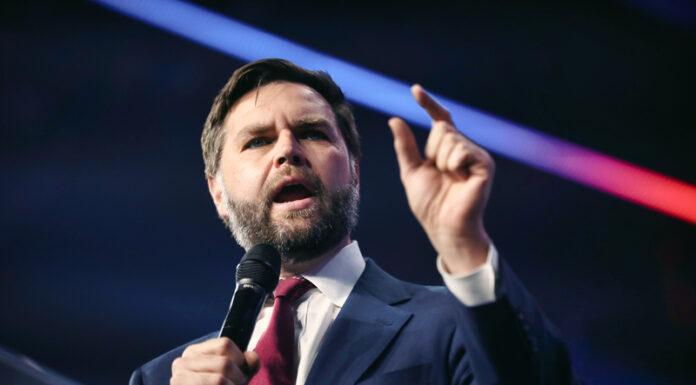
Vice President JD Vance’s early lead in the 2028 Republican presidential race has cratered in New Hampshire, and a familiar rival is closing fast. On July 23, CNN chief data analyst Harry Enten warned that Secretary of State Marco Rubio is gaining ground quickly, telling viewers the vice president should "watch out" as the two men tighten in the Granite State.
The numbers behind that warning are stark. In a new University of New Hampshire poll, 36% of likely Republican primary voters said they plan to back Vance in 2028. That marks a double-digit collapse from February, when a clear majority — 53% — named him as their choice. Enten said the vice president’s support has been “dropping like a rock.”
Rubio, by contrast, has surged. The secretary of state jumped from 7% in February to 26% this month, a climb Enten likened to “climbing up to Mount Washington.”
A Lead That History Says Is Too Small
Vance still leads Rubio in New Hampshire, but only by 10 points — a margin Enten framed as remarkably weak for a sitting vice president serving under a popular president in his own party. By comparison, former Vice President Al Gore held a 40-point lead over his nearest competitor in early polling ahead of the 2000 race, and even then narrowly beat former Senator Bill Bradley in the state’s primary. Former Vice President George H.W. Bush was up 26 points in early 1988 New Hampshire polling before losing the Iowa caucuses and having to recover with a win there. Against that backdrop, Enten said a vice president would normally be expected to dominate early New Hampshire surveys, but that this is “not the case” for Vance right now.
The slide comes despite an aggressive push to raise the vice president’s profile. Enten said Vance, fresh off a book tour, has mounted “one of the biggest pushes of his vice presidency in terms of PR” of late. In New Hampshire, at least, “it doesn’t seem to be working in the Granite State,” he concluded.
Underwater Nationally, Especially With Women
The New Hampshire warning lands atop broader signs of trouble. Polling released June 16, 2026, by Navigator Research found Vance’s net favorability at -12, with 40% of Americans viewing him favorably and 52% unfavorably — including 40% who called him “very unfavorable.” That figure has held steady, with the vice president registering net -11 across the four prior surveys by the same group.
Vance edges out President Donald Trump, whose net favorability sits at -17, but trails Rubio, who lands at -5. He also runs behind Pope Leo, whose net favorability of +35 towers over the vice president’s — a striking gap given that Vance’s newly released book chronicles his conversion to Catholicism. Among Catholics, the pope’s net favorability is +57 compared with Vance’s -12.
The damage is sharpest among women. Vance carries a -20 net favorability with women, compared with -4 among men, according to the survey. Among self-described “childless cat ladies,” his standing sinks to -28. Roughly a third of voters cite as a top concern that he is “a Trump yes-man,” and an equal share point to past remarks suggesting Trump might be “America’s Hitler” before Vance joined the ticket. His approval is underwater on every issue tested, from gas prices (net -39) to inflation and the cost of living (net -27), with immigration his least damaging at -9.
The poll was conducted by Global Strategy Group among 1,000 registered voters from June 4-June 8, 2026, with a margin of error of plus or minus 3.1 percentage points.
Young Voters Deepen the Warning Signs
Separate data on younger Americans reinforces the picture of a party front-runner whose grip is loosening. In the Yale Youth Poll’s spring 2026 results, Vance still led the Republican primary field with 43%, followed by Rubio at 17%. But the trend line matched New Hampshire’s: compared with the fall 2025 poll, Vance’s support fell eight percentage points while Rubio’s rose 12 percentage points.
The same survey found deep hostility to the administration among young people. Overall, 57% of voters disapproved of Trump’s job performance, a figure that climbed to 68% among voters aged 18-22 and 72% among those 23-29. On the Democratic side, former Vice President Kamala Harris led the primary field at 20%, ahead of California Governor Gavin Newsom at 19%, former Transportation Secretary Pete Buttigieg at 14% and Representative Alexandria Ocasio-Cortez at 13%.
Vance has recently sought to project confidence about his party’s prospects. After meeting with House Republicans, he said the GOP would “support the results of the midterm elections” regardless of the outcome, adding, “We think we’re going to win. But ultimately that’s up to the American people.”
Whether that confidence extends to 2028 is another matter. With more than two years until the first votes are cast, the polling is a snapshot rather than a verdict. But the direction is unmistakable: a vice president who once dominated the field is watching his lead shrink while a rival who was, as Enten put it, in “the cellar” just six months ago climbs steadily toward him.