


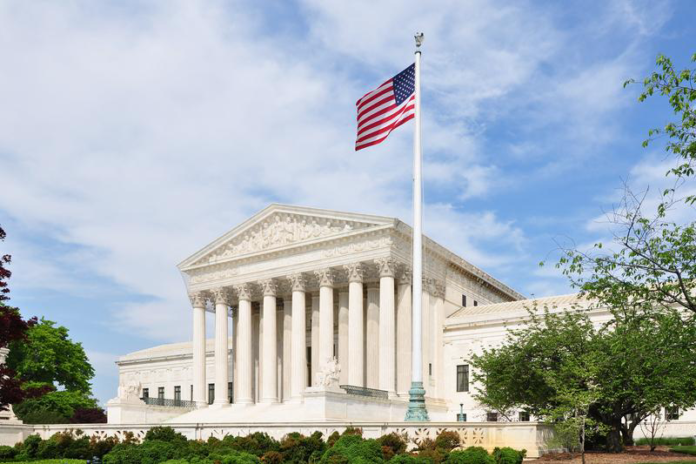
The nation’s highest court has closed the door — again — on President Donald Trump’s efforts to overturn a verdict finding him liable for sexually abusing advice columnist E. Jean Carroll. On August 17, 2026, the Supreme Court denied Trump’s request to reconsider his appeal of the case, ending a legal fight that has stretched across years and cost the president millions.
The decision came in a single-sentence order that offered no explanation and noted no dissents. It was, in effect, the final legal word in a saga that began with a jury verdict and wound its way to Washington, DC — only to be turned away at the very top.
A Rehearing the Court Rarely Grants
This wasn’t Trump’s first trip to the Supreme Court on this matter. The justices had already declined to take up his case back in June. But rather than accept that outcome, Trump petitioned the court to reconsider — a long-shot maneuver by any measure.
Rehearings at the Supreme Court are extraordinarily rare. The court virtually never grants them, reserving such outcomes for exceptional circumstances that almost never materialize. According to reporting by The Hill, Trump’s legal team asked the justices to take a second look at their earlier refusal, hoping to gain traction where previous attempts had failed.
When the one-sentence order arrived on August 17, 2026, refusing the request without comment or any noted dissents, it followed the pattern legal observers had every reason to expect. The denial left no room for further appeals on this front.
The petition had reached the court after a jury determined Trump was liable for sexual abuse and defamation, ordering him to pay Carroll $5 million. With the rehearing denied, that verdict now stands unshaken. Trump had petitioned the Supreme Court after the jury’s decision, seeking to overturn the findings that formed the basis of the multimillion-dollar award.
How the Case Began
Carroll, an advice columnist, first brought her allegations against Trump into public view in her 2019 book, “What Do We Need Men For?: A Modest Proposal.” In it, she described an encounter she said took place in the 1990s at Bergdorf Goodman, a luxury department store in New York City.
Carroll alleged that Trump forced her against a dressing room wall, held her in place, and raped her. Trump has consistently denied the accusations. In an interview, he said Carroll was “not my type” and claimed he’d never met her — a denial complicated by photographs showing the two of them together.
The legal proceedings unfolded on two tracks. In 2019, Carroll sued Trump for defamation. Then, in 2022, she filed a separate suit accusing him of battery and defamation under New York’s Adult Survivors Act. That law created a one-year lookback window allowing survivors of sexual abuse to bring claims that would otherwise be barred by the statute of limitations — giving Carroll a legal path she wouldn’t have had under ordinary timelines.
The Verdict Stands
The push for a rehearing arrived as something of a last-ditch effort. By the time the August order came down, the $5 million judgment had already been resolved through the legal process, leaving Trump’s only remaining option a plea for the court to reconsider its earlier refusal to take up the case.
That sequence is worth pausing on. The president sought to have the Supreme Court revisit the underlying verdict even after the financial and legal consequences had begun to take shape. The August 17 order put that final request to rest, leaving both the payment and the finding of liability intact.
For Carroll, whose allegations reshaped a national conversation when she went public in 2019, the denial represents the conclusion of a legal journey that took her from the pages of a memoir to a courtroom to the marble halls of the Supreme Court. The jury’s decision — and the $5 million verdict at its center — will not be reconsidered.
The court’s refusal to explain itself is, in its own way, telling. Orders like this one rarely come with reasoning, and the absence of any noted dissent suggests there was little appetite among the justices to wade back into a matter they had already declined once. Two denials, separated by a span of weeks, delivered the same message.
With the rehearing off the table, the legal avenues that once seemed available to Trump have narrowed to none where this verdict is concerned. The finding that he was liable for sexual abuse and defamation — reached by a jury and now left undisturbed by the highest court in the land — stands as the last word.
The case was reported by Natalia Mittelstadt of the Sinclair National Desk, drawing on Supreme Court filings and legal analysis from multiple outlets.