


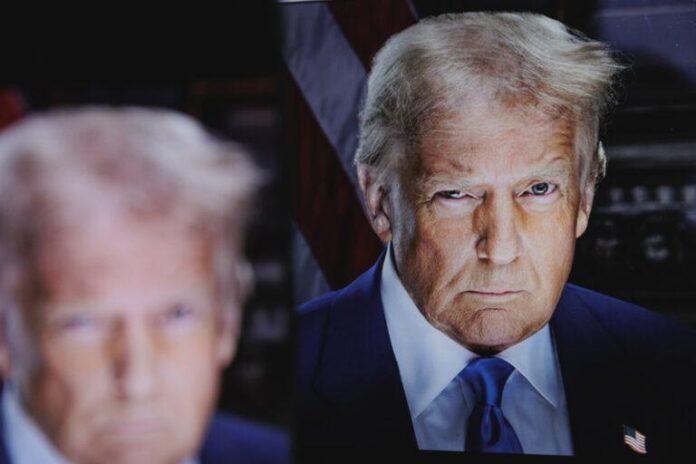
President Donald Trump unleashed a late-night social media tirade against NBC and “Late Night With Seth Meyers” host Seth Meyers early Aug. 5, 2026, vowing to investigate the network’s decision to extend the comedian’s contract — the latest flashpoint in an escalating war between the president and late-night television.
Trump posted on Truth Social around 2 a.m. on Aug. 5, calling the contract renewal a “sick rumor” and attacking the late-night host. In the post, Trump criticized Meyers as lacking ratings, talent, and intelligence while possessing the personality of an insecure child, and vowed to investigate why NBC would renew his contract.
NBC did, in fact, extend Meyers’ contract — the deal, which runs through 2028, was reported in May 2025. The president’s Truth Social post framed the renewal as an unverified rumor, though the agreement had already been publicly confirmed at that point.
A Long-Running Feud With Late Night
Trump’s fury toward Meyers is hardly new. Earlier in 2025, the president acknowledged stumbling across the comedian’s program, saying he “got stuck watching Marble Mouth Meyers the other night, the first time in months” and calling him a “moron.” Trump has also previously described “Late Night With Seth Meyers” not as entertainment but as something closer to a political hit job aimed at his administration.
Meyers has given Trump plenty of material to work with. The host regularly skewers the president on his program, offering satirical breakdowns of the latest White House developments — including Trump’s own Truth Social posts — and has taken pointed aim at specific policies, including the president’s tariff agenda, his push to federalize Washington, D.C., and his takeover of the Kennedy Center. The former “Saturday Night Live” cast member’s show drew just under 1 million viewers as of August 2025, though its reach extends considerably further through social media platforms.
“Late Night With Seth Meyers” reached its 10-year milestone in 2024, with former President Joe Biden appearing as a guest. Meyers later discussed the challenges facing late-night television on the July 28 episode of the “Armchair Expert” podcast, explaining that his worries had evolved from personal performance concerns to questions about the media industry’s long-term viability for programs like his.
NBC in Trump’s Crosshairs
Wednesday’s outburst was not the first time Trump has targeted NBC Universal specifically. Before returning to the White House, he had already threatened an investigation into the network, alleging it had provided unfair coverage of the 2024 presidential election by focusing too heavily on the Democratic Party. That threat set the tone for what has become a sustained pattern of presidential pressure on major broadcast networks throughout his second term.
Late Sunday, Trump escalated that pressure campaign in a separate string of online posts, demanding to know why ABC and NBC were not paying what he called license fees for their use of public airwaves. Trump wrote that networks should lose their licenses over unfair treatment of Republicans and conservatives, or at minimum pay substantial fees for using valuable public airwaves. The posts amounted to a sweeping threat against major commercial broadcasters, suggesting networks could face fines or even lose their licenses over coverage he deemed hostile to conservatives.
Colbert and the Future of Late Night
Trump’s antagonism toward late-night TV has coincided with significant upheaval across the genre. As of August 2025, CBS had announced it would end “The Late Show with Stephen Colbert” in May 2026, a development the president celebrated publicly. He went further, quipping that ABC’s late-night host Jimmy Kimmel should be the next to go. The pressure Meyers acknowledged feeling about the long-term sustainability of the format reflects broader uncertainty in the late-night landscape.
No Formal Investigation Announced
Despite Trump’s vow to look into the matter, it remains unclear what authority the president would invoke to scrutinize a network’s decisions about its on-air talent. No formal White House investigation into NBC Universal had been announced at the time of reporting. NBC Universal had not responded to a request for comment as of Wednesday. Whether the president’s Truth Social post amounts to a genuine policy threat or another salvo in an ongoing media feud is a question that, for now, has no definitive answer.