


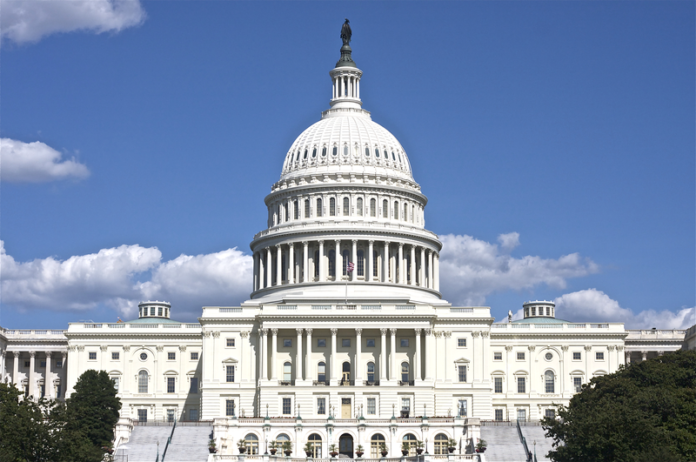
President Donald Trump is pressing the Senate to finalize a sweeping change to how Americans mark time, arguing on Wednesday, August 13, that making daylight saving time permanent would not only spare the country the twice-yearly ritual of resetting clocks but also drive down the nation’s murder rate. The bold claim arrived alongside a major legislative milestone: the Sunshine Protection Act cleared the House in mid-July in a 308-117 vote and now awaits action in the Senate.
Trump made his case in a lengthy post on Truth Social, framing the legislation as an overdue victory for a public long frustrated by the annual clock shuffle. Trump wrote that Americans have wanted permanent daylight saving time for years but that previous administrations had failed to achieve it, adding that the bill had passed the House and was headed to the Senate for a final vote.
The post stretched across a remarkable range of promised benefits — fewer traffic accidents, lower cardiac risk, reduced seasonal depression, a boon to restaurants and retailers, even safer school commutes. Trump described Americans as “sick and tired of having to change their clocks twice a year” and cast the measure as rare common ground in a fractured political moment, calling it an issue that “Republicans, Democrats, and Independents can unite behind.”
The Crime Claim and What Research Shows
The most striking element of Trump’s pitch was his assertion that ending the biannual clock change would help decrease both robbery and murder rates. On the robbery side, there is genuine scholarly support for that idea. A 2015 study published in The Review of Economics and Statistics found that when clocks fall back in autumn, robberies jump 7% over the course of the entire day and surge 27% specifically in the hours immediately after sunset, when the sudden loss of evening light gives cover to street crime.
The case for homicide reduction is considerably murkier. A 2012 working paper from Stanford reported a sharp drop in murders around sunset following the spring clock change, but the researchers themselves noted that the effect was not statistically significant in their subsequent analysis. A separate 2024 study examining 11 American cities, appearing in Lighting Research & Technology, found no meaningful relationship between daylight hours and homicide rates, though it did identify stronger evidence linking additional light to a reduction in robberies. Research conducted in the Brazilian state of Rio Grande do Sul similarly concluded that daylight saving time had no significant effect on homicide rates per 100,000 inhabitants.
In short, the evidence supports the idea that extra evening light deters robbery. The claim that it reduces murder rates does not have consistent scientific backing.
A Campaign Promise Nearing the Finish Line
Trump ran for president in 2024 on an explicit promise to make daylight saving time permanent, and the Sunshine Protection Act represents the vehicle for fulfilling that pledge. The bill passed the House with a comfortable bipartisan margin, and Trump moved quickly to press Senate Republicans for swift action, urging them in all-caps to pass the legislation “ASAP.”
The effort echoes a previous near-miss on the same issue. In March 2022, senators voted unanimously in favor of a prior iteration of the same proposal, generating widespread attention and bipartisan enthusiasm — only for the measure to stall in the House over a fundamental disagreement: whether to lock in daylight saving time permanently or to instead make standard time the year-round baseline. That dispute killed the earlier bill. The current version resolves that standoff by landing squarely on the daylight saving side, keeping clocks as they are during summer rather than reverting each November.
Under the existing system, governed by federal law but not binding on all states and territories, the clock shifts forward on the second Sunday of March at 2 a.m. and returns on the first Sunday in November. Most of Arizona does not observe daylight saving time, though the Navajo Nation within Arizona does. Hawaii also remains on standard time year-round, as do the U.S. territories of Puerto Rico, Guam and the U.S. Virgin Islands.
Where the Bill Stands Now
The Sunshine Protection Act has been referred to the Senate Committee on Commerce, Science, and Transportation, the customary procedural step before a full floor vote. Whether the Senate moves quickly — or whether the bill encounters the same friction that derailed its predecessor — remains to be seen.
The history of daylight saving time stretches back more than a century. Germany introduced the practice in 1916 to conserve coal during World War I, and the United States followed two years later with the Standard Time Act, legislation that simultaneously created America’s five federal time zones. The federal government standardized the twice-yearly clock change in 1966, embedding the practice into American life for the six decades since.
Trump’s Bipartisan Pitch
The president, whose Truth Social posts have grown increasingly legislative in tone as his second term advances, framed the Sunshine Protection Act as something approaching a consensus issue — rare in an era of deep partisan division. The 308-117 House vote lends some credibility to that framing.
Whether the Senate shares that appetite for speed will determine whether Trump can claim a win on a promise he made on the 2024 campaign trail. For now, the bill sits in committee, and millions of Americans are left wondering whether they will again set their clocks back on a March Sunday.